
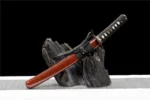


Tsuru (鶴): the crane
In Japan, the crane (tsuru) is among the most cherished of symbols: an emblem of longevity, fidelity and good fortune. Legend holds that it lives a thousand years, and to this day a thousand paper cranes are folded as a wish for health and happiness.
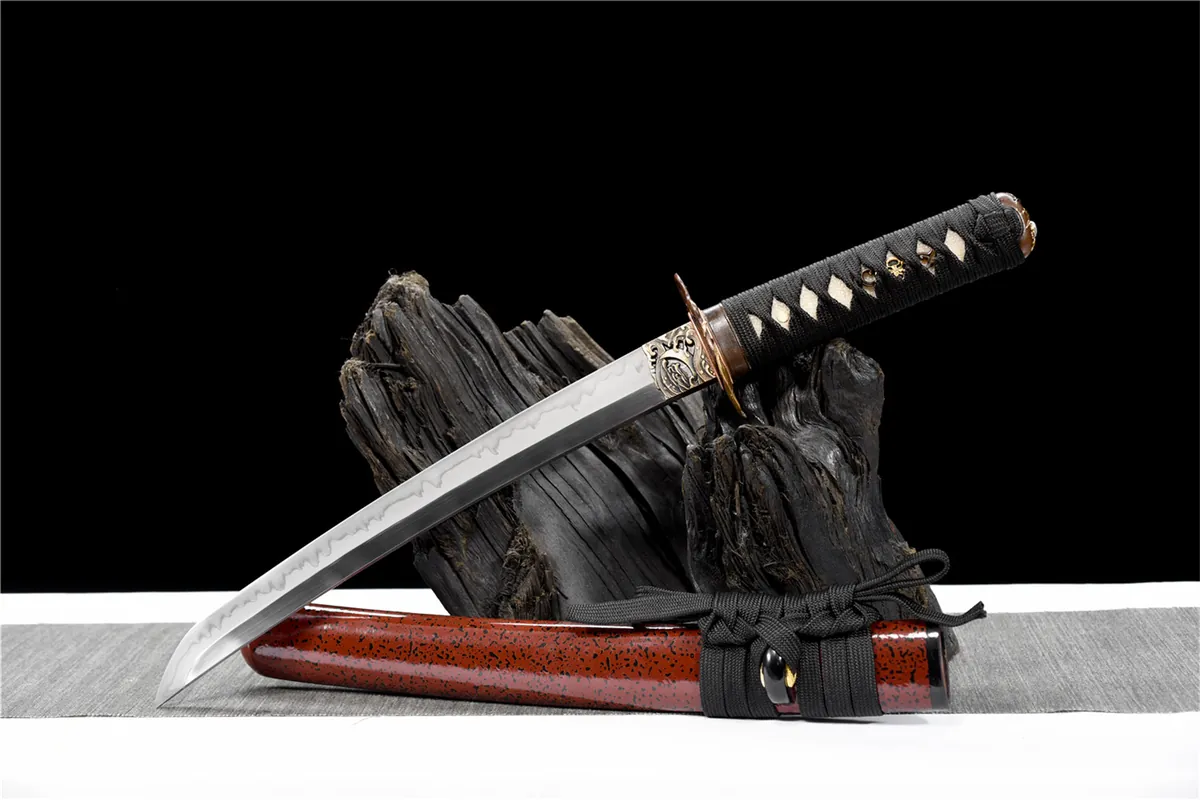
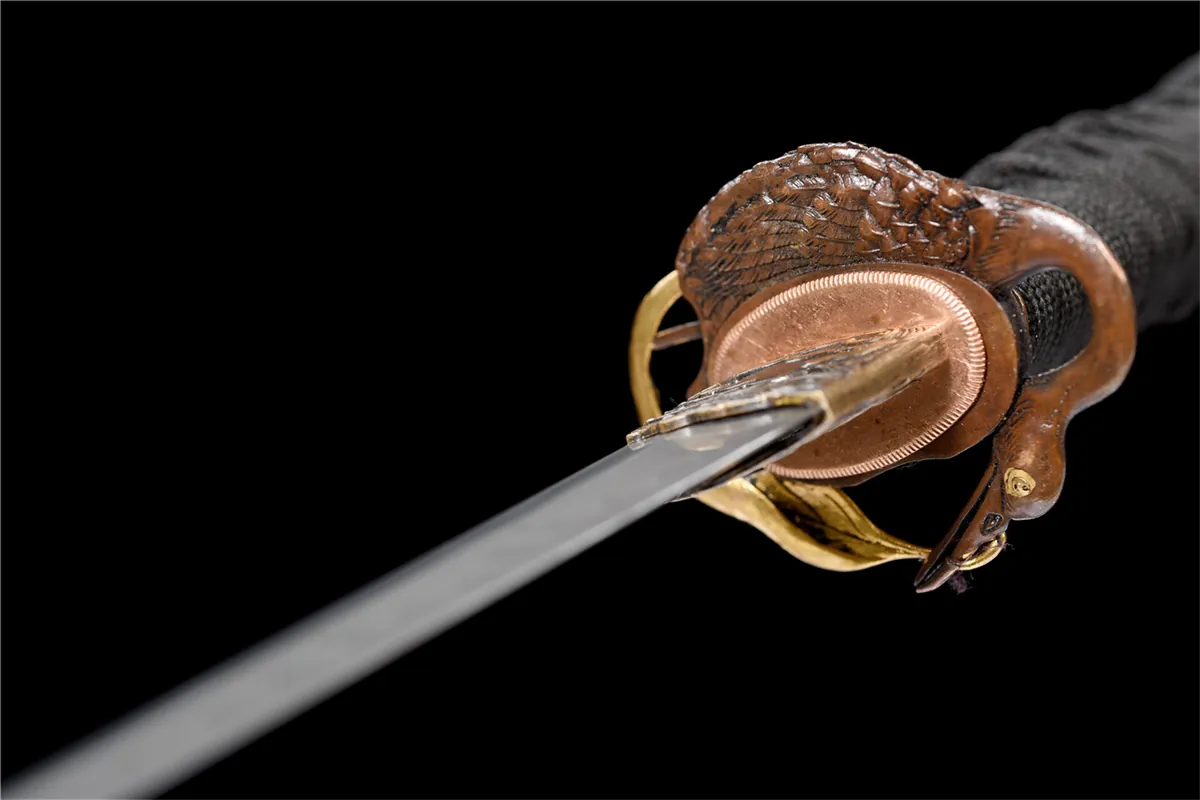
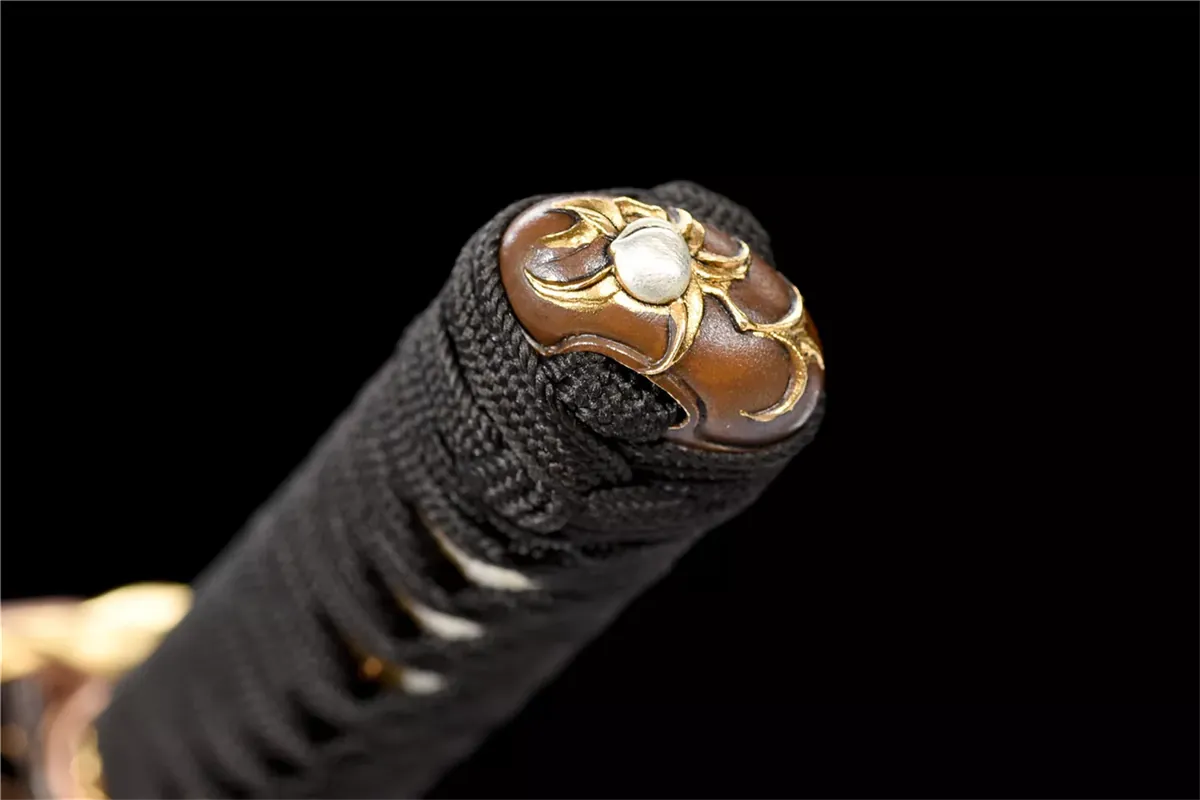
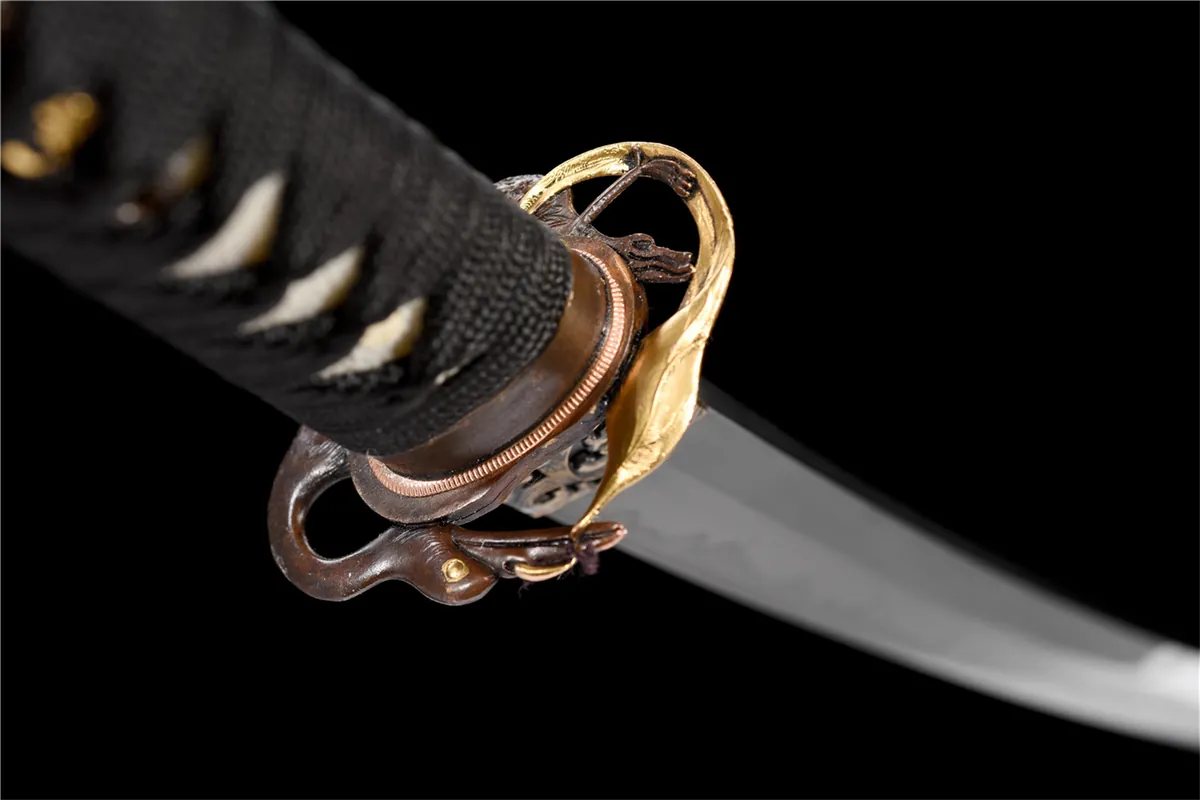
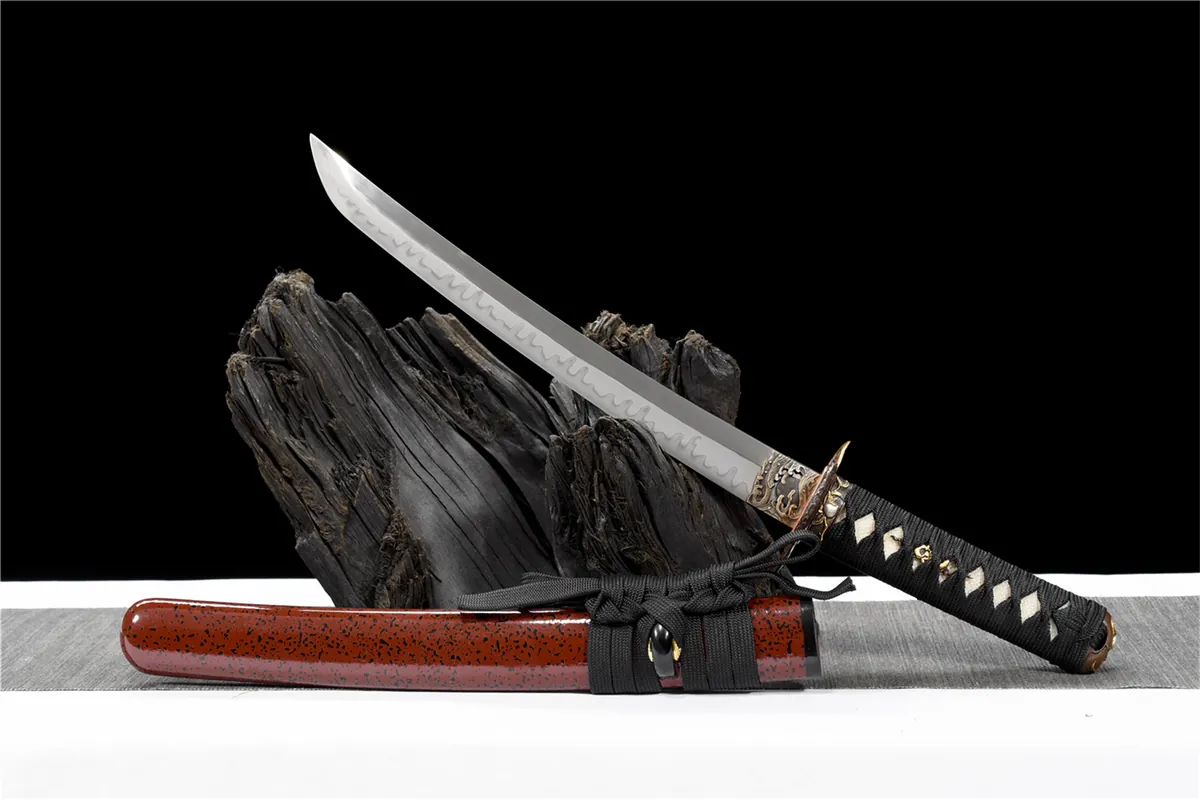
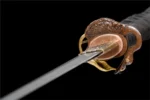
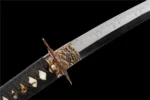
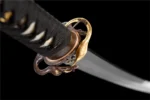
This tanto pays tribute to that tradition with a tsuba carved entirely in the silhouette of a crane, its outline following every contour of the bird in flight. The blossoms on the fuchi and kashira complete the evocation of nature and tranquillity.
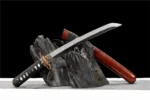
A hira-zukuri blade in T10 steel with a genuine chōji hamon
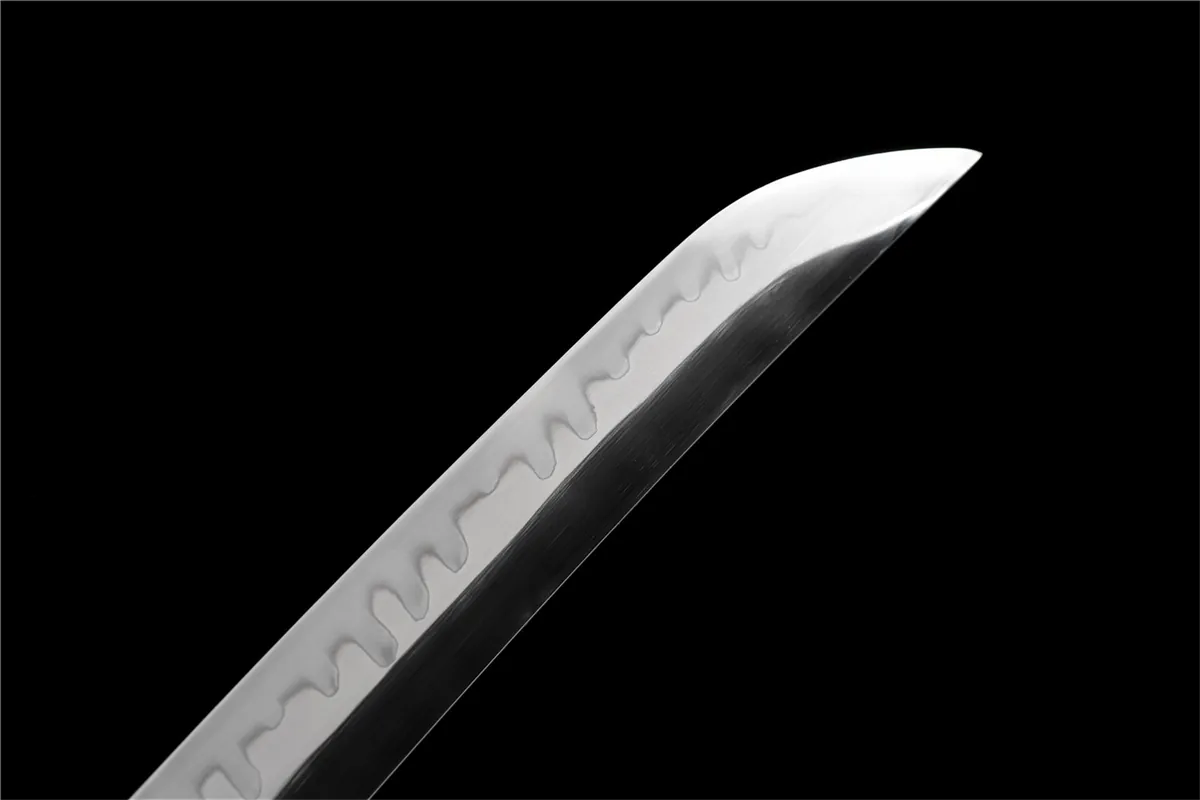
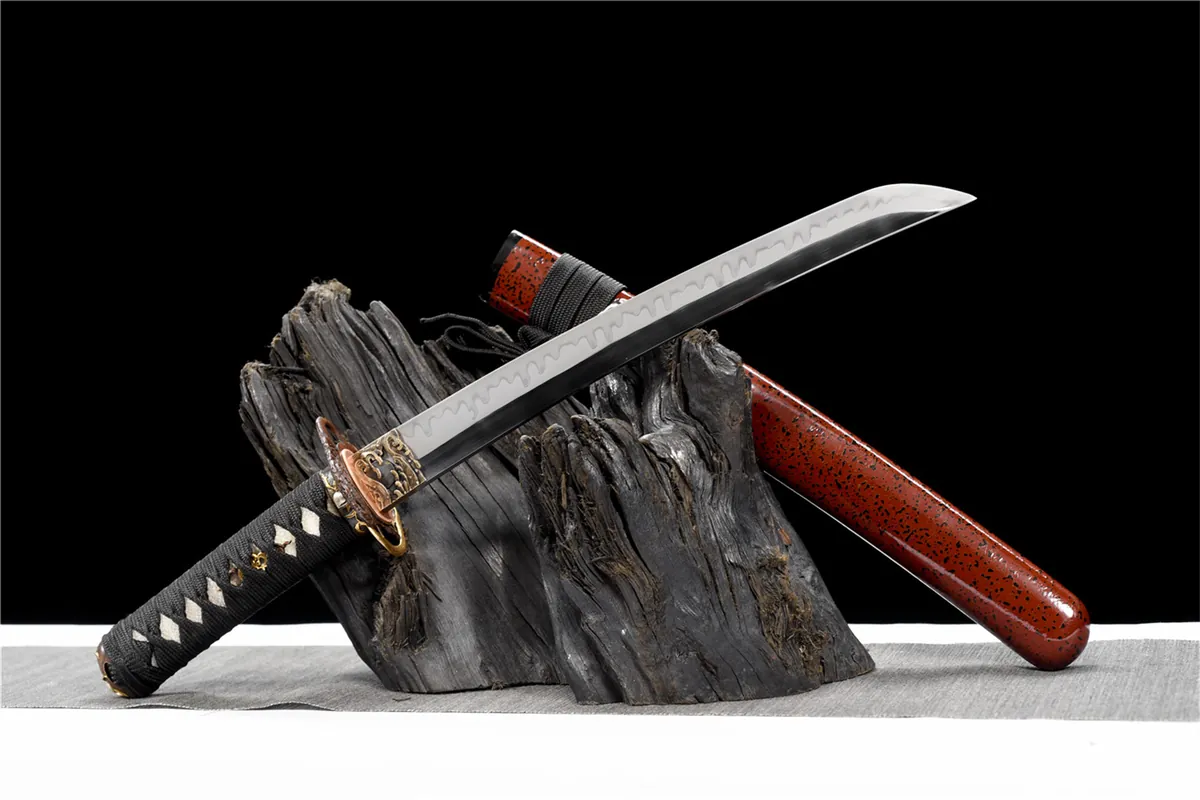
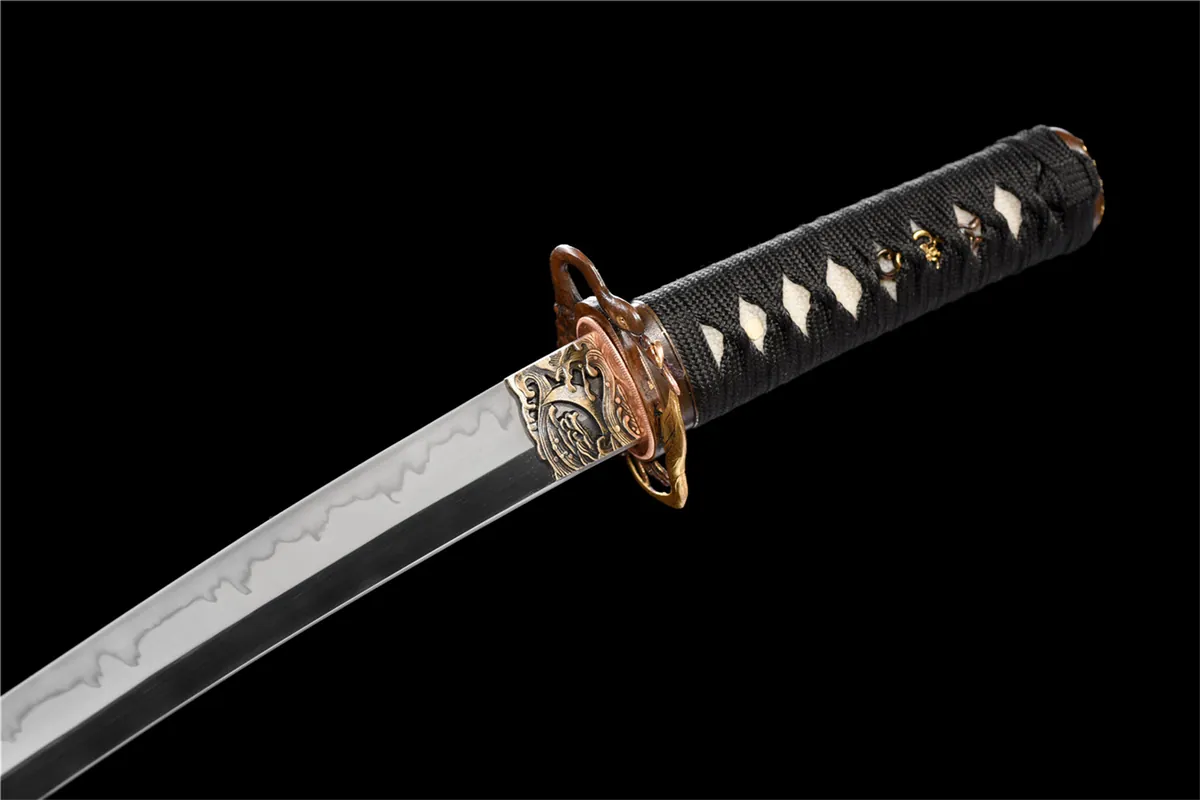
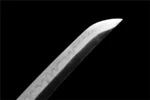
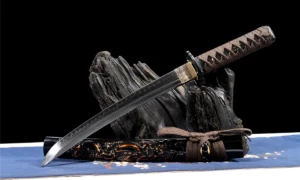
The blade is forged in T10 steel, a high-carbon steel prized for its exceptional hardness. It follows a hira-zukuri geometry (flat-ground, without a longitudinal ridge), the form most closely associated with the tantō.
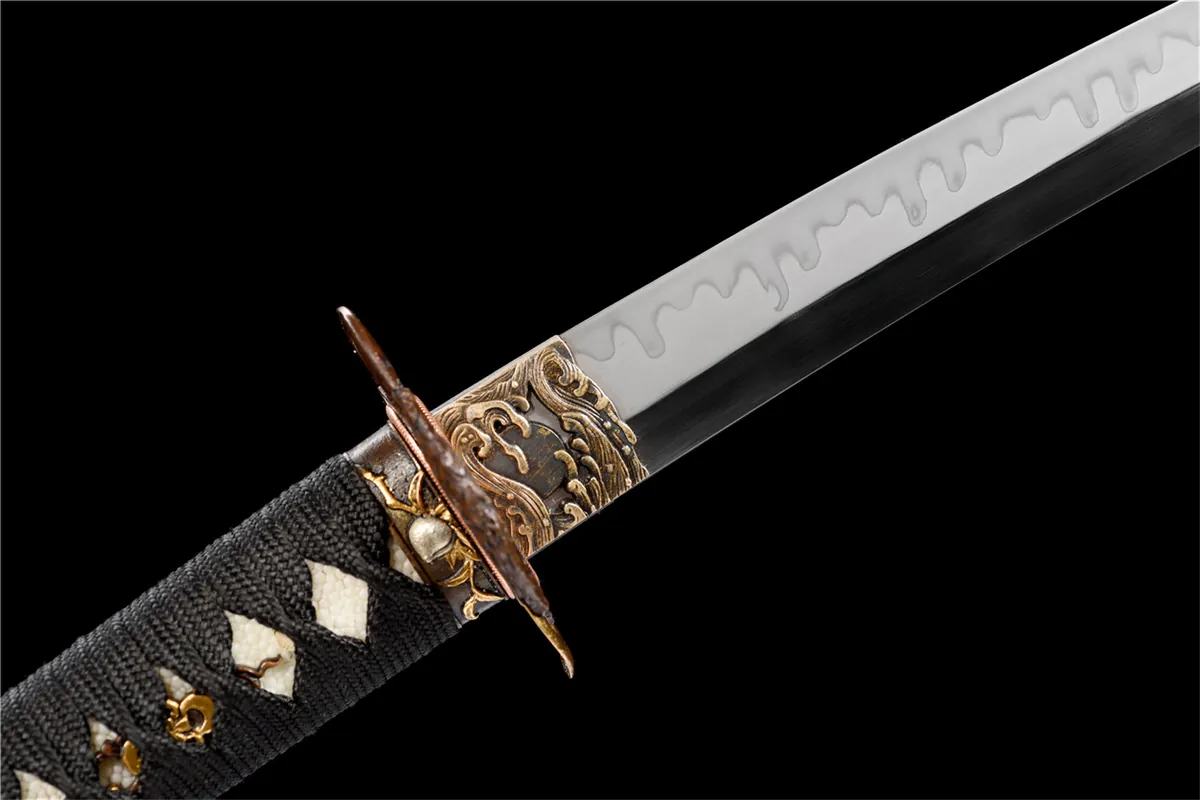
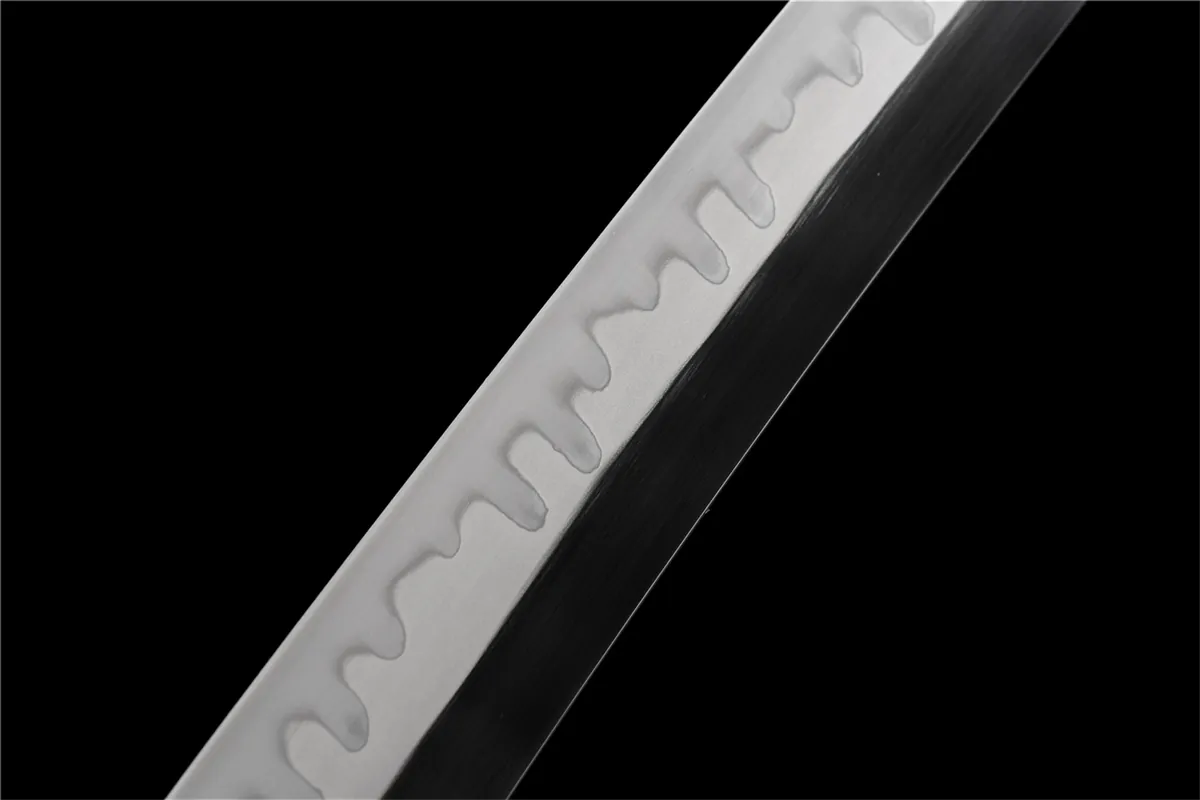
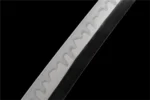
It carries a genuine chōji hamon, achieved through differential clay tempering: its undulating line evokes the rounded buds of the clove tree in a series of soft scallops. Against the mirror-polished steel, the milky-white edge and temper line stand in sharp relief. There is no bo-hi. Hand-sharpened to a fine cutting edge, the blade bears the hallmarks of considered craft at every level.
A buke-zukuri mounting in the form of a crane
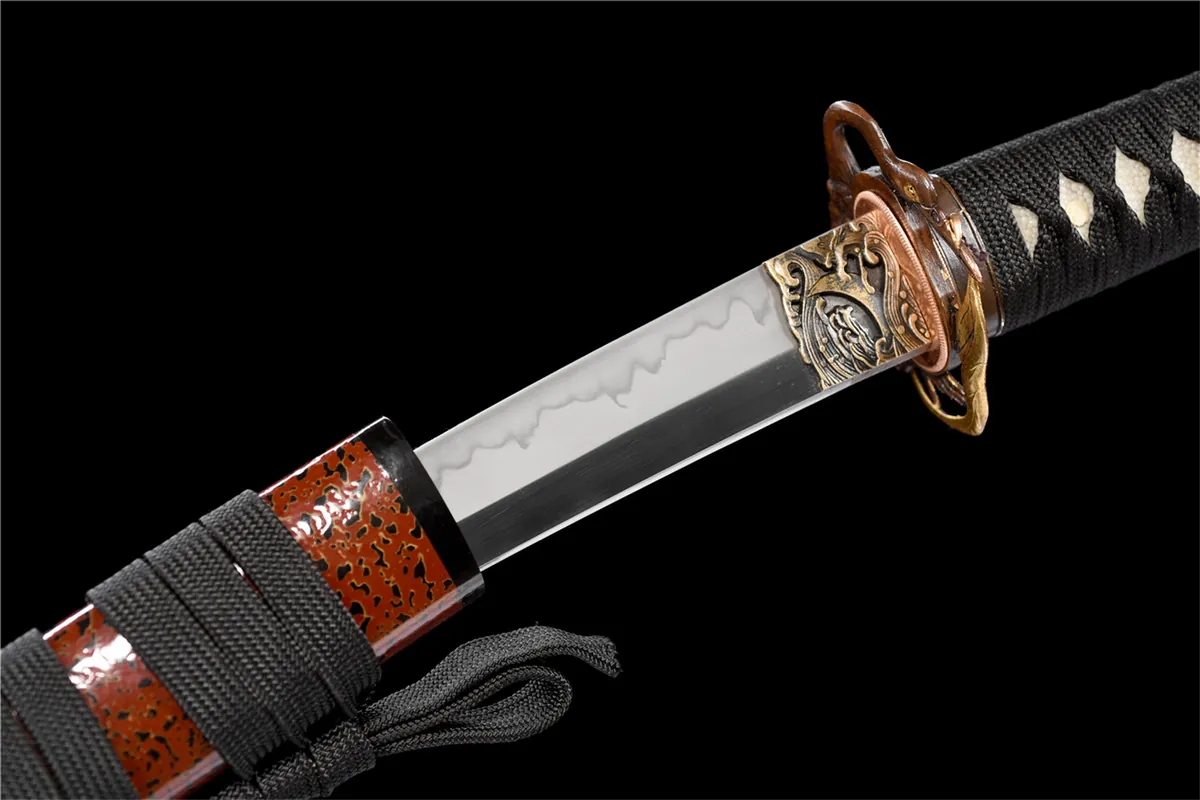
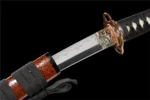
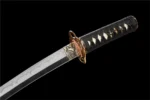
The kawari-gata tsuba, shaped as a crane, is crafted in gold-plated patinated brown copper. The feathers are sculpted in high relief (takabori), enriched with gold and silver highlights (iroe), and pierced with openwork (sukashi) between the wing and the neck. Fluted-edge copper seppa frame it on either side.
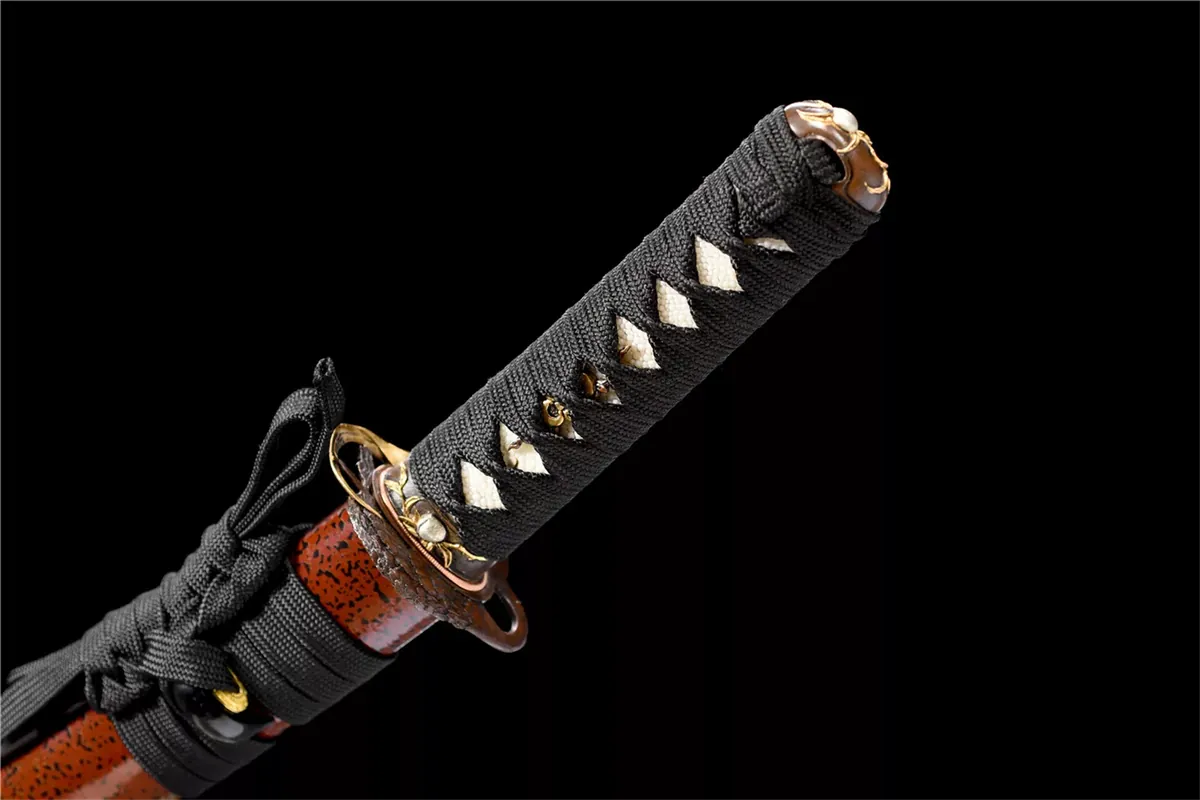
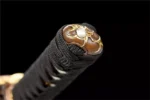
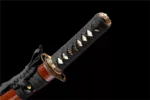
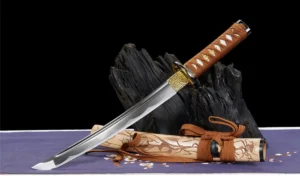
The fuchi and kashira in patinated brown copper each bear a flower in relief, highlighted in gold and silver to match the guard. The handle combines wood with faux white ray skin beneath a black tsuka-ito in hineri-maki braid, fitted with gilded menuki. The ichimai habaki in patinated copper is pierced with openwork and decorated with waves in relief.
An orange-red saya flecked with black
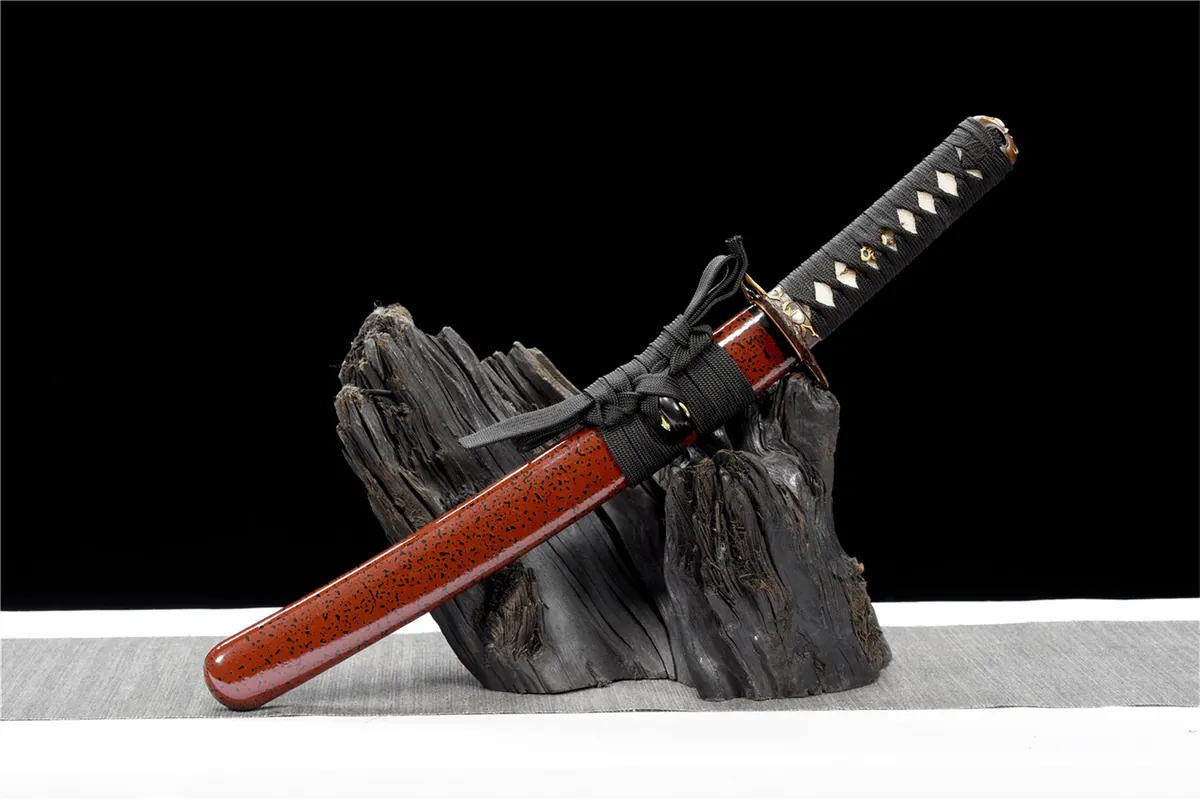
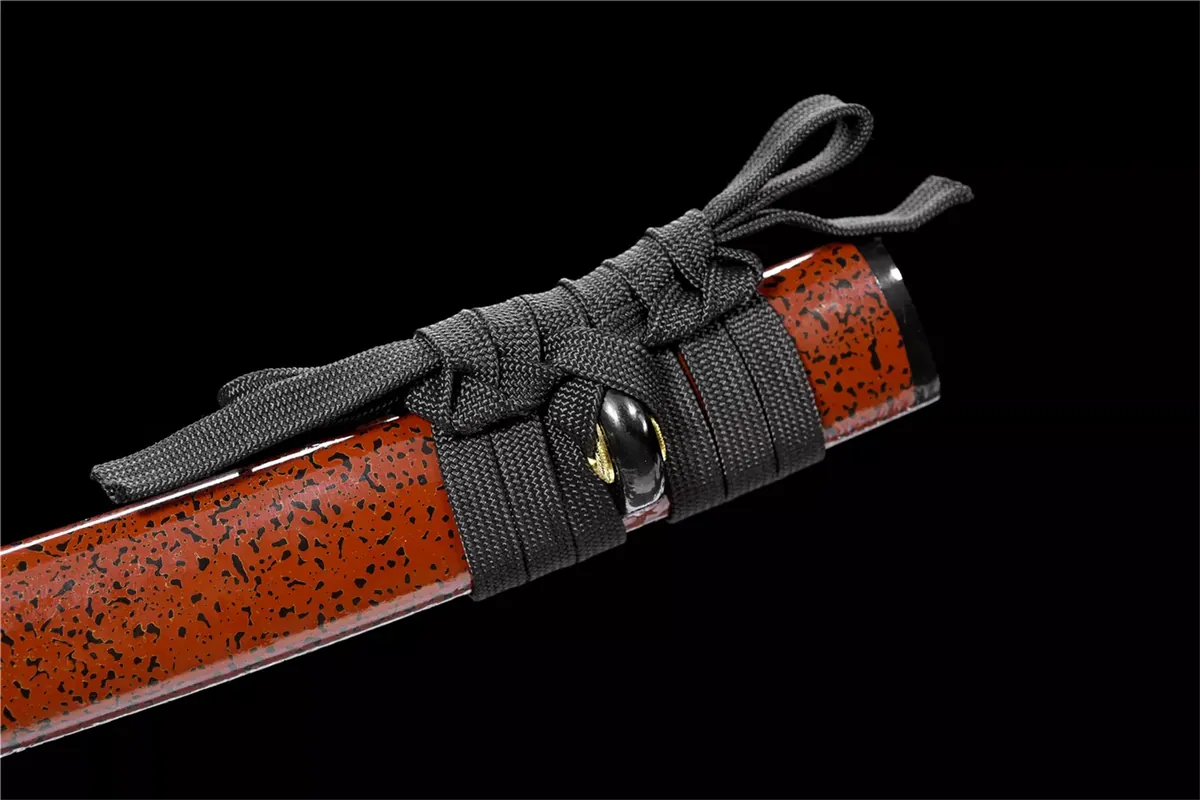
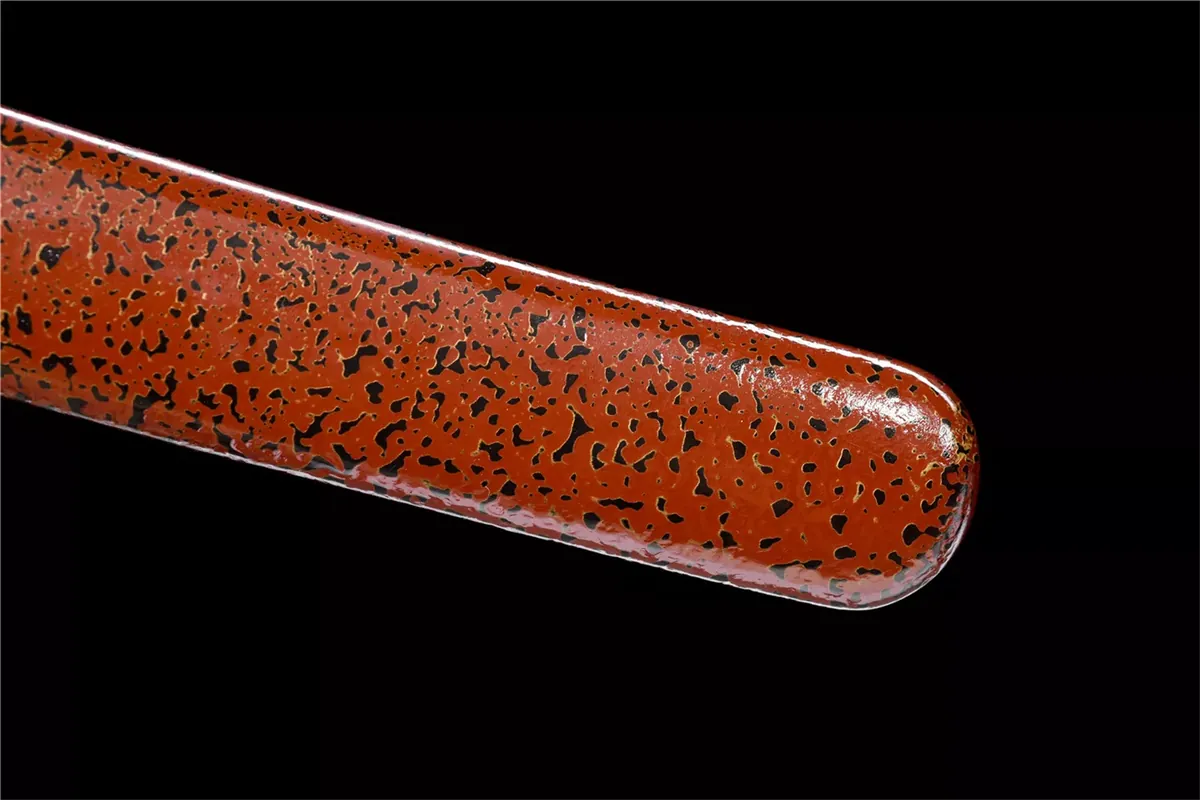
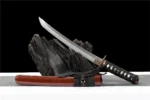
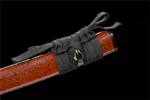
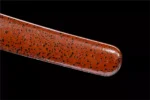
The saya is crafted in hardwood and finished with a kawari-nuri lacquer in orange-red flecked with black, polished to a bright sheen. The koiguchi is rendered in polished black, and the rounded kojiri continues the flecked red lacquer to the tip. The black kurikata with a gilded shitodome carries a black cotton sageo.
Dimensions and handling
With a blade of 33 cm and an overall length of 55 cm, Tsuru is a tanto of generous proportions. Its 17 cm handle sits firmly in a single hand, and at 0.8 kg the piece carries a satisfying presence. In its saya it measures 57 cm, a format that allows the sculpted guard to command any display stand it graces.
Reviews
There are no reviews yet