
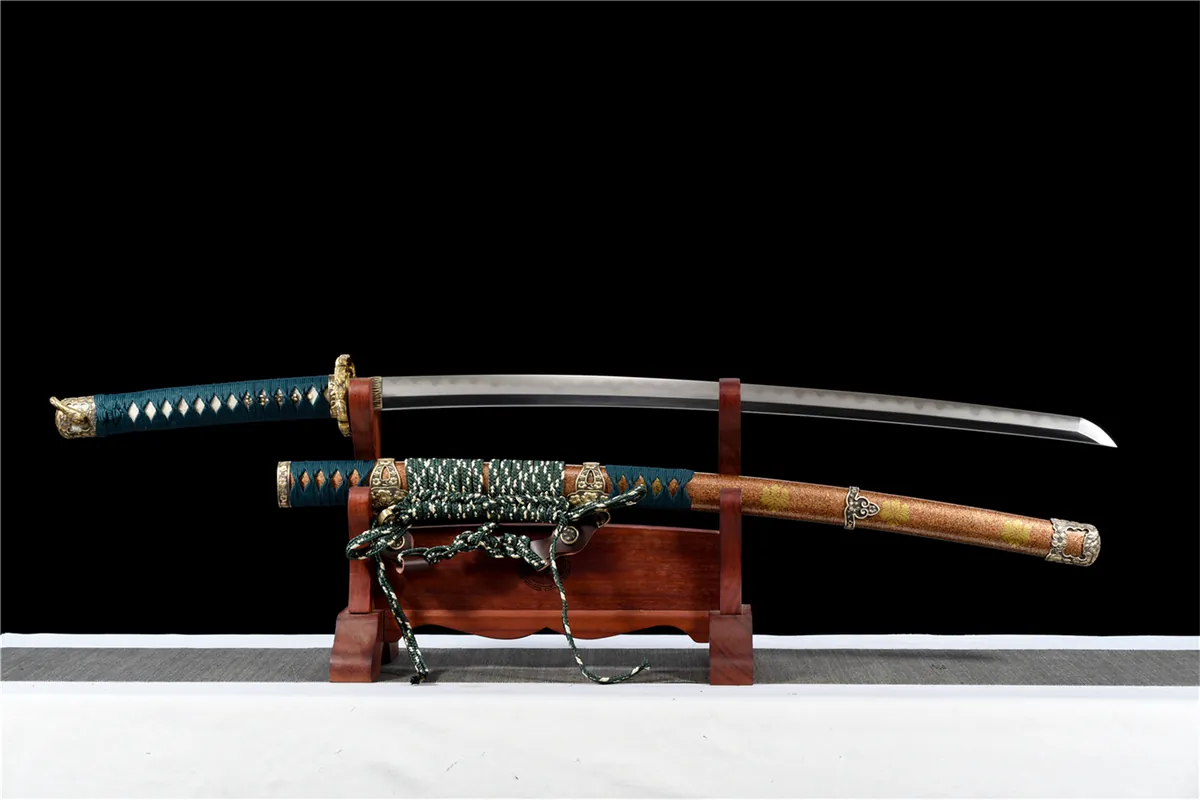
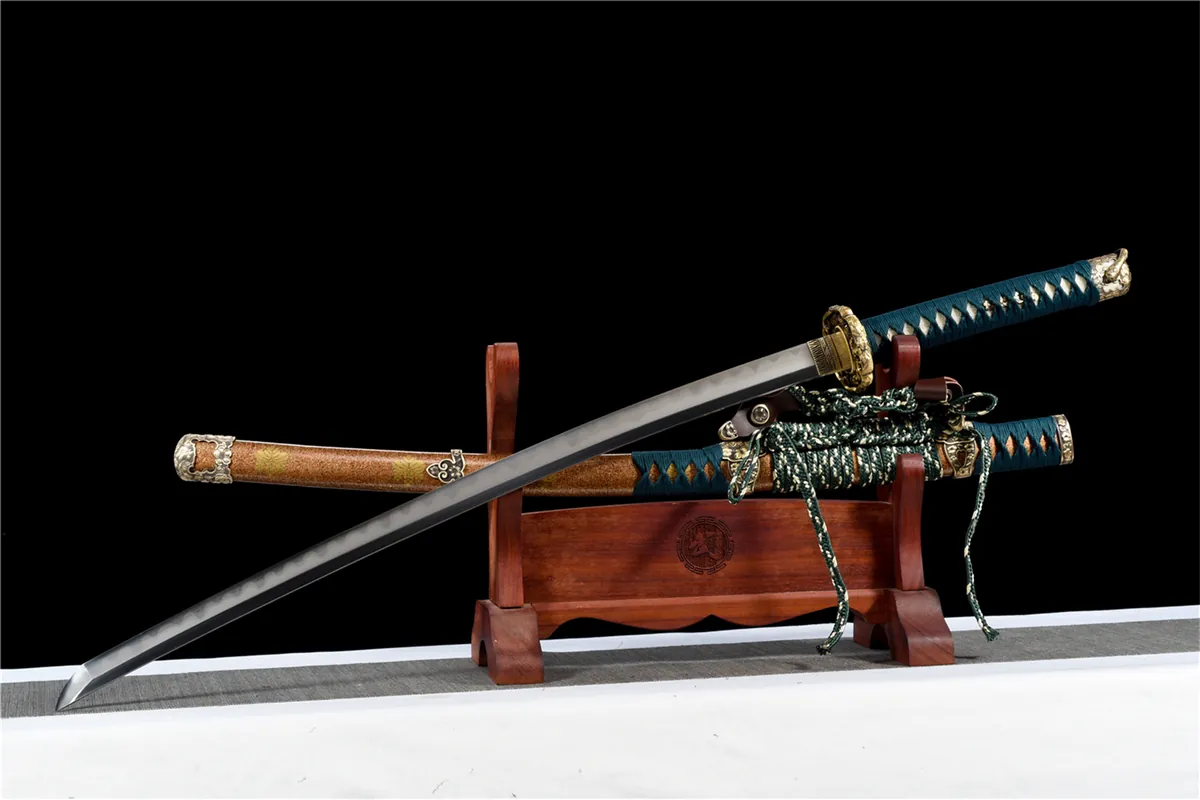
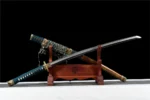
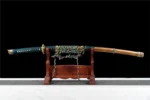


Kinka no Tachi (金花の太刀): the Golden Flower Tachi
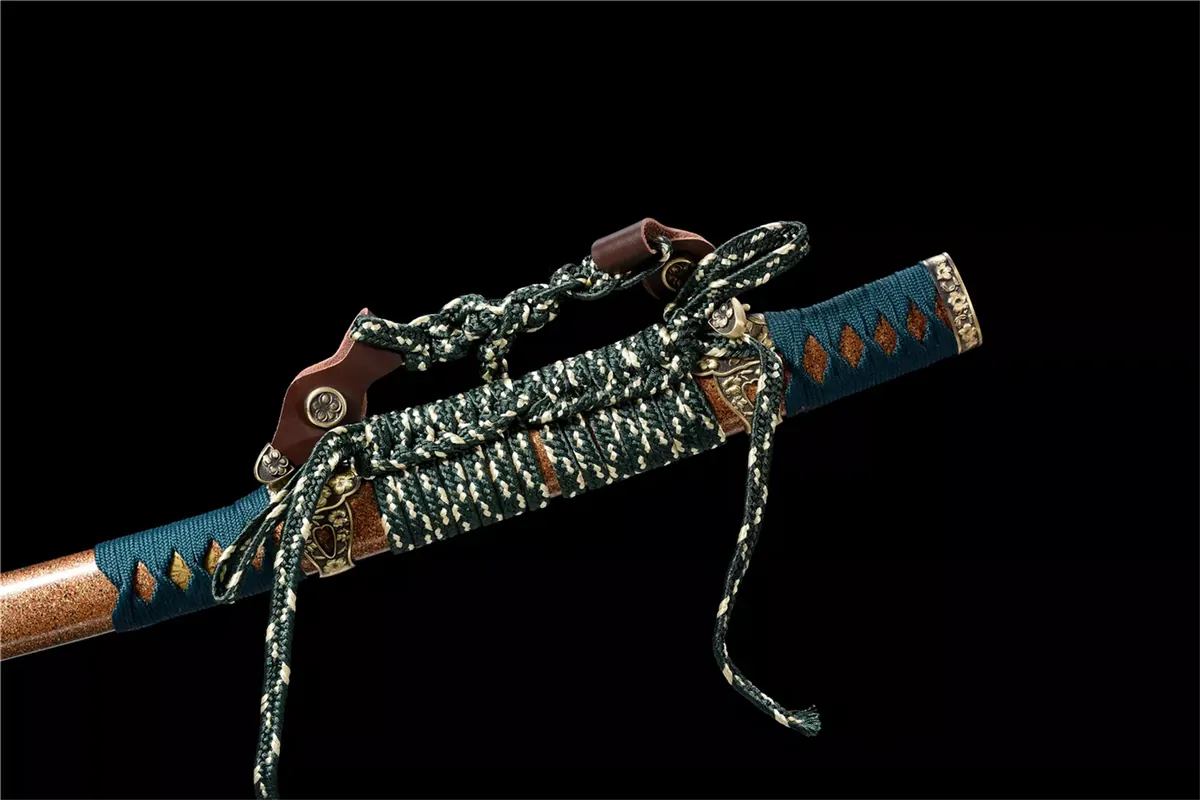
The tachi is the forerunner of the katana, a long sabre worn suspended at the hip by two fittings, blade edge facing downward. The most richly appointed tachi mountings, such as the itomaki no tachi, were reserved for ceremonial use and shrine offerings.
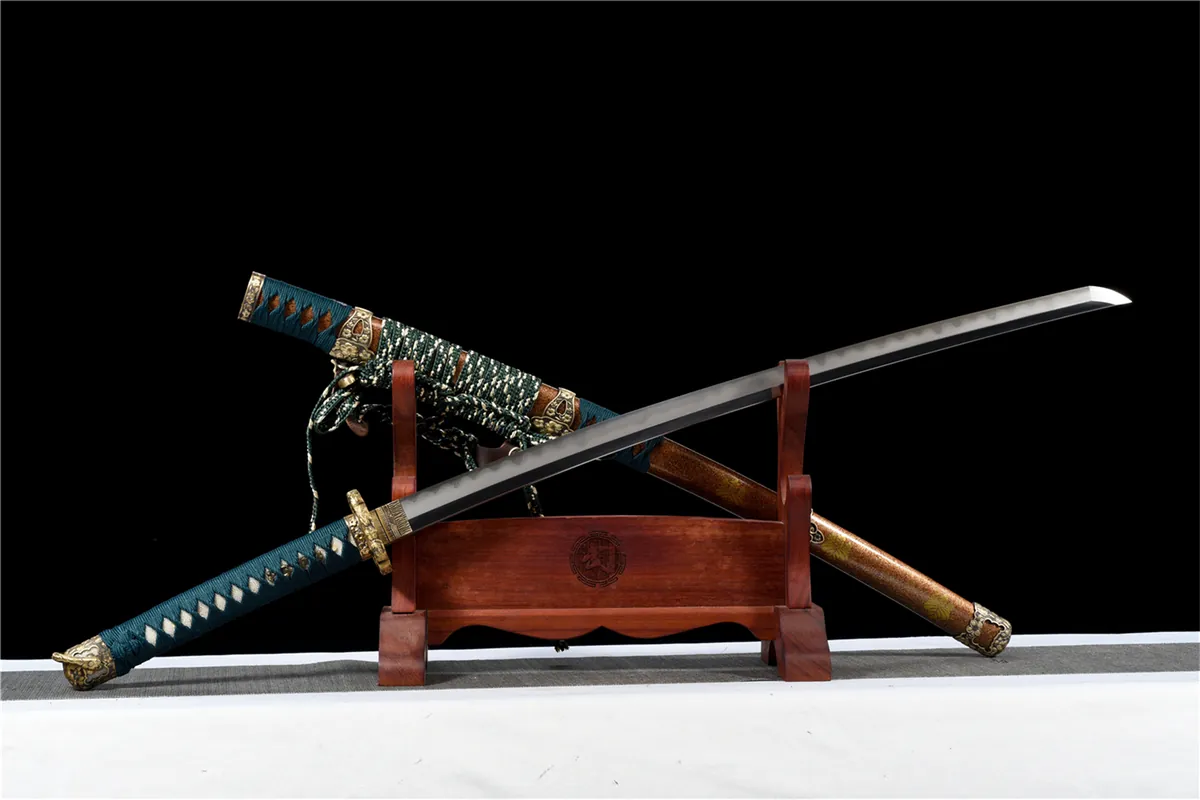
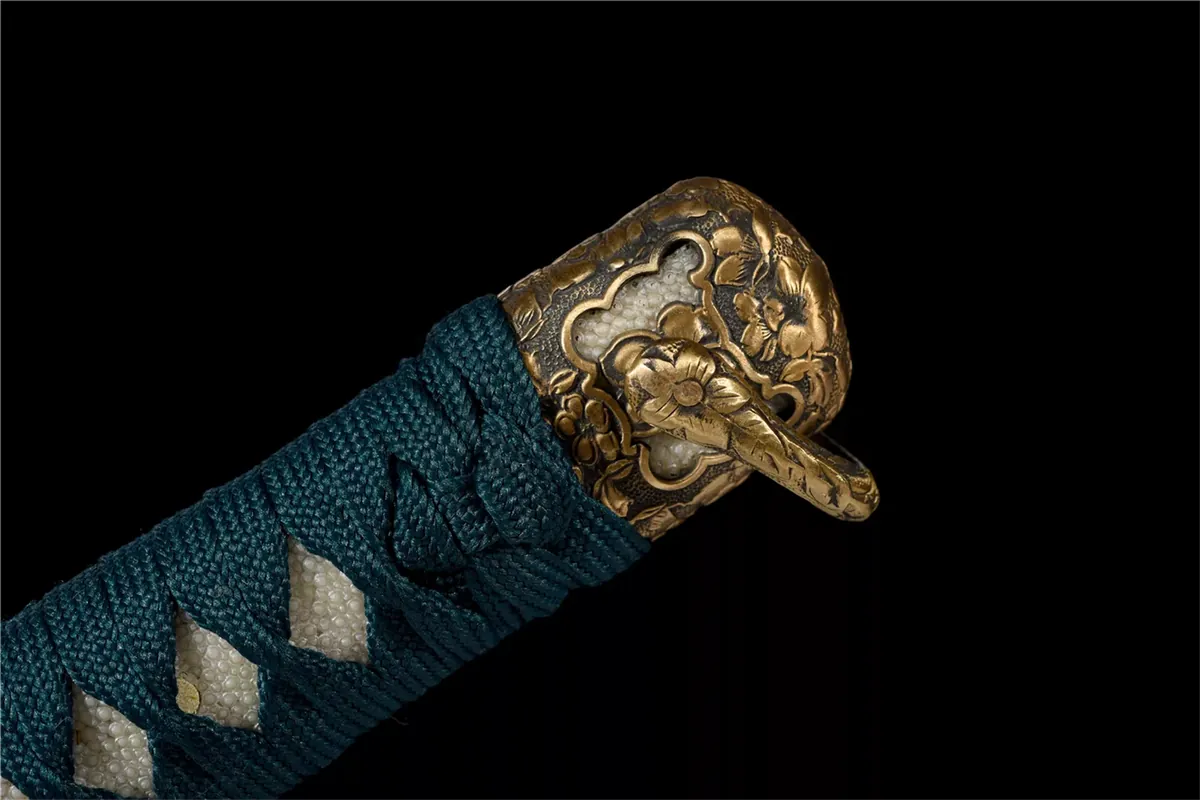
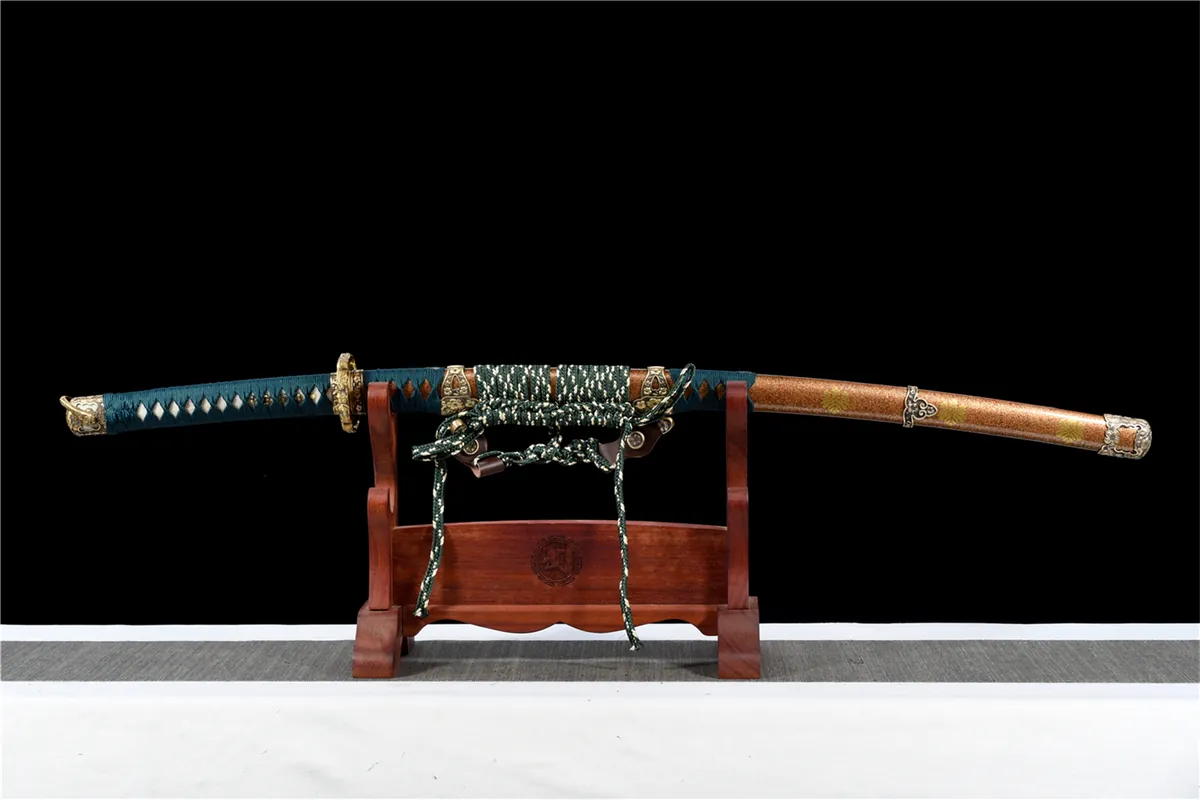
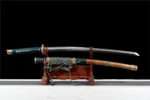
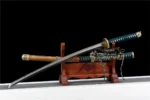
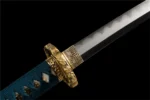
This katana draws on that tradition of formal splendour: its gilt mounting is covered in chiselled flowers (kinka, the golden blooms), from the guard to the pommel, and its scabbard hangs by two gilt-copper ashi.
A damascus steel blade with a true gunome hamon
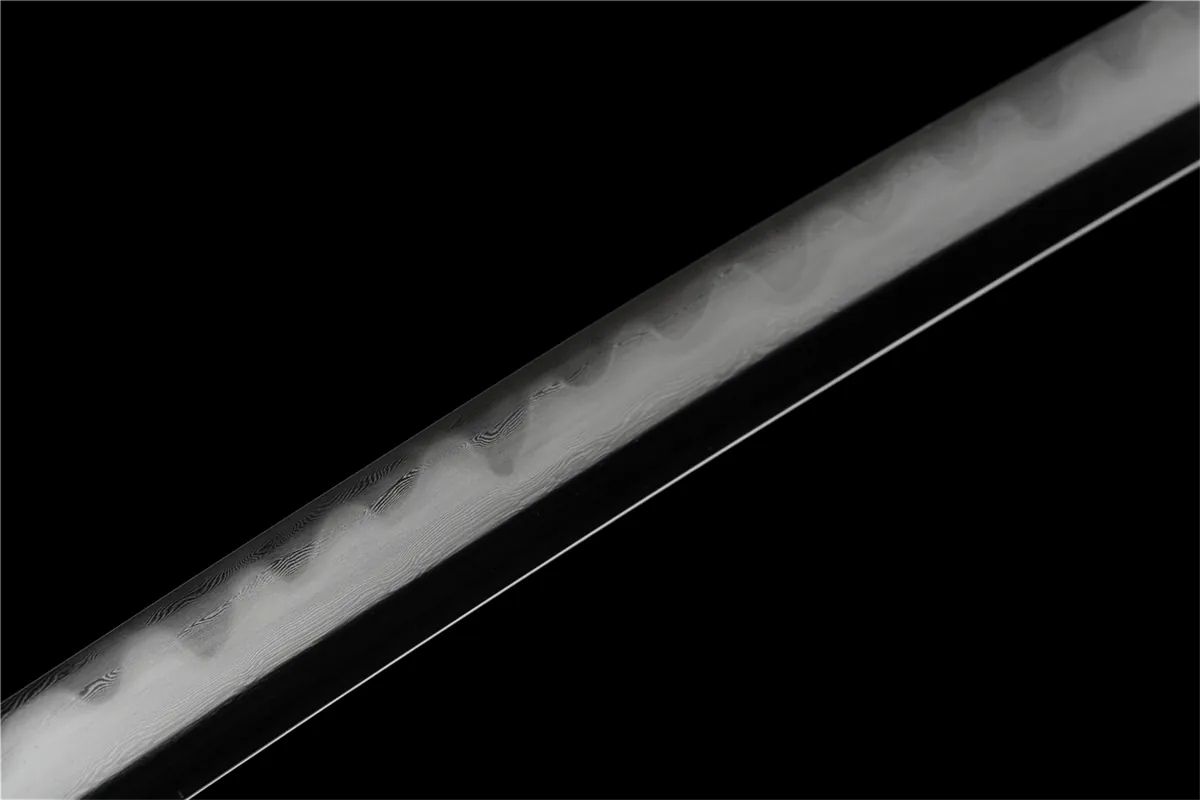
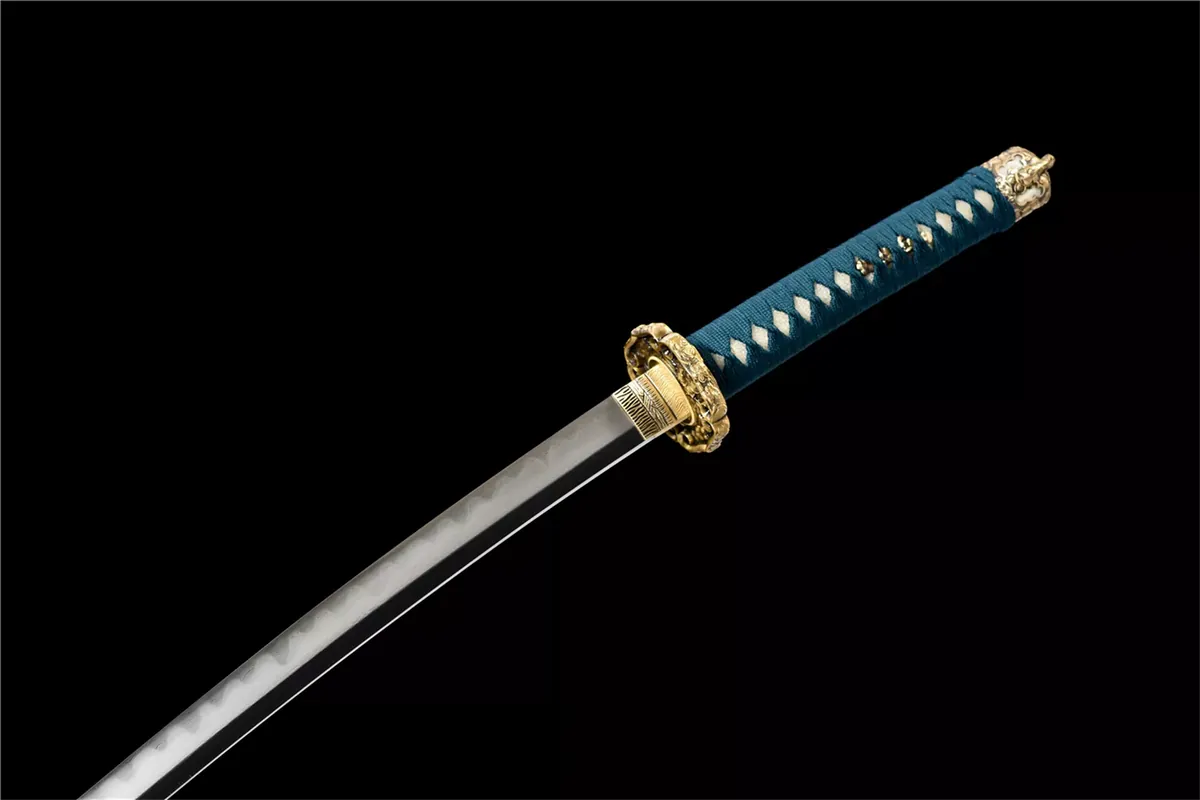
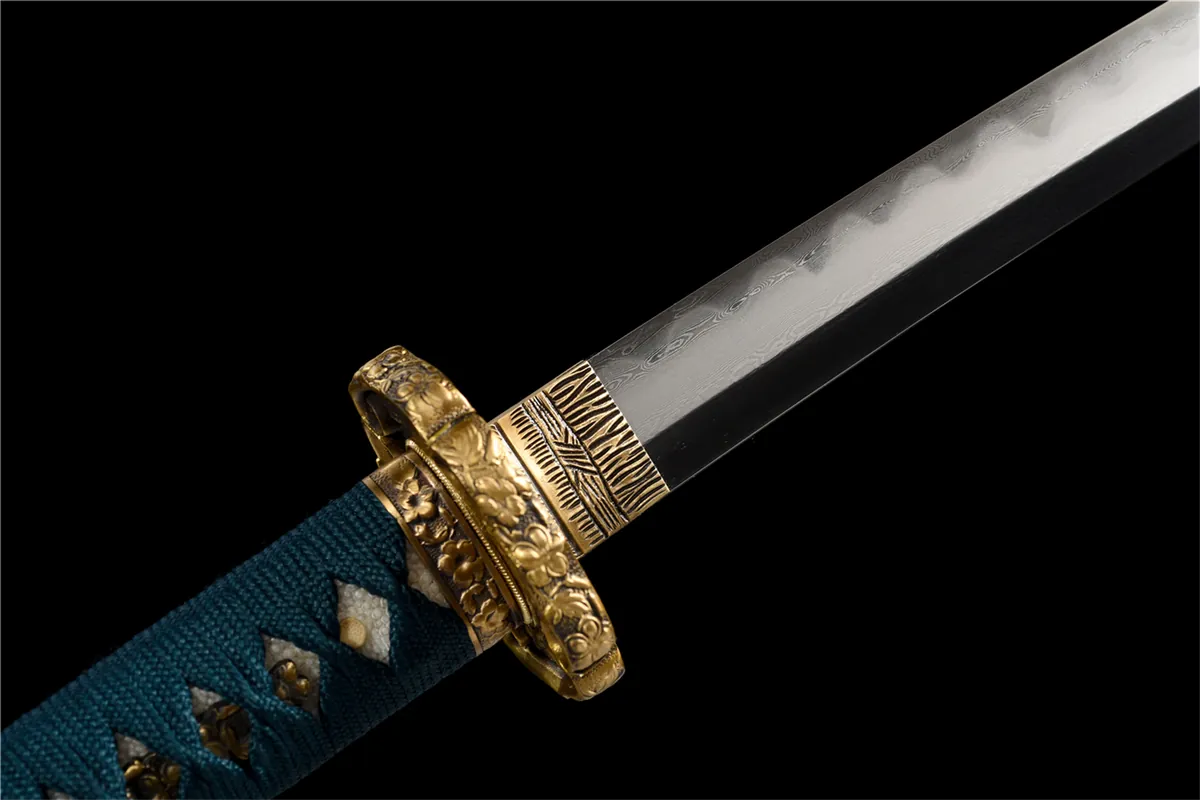
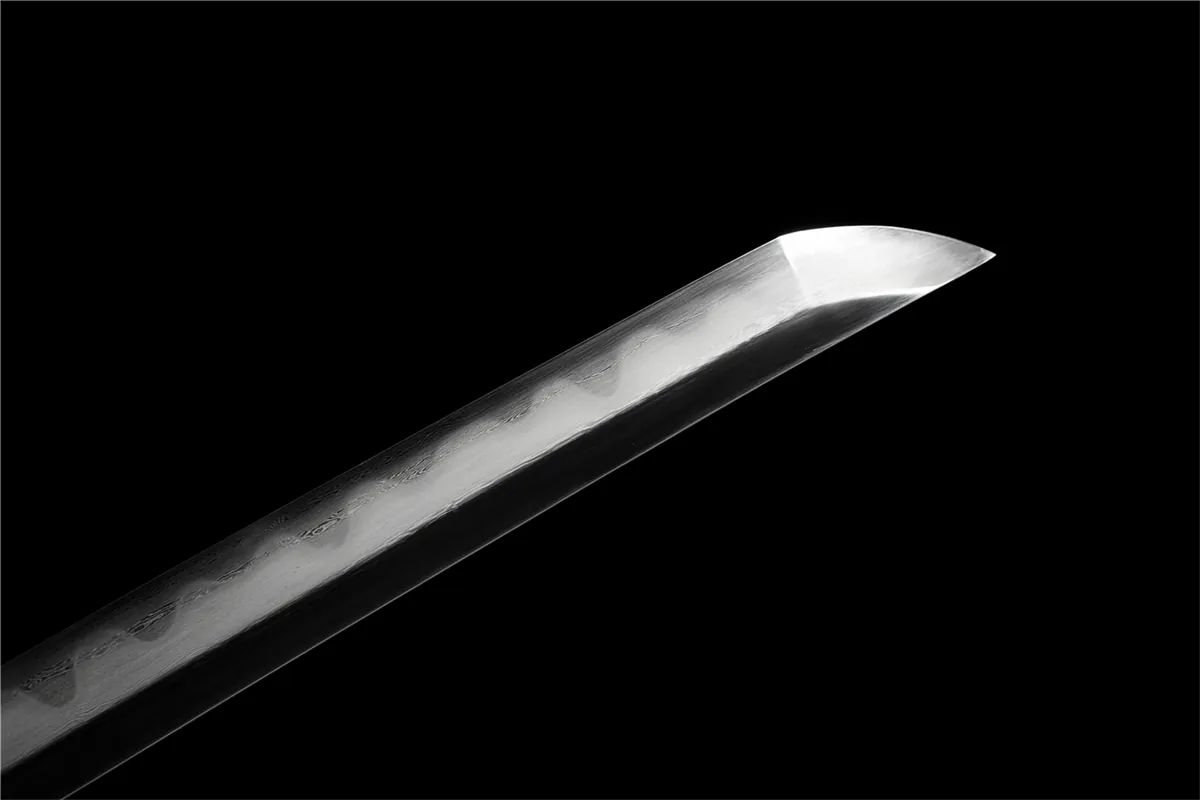
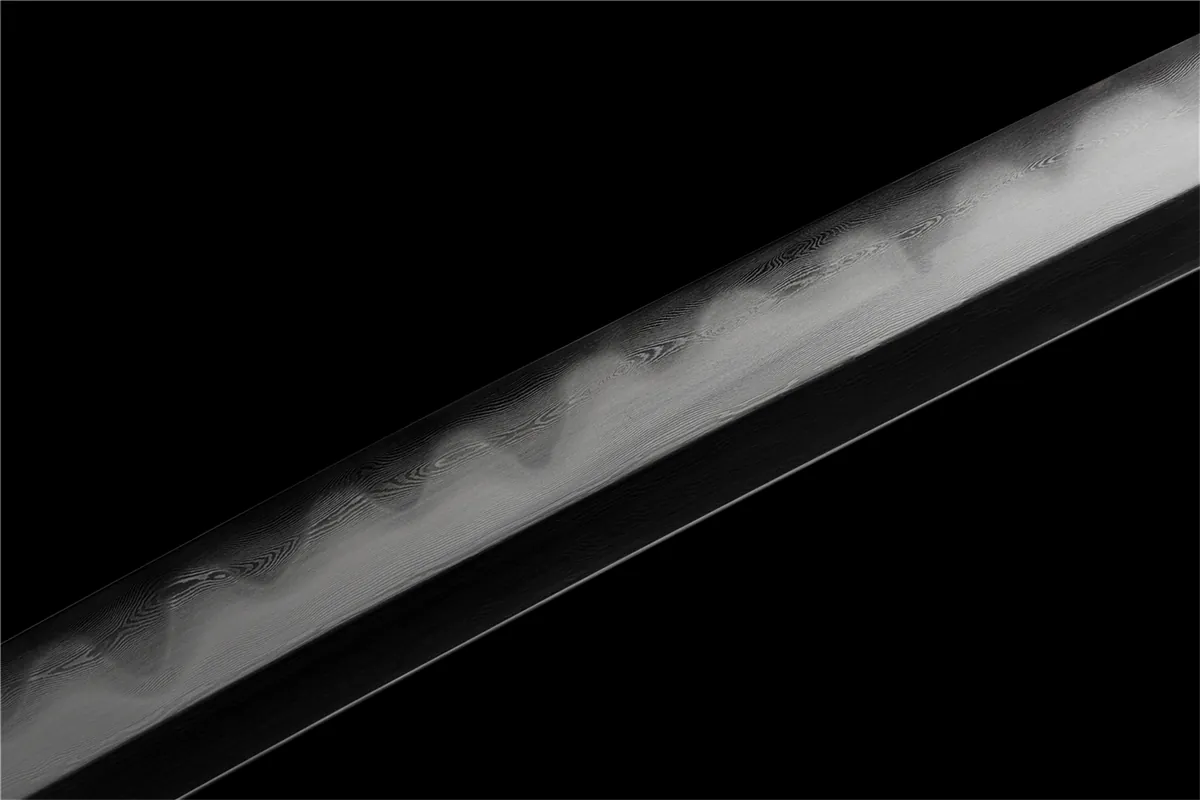
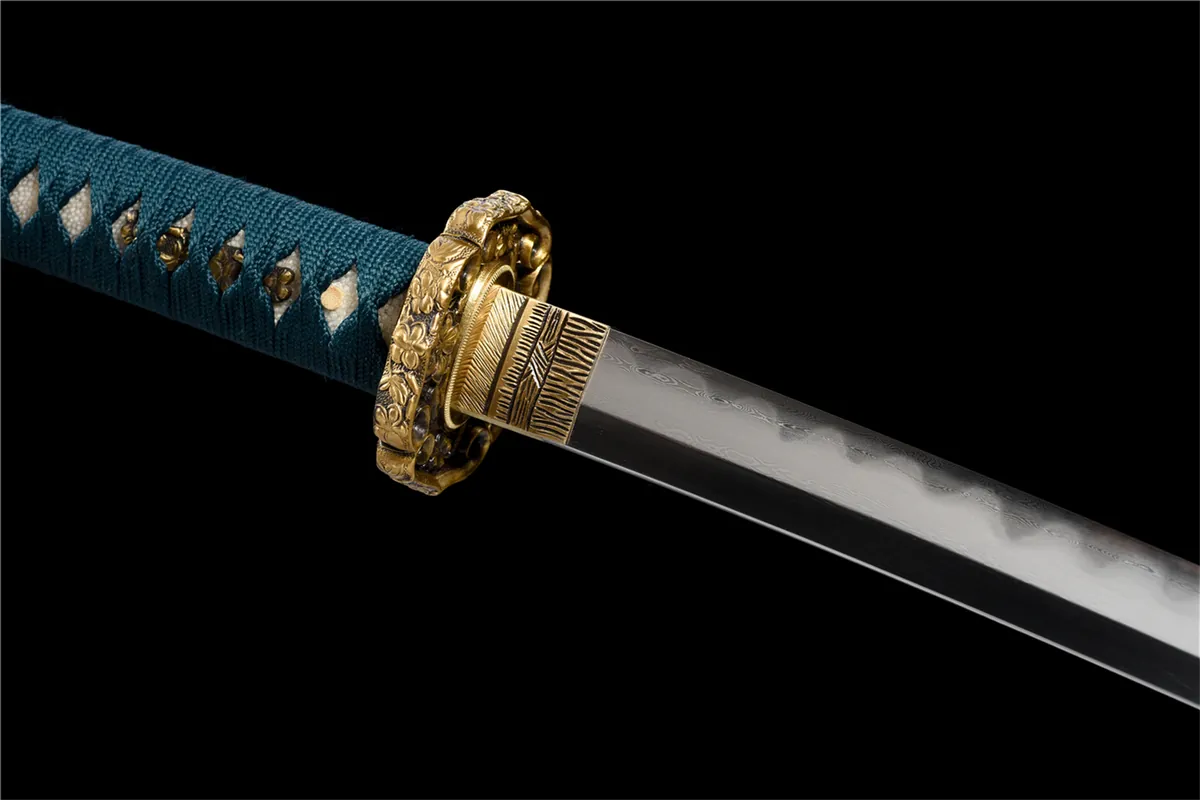
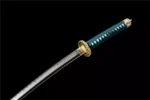
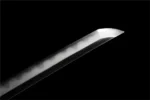
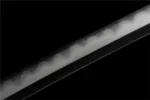
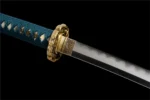
The blade is forged in damascus steel, achieved by layering and folding multiple sheets of steel. The light-and-dark grey damascus pattern, with its satin polish, is visible across the full length of the blade.
It has been clay-tempered, bringing forth a true gunome hamon. The geometry follows a shinogi-zukuri profile with a chū-kissaki tip and a torii-zori curvature, without a fuller. Hand-sharpening and hand-polishing complete the finish, a level of artisanal care that brings out the full character of the steel.
An itomaki no tachi mounting in golden flowers
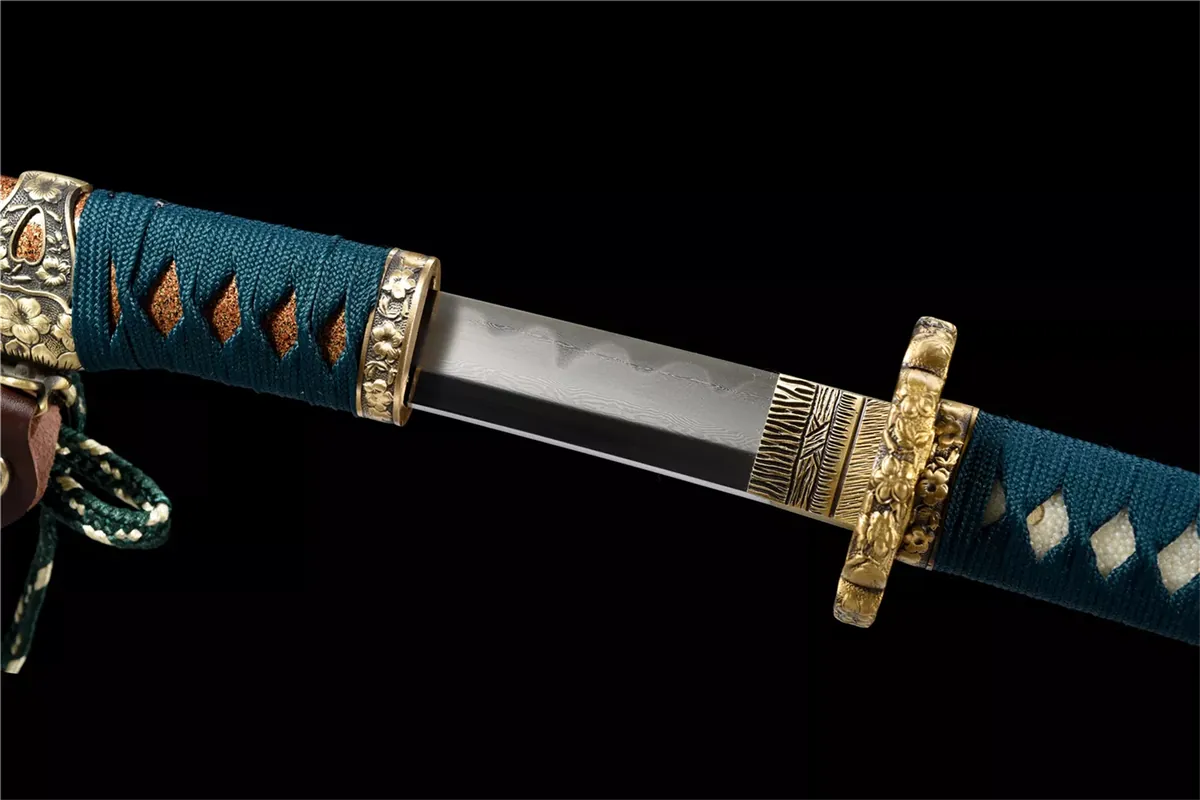
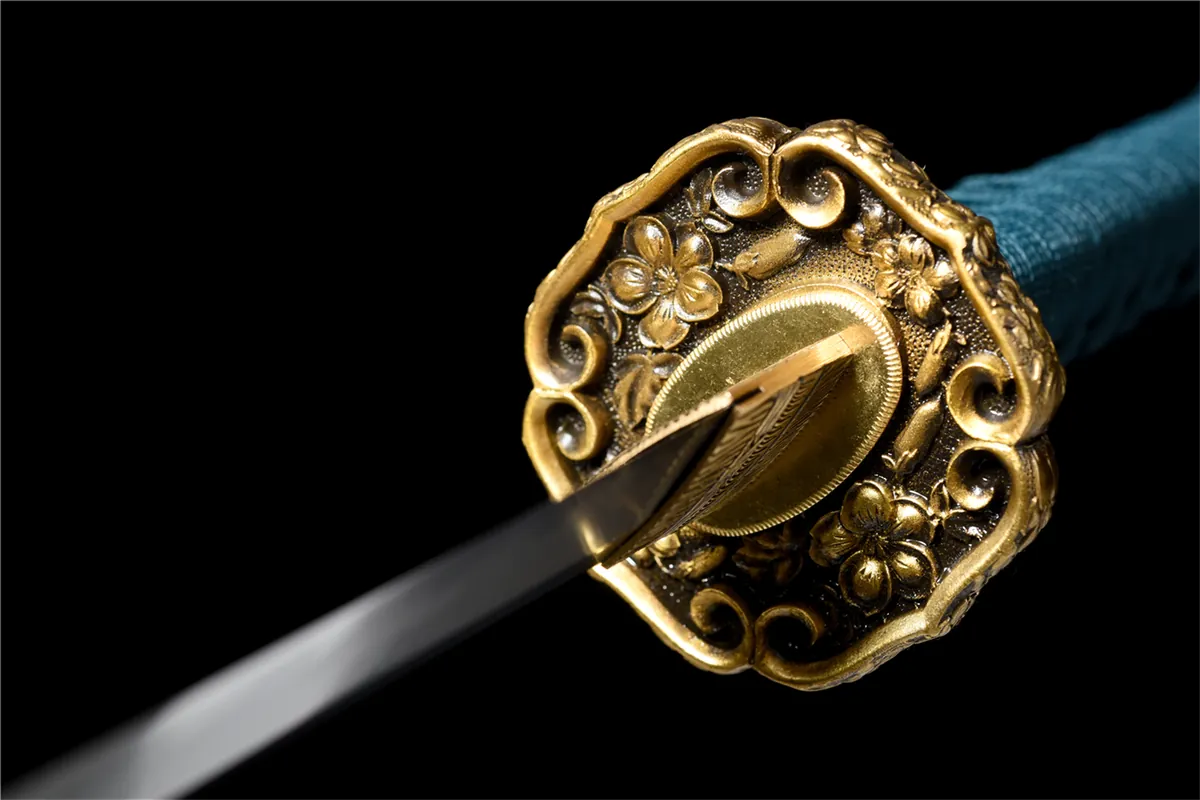
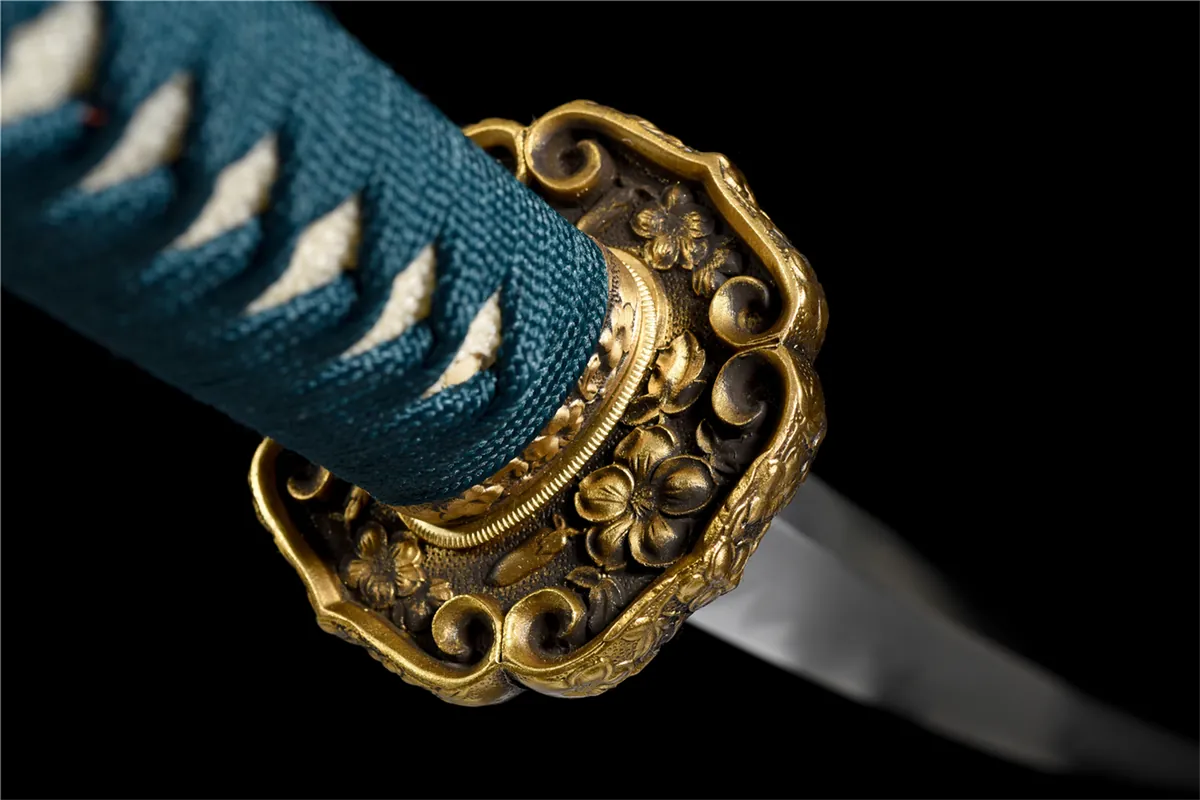
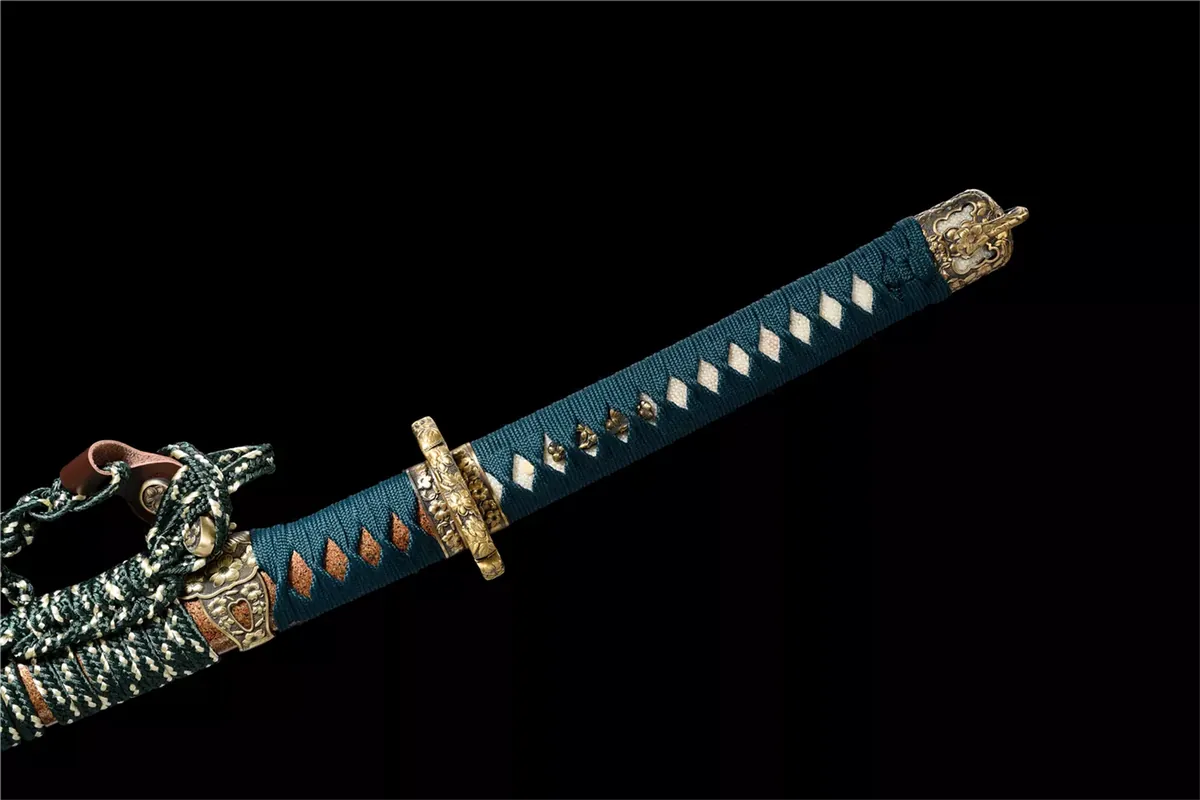
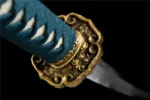
The mokkō-gata tsuba in gilt copper presents a granulated nanako ground adorned with raised flowers (takabori) and karakusa scrollwork, with a rounded maru-mimi rim. Two gilt-brass seppa with fluted edges frame it on either side.
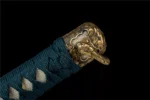
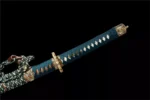
The gilt-copper fuchi is chiselled with flowers against a nanako ground, and the pommel is a gilt-copper kabutogane chiselled with blossoms and fitted with a sarute ring. The grip is wrapped in genuine white ray skin over wood, beneath a teal tsuka-ito in hineri-maki, with gilt menuki. The ichimai habaki in gilt brass is engraved with hatching, chevrons and striations.
A nashiji copper-lacquered scabbard, made to be suspended
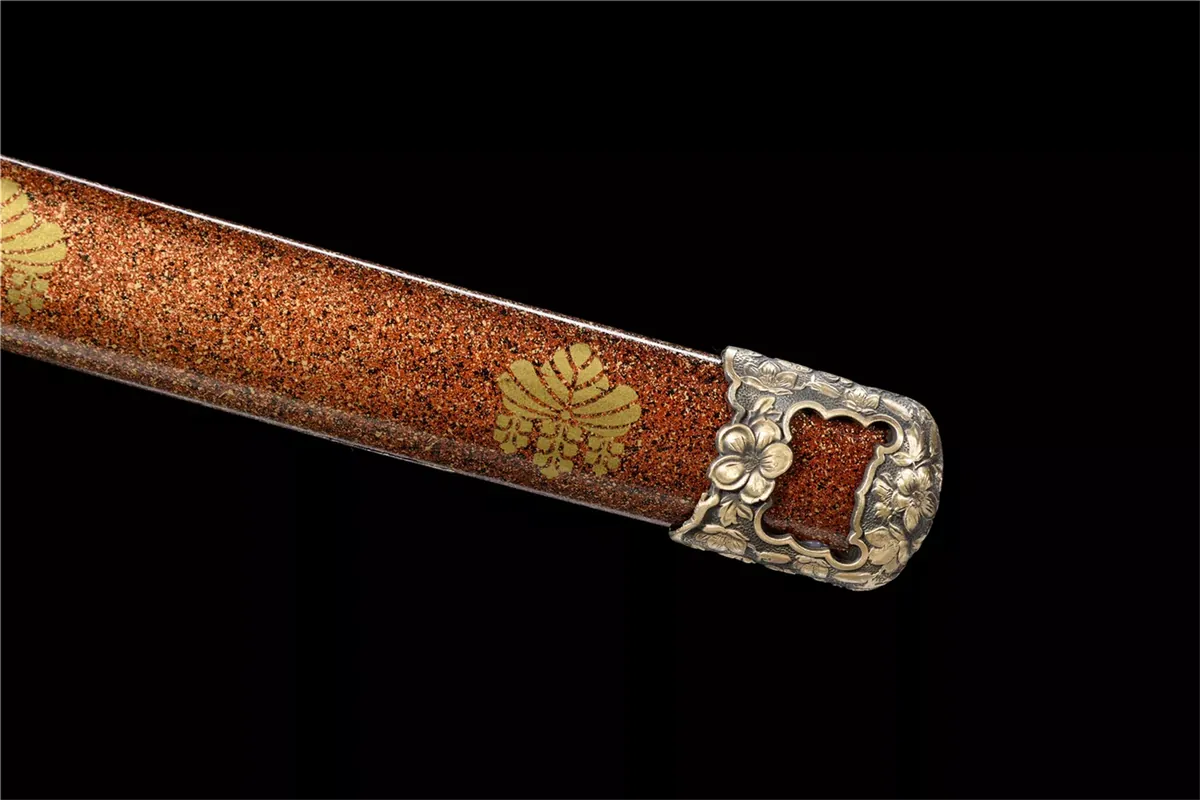
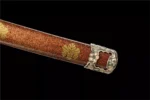
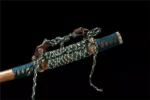
The saya is crafted in solid wood, finished in a copper-brown nashiji lacquer with metallic flecks and decorated with gilt stylised kamon. Its upper section is bound in a teal itomaki, matched to the grip. Two chiselled gilt-copper ashi with brown leather ties allow it to be suspended in the tachi manner, and a dark green and ivory maru-sageo is tied around it. The rounded koiguchi and kojiri are both chiselled with flowers, with pierced decorative surrounds.
Dimensions and handling
With a blade of 71 cm and an overall length of 103 cm, the Kinka no Tachi carries the proportions of a traditional katana. Its 26.5 cm grip allows a secure two-handed hold. At 1.5 kg, it has a commanding, solid presence in the hand. The piece measures 105 cm within its scabbard, and its ashi allow it to be presented suspended, in the manner of a ceremonial tachi.


Reviews
There are no reviews yet