
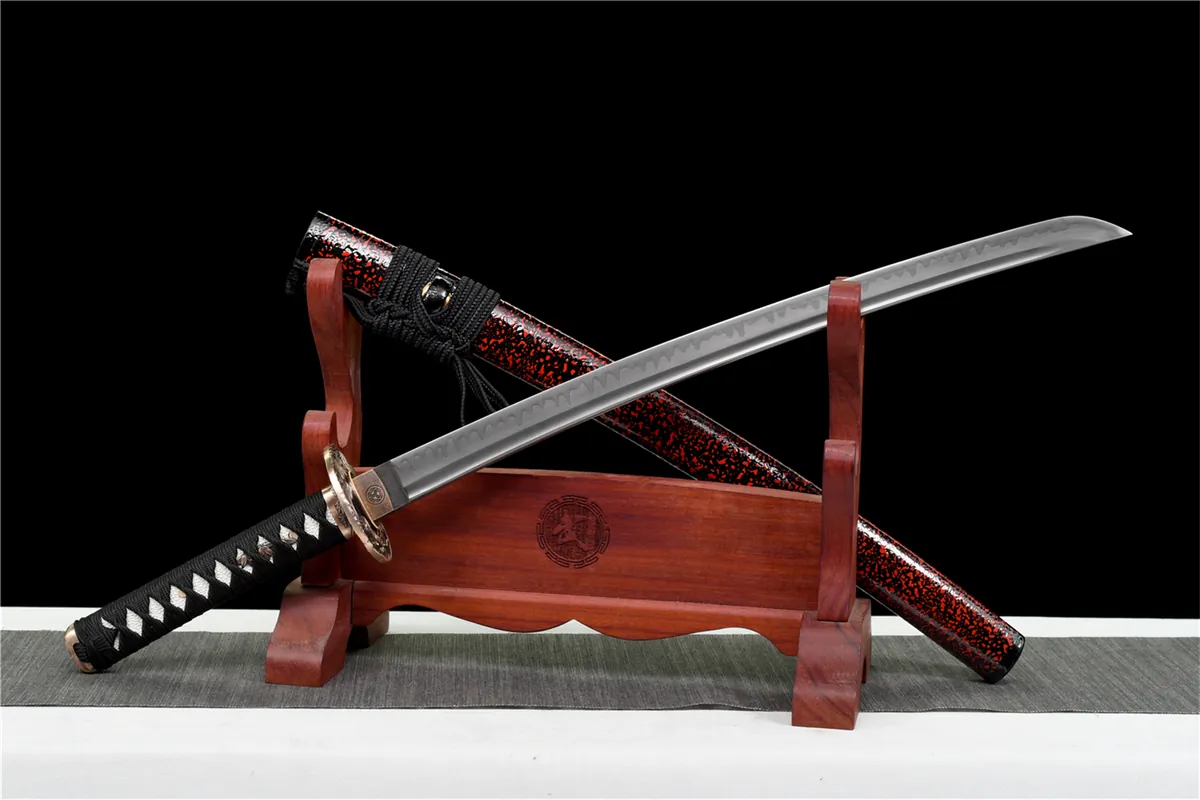
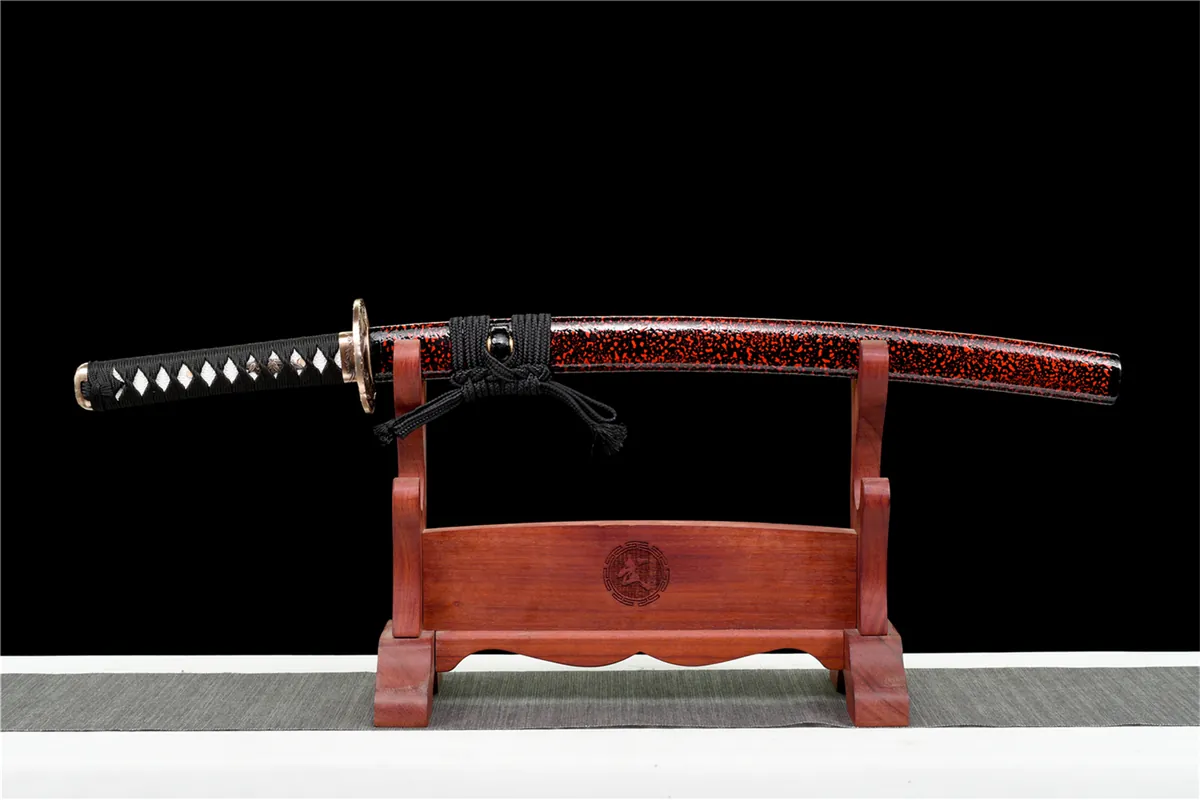
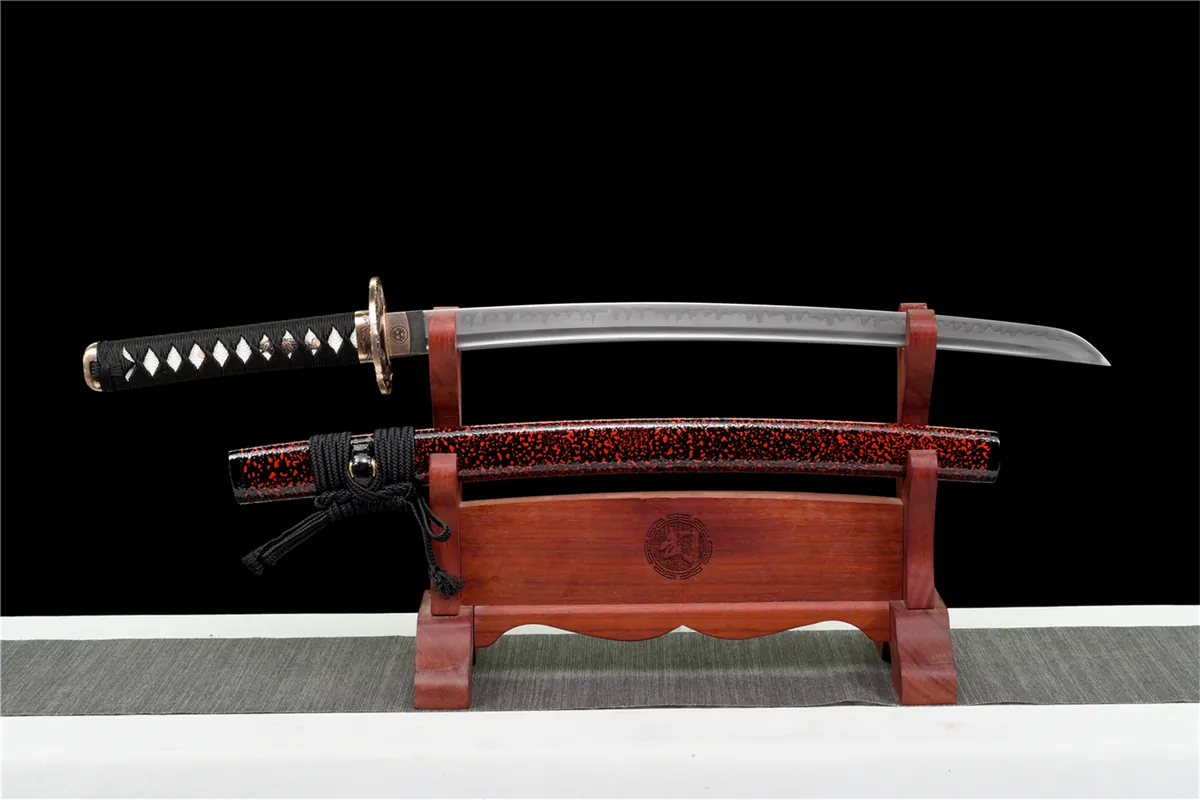


Chikurin no Tora (竹林の虎): the tiger of the bamboo grove
In Japanese art, the tiger and bamboo form a classic pairing. The great cat embodies strength and courage, whilst bamboo (which bends in the wind yet never breaks) symbolises resilience. Together, they evoke a controlled power: ready to strike, yet capable of patience.
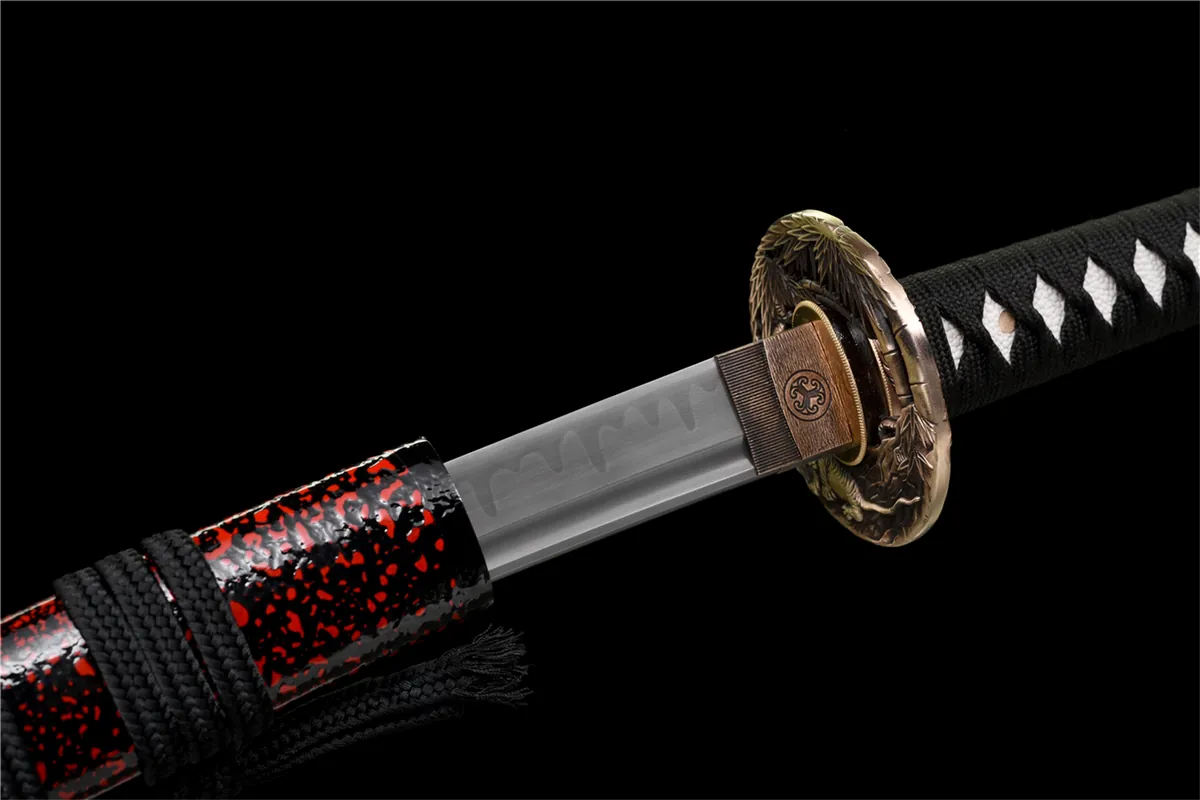
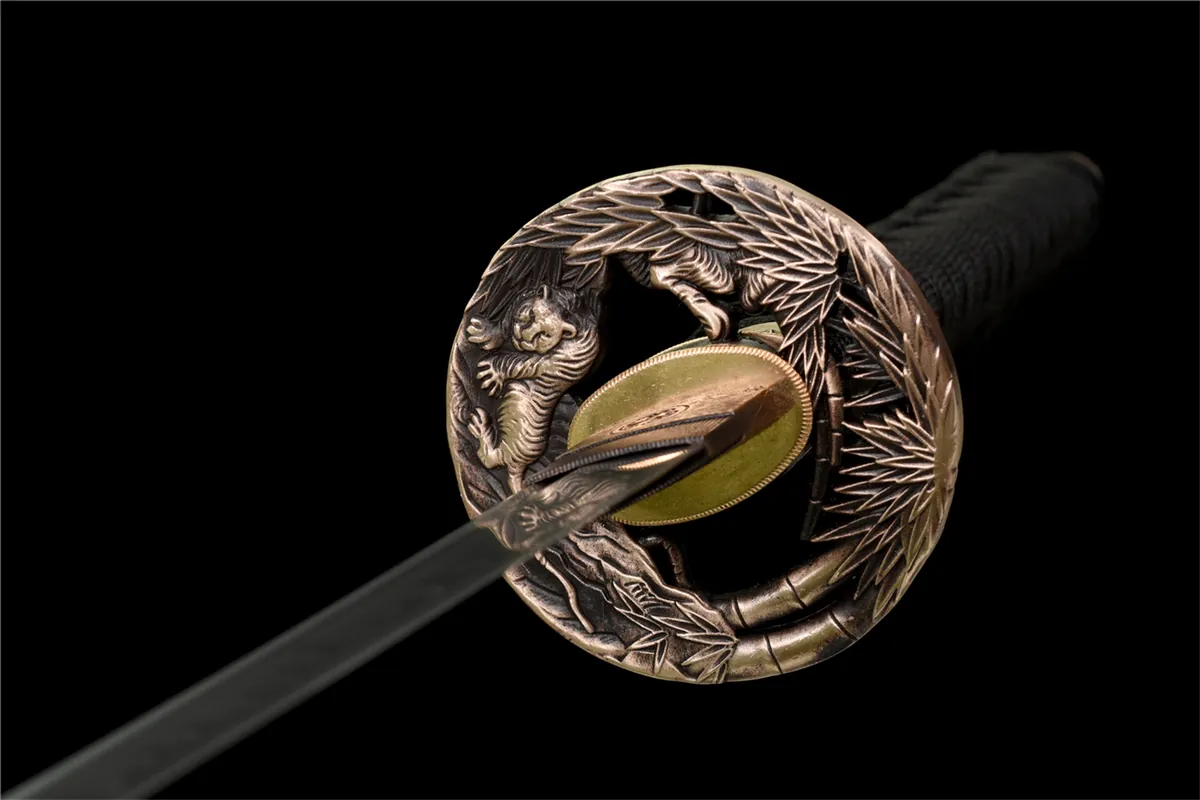
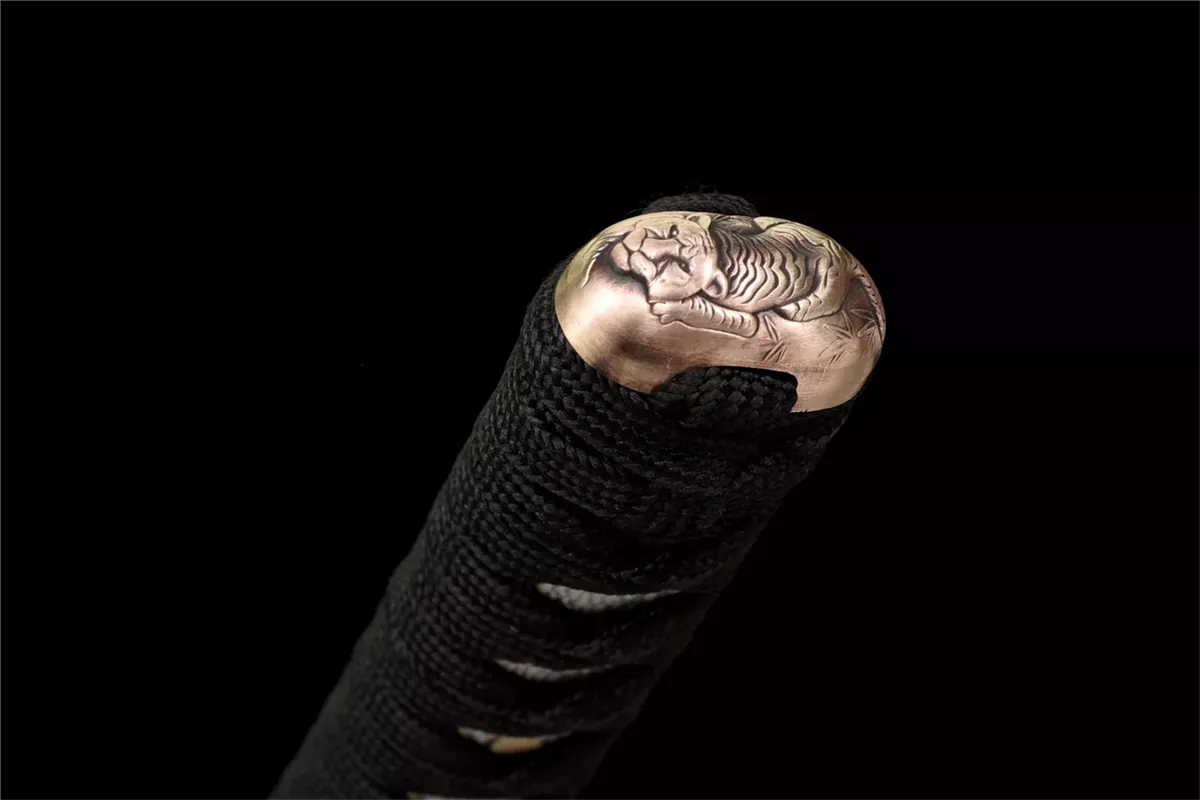
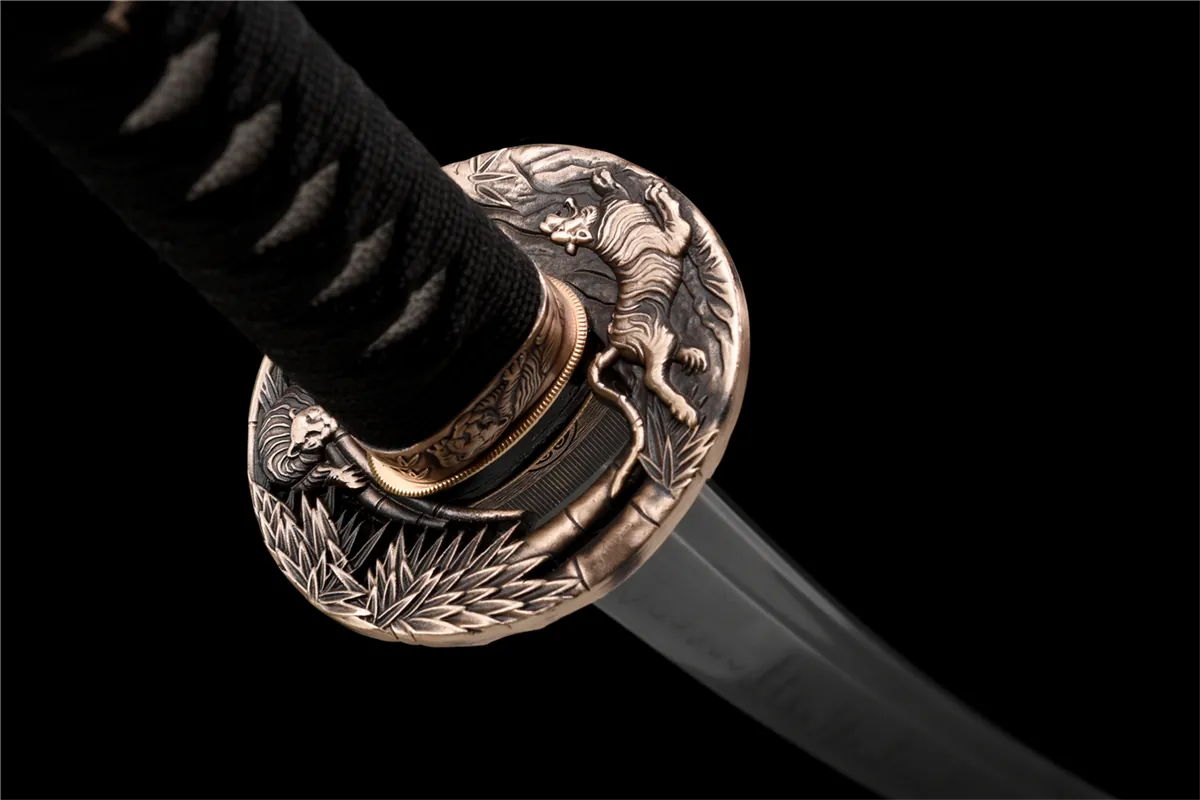
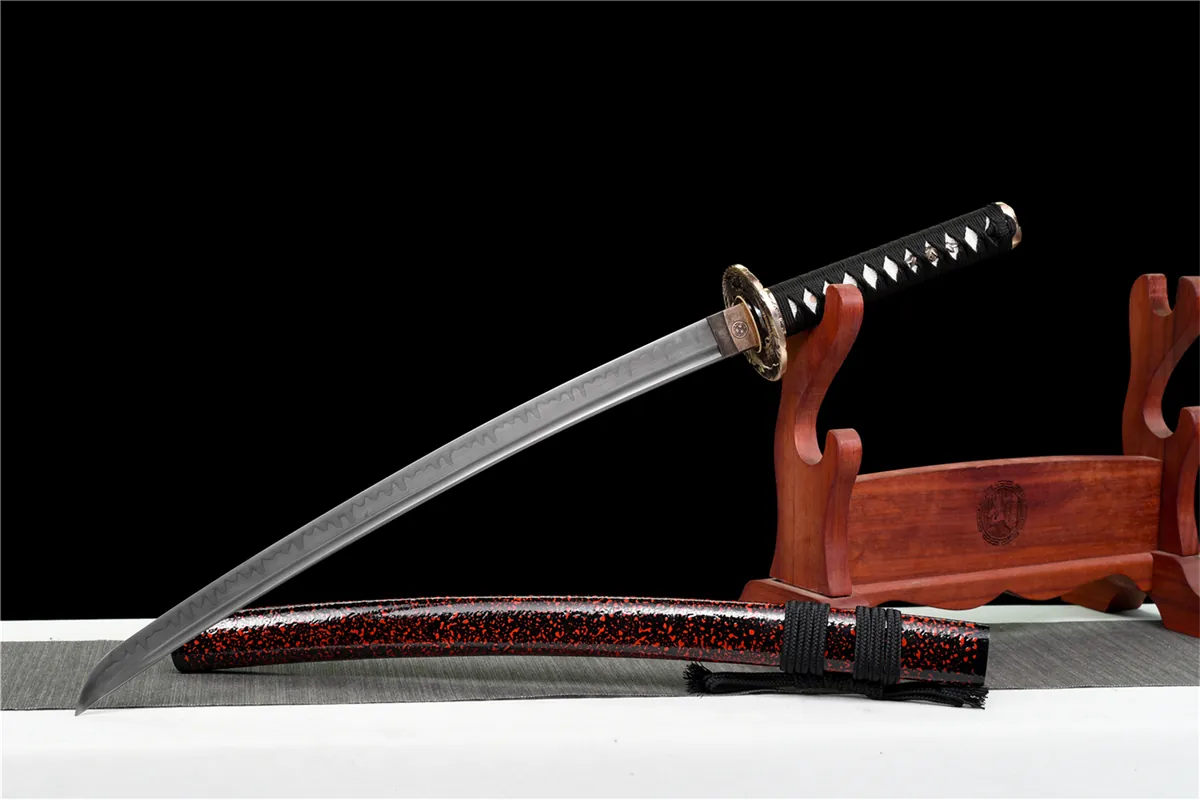
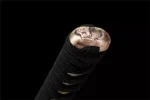
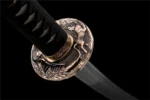
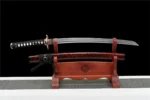
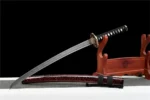
This wakizashi takes its name from that theme, rendered across every element of the mounting: a tiger among bamboo on the tsuba, bamboo leaves engraved on the fuchi, and the tiger once more on the kashira. Each piece answers the others, telling a single scene from guard to pommel.
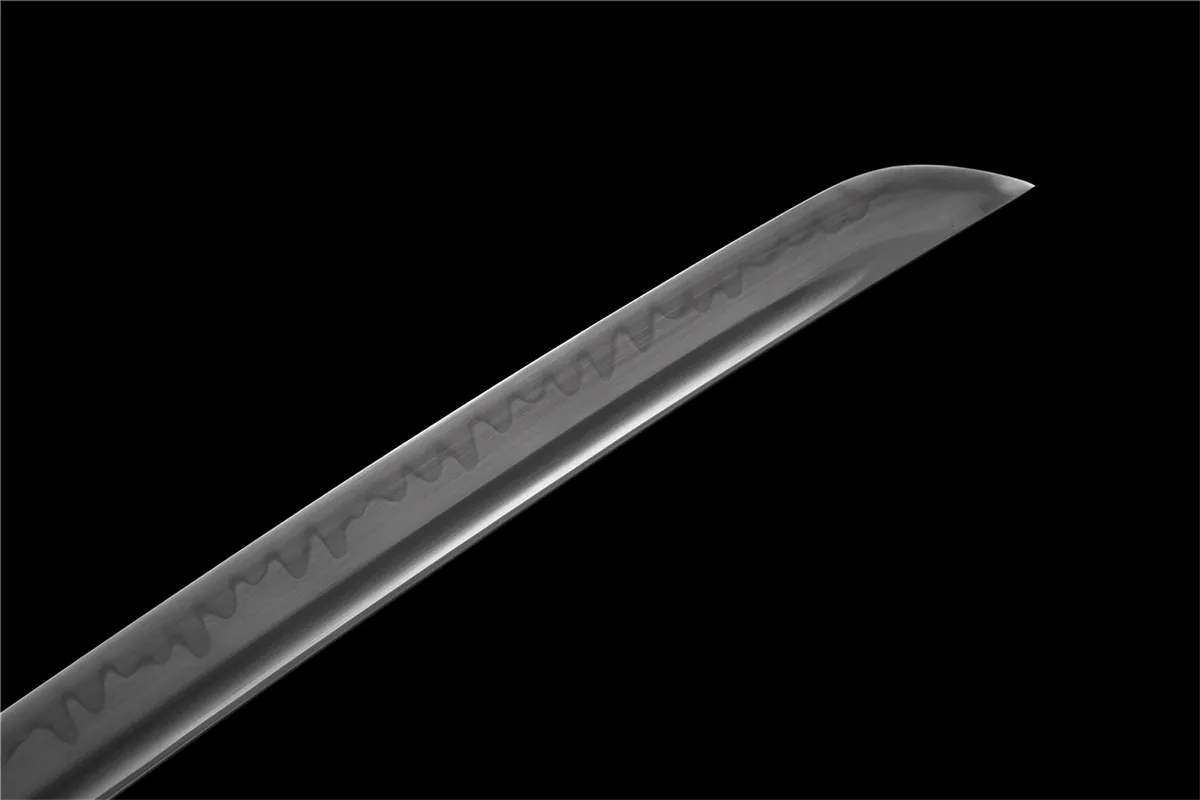
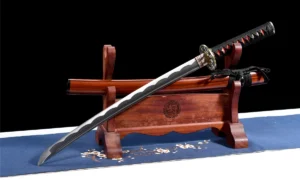
A T10 steel blade with a genuine gunome midare hamon
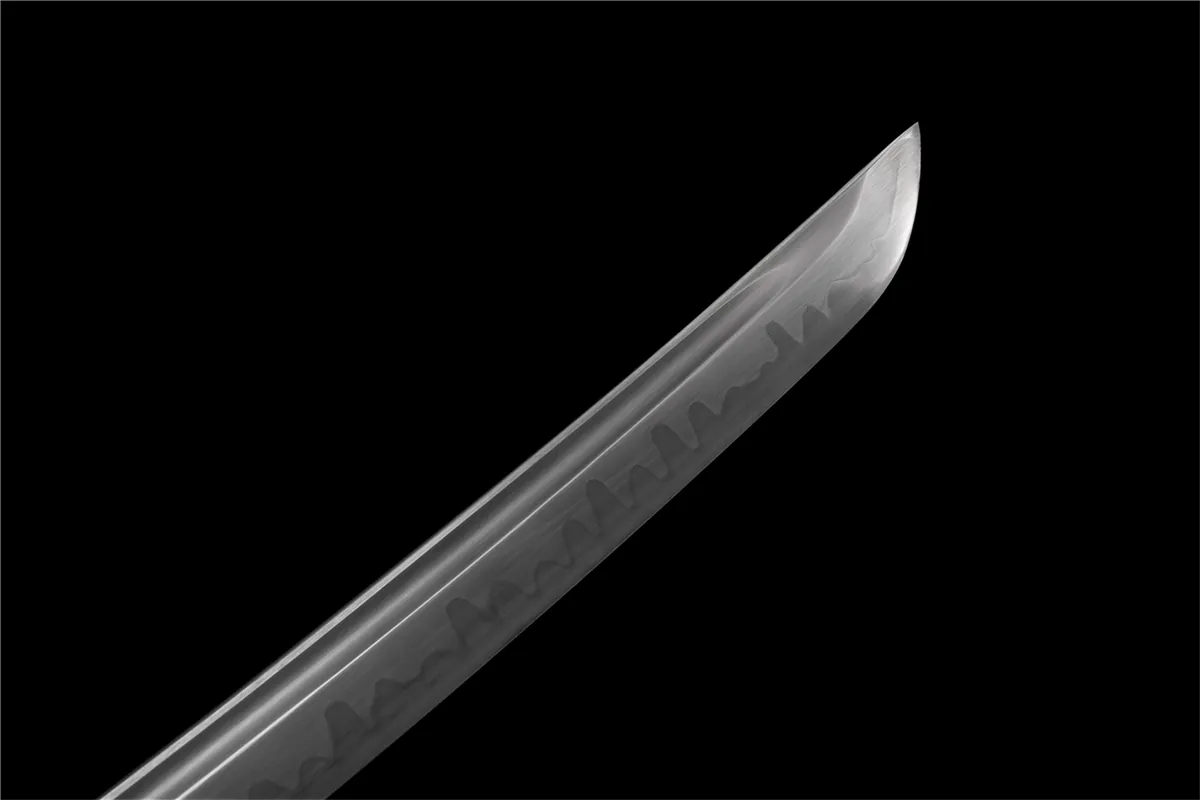
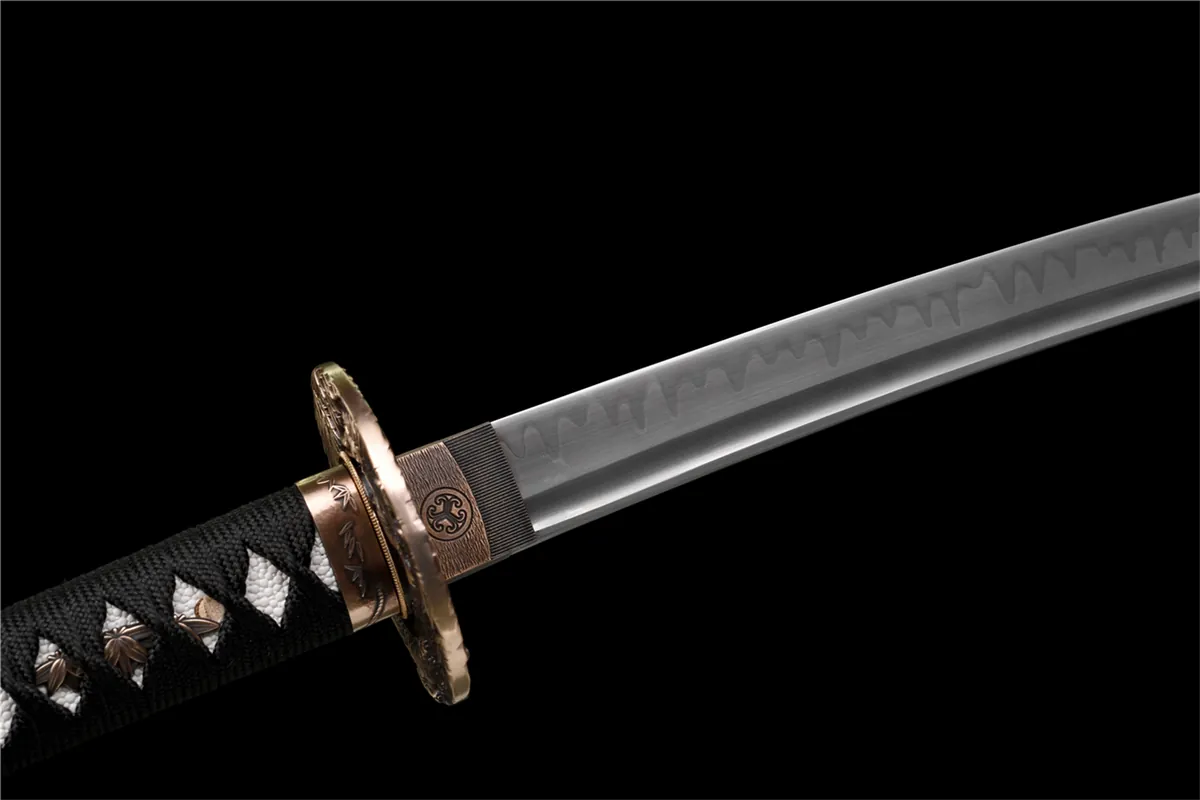
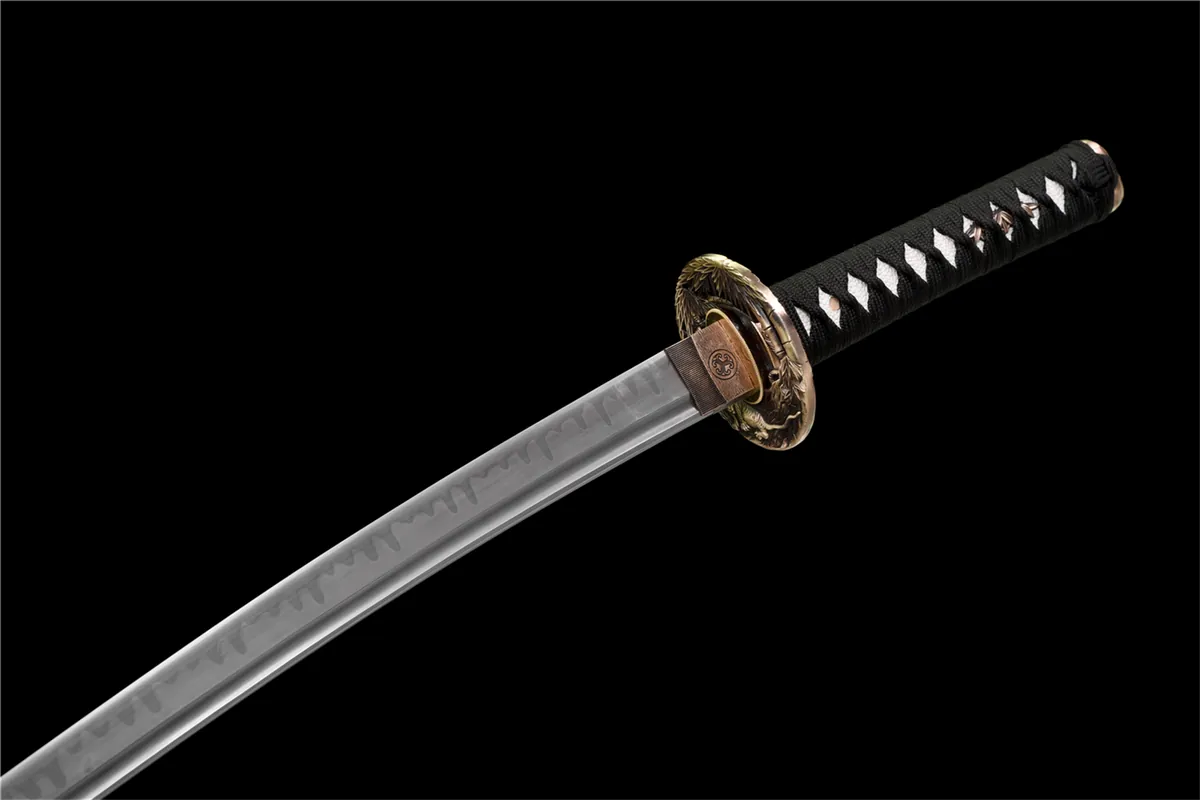
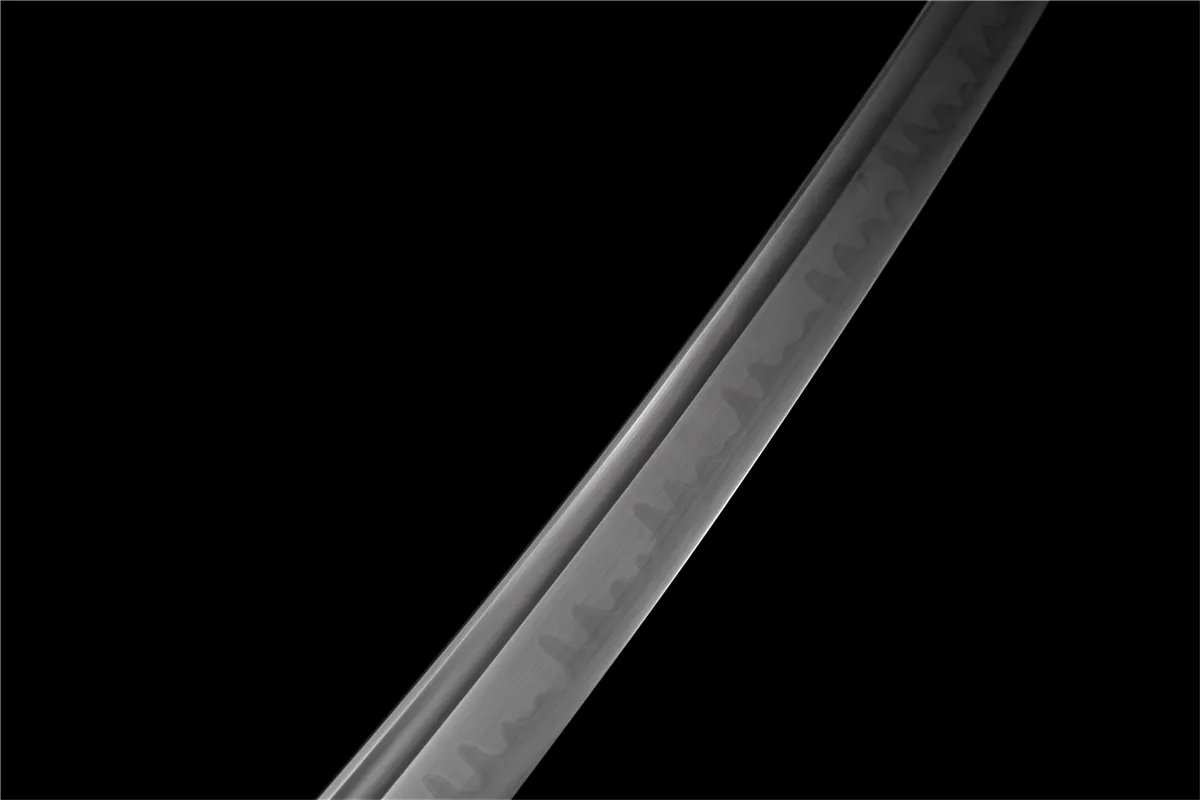
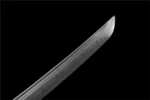
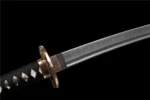
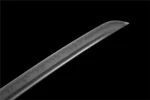
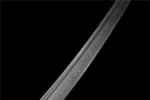
The blade is crafted from T10 steel, a high-carbon steel prized for its hardness and resilience. It has been clay-tempered: clay applied to the spine slows the cooling rate, creating two distinct hardness zones and giving rise to a genuine hamon along the cutting edge.
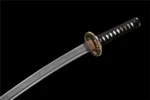
Here, the temper line traces a gunome midare pattern, a succession of irregular waves that catches the light across the polished steel. The blade follows a shinogi-zukuri geometry with a chū-kissaki tip and a torii-zori curvature, consistent along its full length. A bo-hi groove runs along the flat, reducing the blade’s weight. The edge is hand-sharpened, a level of artisanal finishing that makes all the difference.
A buke-zukuri mounting unified around the tiger motif
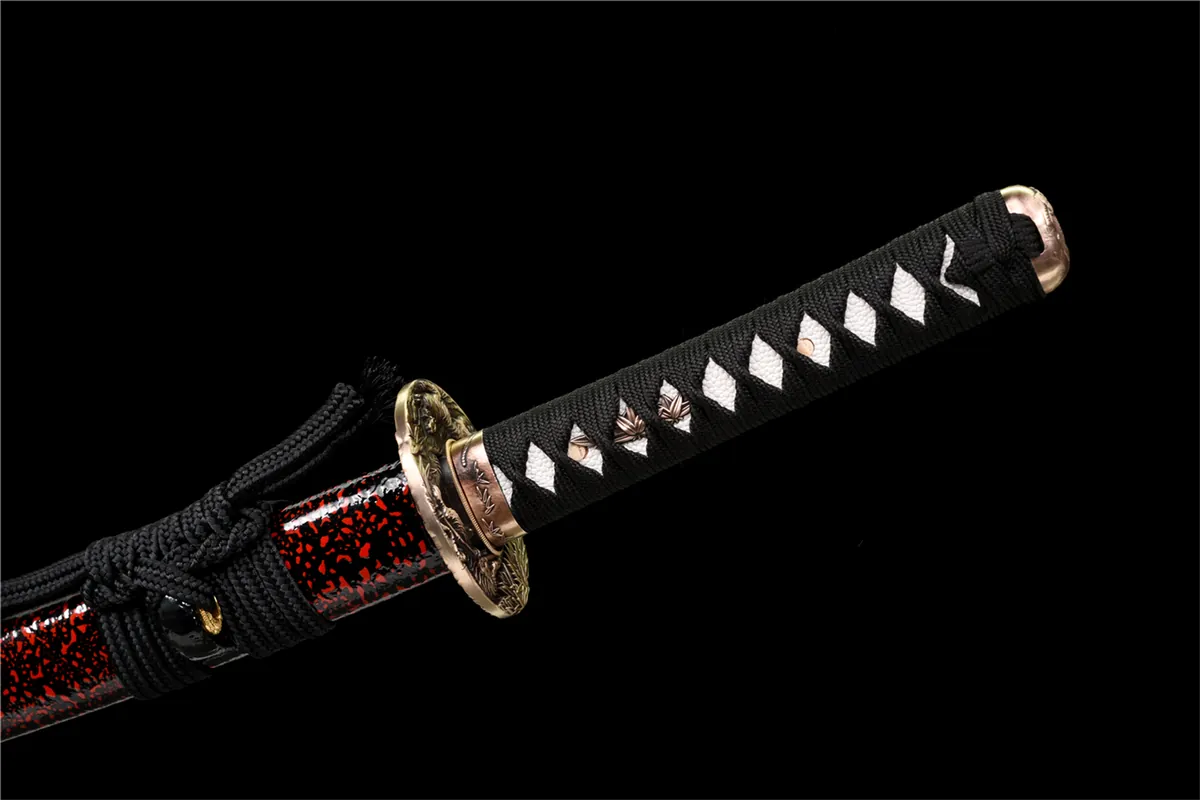
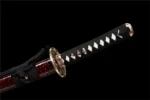
The round (maru-gata) tsuba in patinated brown copper is the centrepiece of this wakizashi. The tiger is sculpted in high relief (takabori) amid bamboo, with open-work piercings (sukashi) between the leaves, a polished ground (migaki), and a rounded rim (maru-mimi). Two gilded brass seppa flank it on either side.
The fuchi, in patinated brown copper matching the tsuba, bears finely engraved bamboo leaves in line carving (kebori). The kashira repeats the tiger in relief on a rounded cap. The handle (tsuka) combines wood with a faux white ray skin, wrapped in a black tsuka-ito in hineri-maki braid, through which copper-toned menuki are visible. Finally, the one-piece (ichimai) habaki, in finely grooved patinated brown copper, is adorned with a small stamped kamon.
A black kawari-nuri saya speckled with red
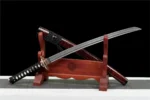
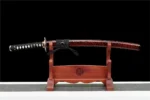
The saya is crafted from solid wood, finished in a glossy black kawari-nuri lacquer speckled with red. This decoration recalls the markings of the tiger and echoes the copper tones of the mounting. The koiguchi is lacquered in gloss black, whilst the rounded (maru) kojiri extends the lacquer in seamless continuity with the scabbard.
The kurikata, lacquered black with a gilded shitodome, receives a black cotton hira-sageo sageo, offering a restrained presentation that allows the guard’s decoration to speak for itself.
Dimensions and handling of the wakizashi
With a blade of 51 cm and an overall length of 78 cm, Chikurin no Tora carries the proportions of a classic wakizashi, the short companion to the katana. Its 23 cm handle offers a comfortable one-hand grip, with enough room to support a second hand. At 1 kg, it remains manoeuvrable and well-balanced. Measuring 80 cm in its saya, it lends itself to display on a stand or presentation alongside a katana.



Reviews
There are no reviews yet