


Ōkami (狼): the spirit of the wolf
In Japan, the wolf (ōkami) holds a singular place. Long venerated in the mountain regions as a messenger of the gods, it protected crops from wild animals and watched over travellers on the road. Its very name echoes, in sound, that of ōkami (大神), meaning “great deity”.
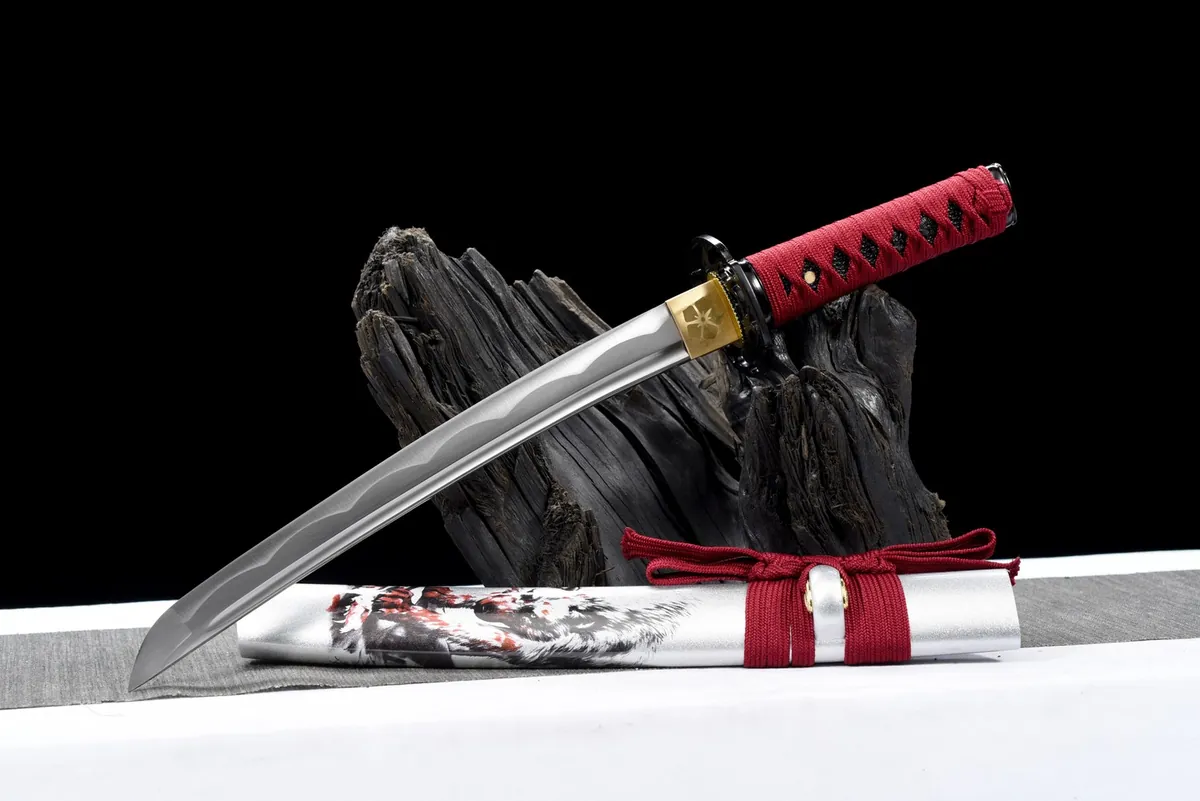
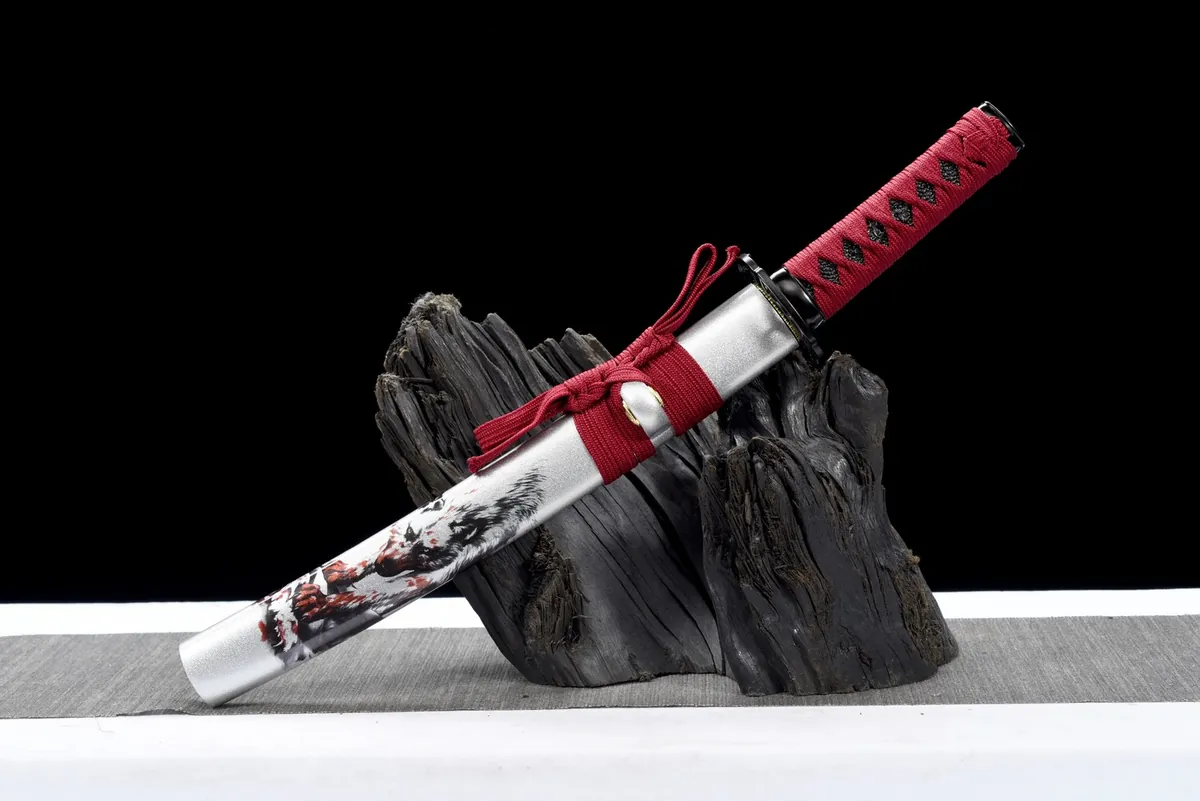
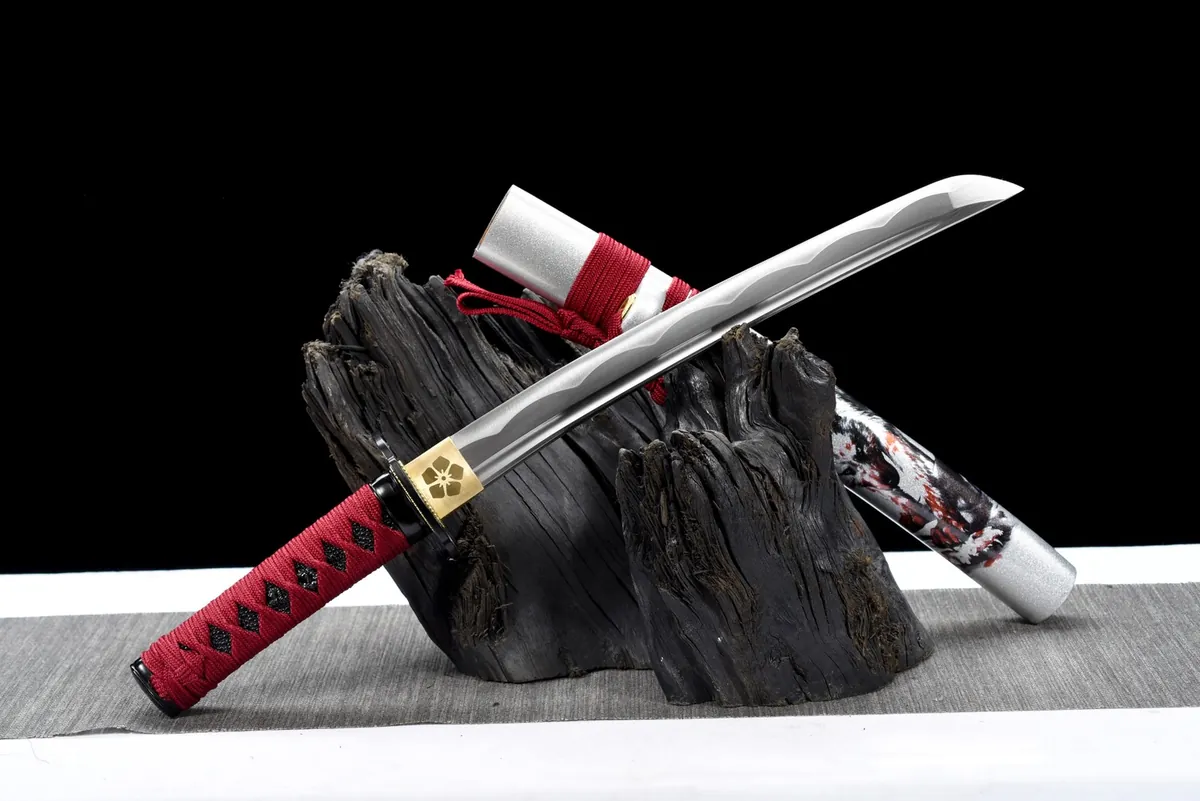
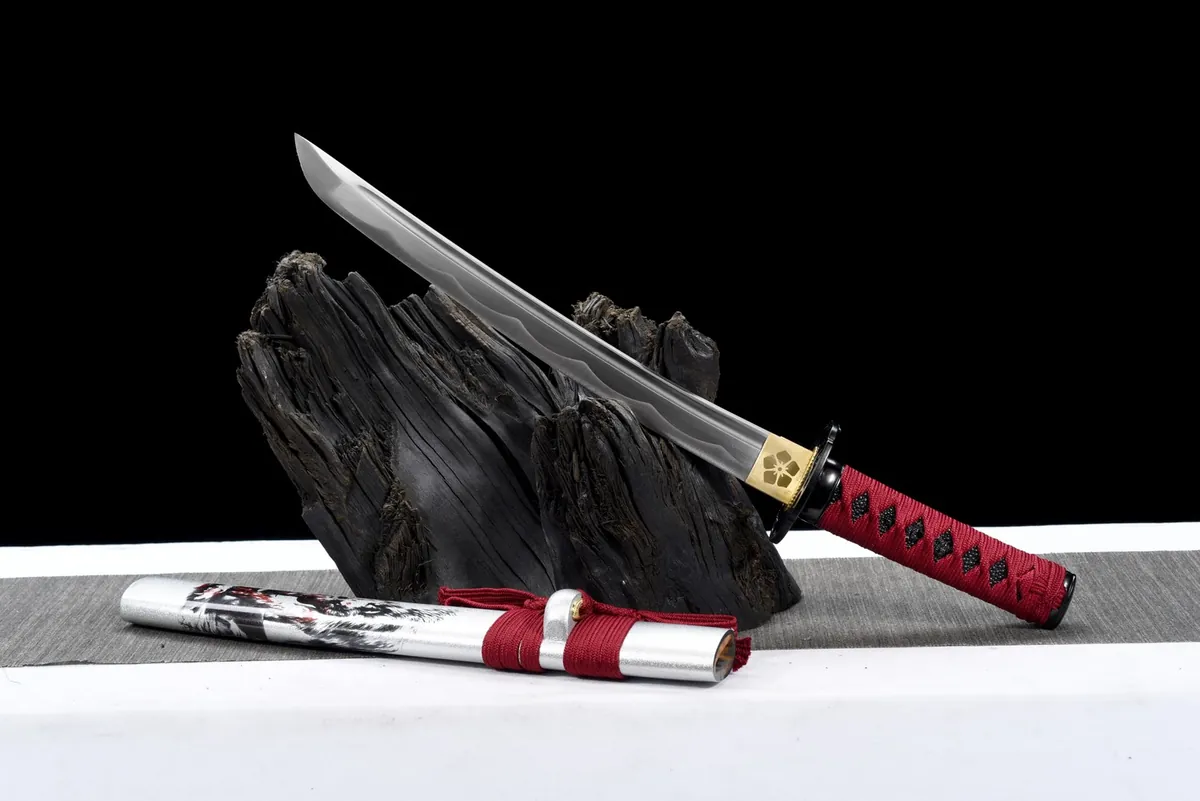
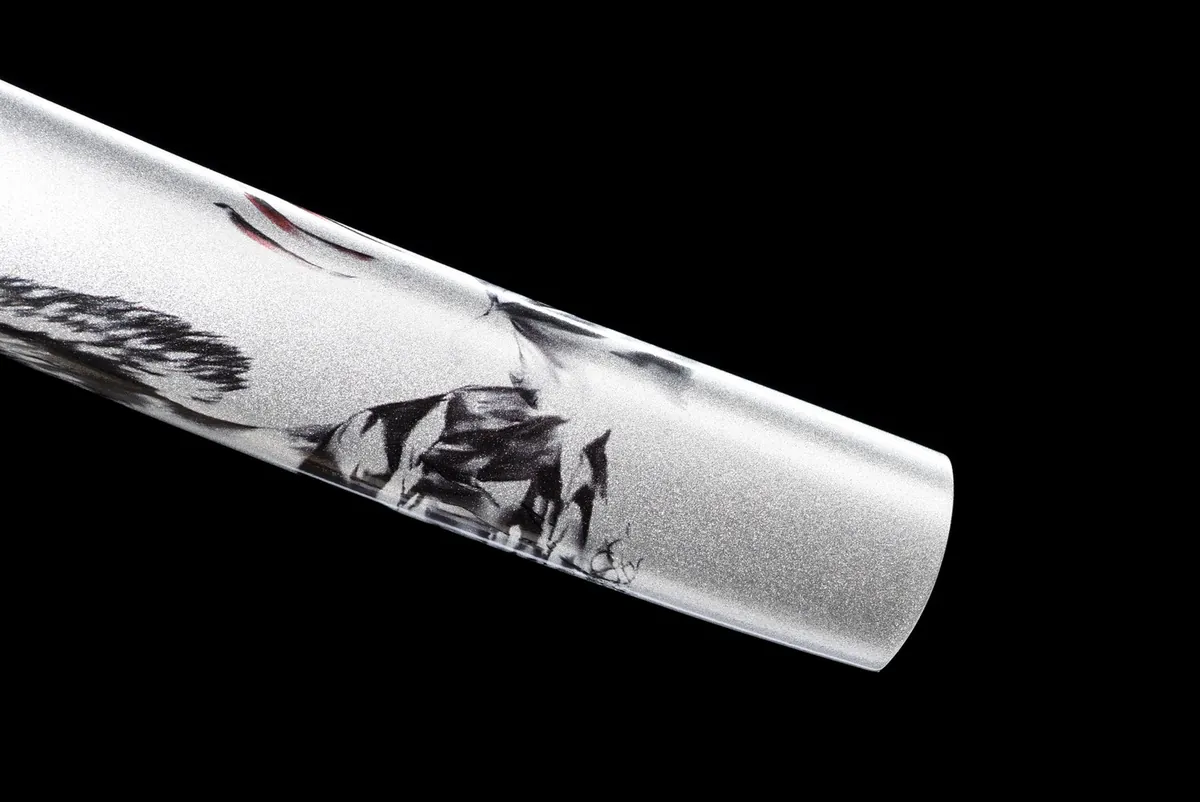
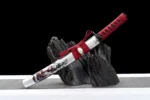
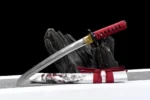
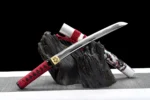
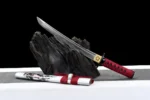
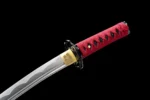
This tanto pays homage to that spirit through its saya: a wolf’s head painted in black and red, in the tradition of sumi-e ink painting, set against a silver-white lacquered ground. The red of the tsuka-ito and sageo answers the red of the brushwork, uniting the piece around three colours : white, black and red.
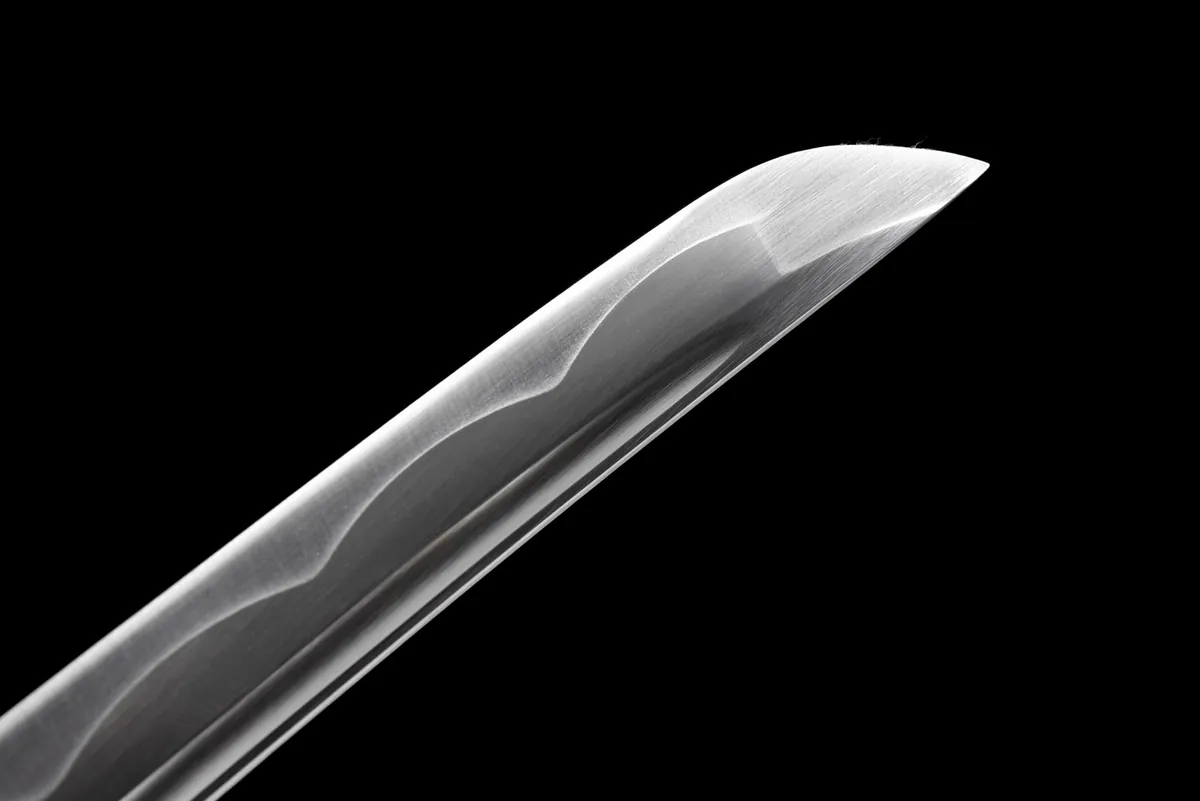
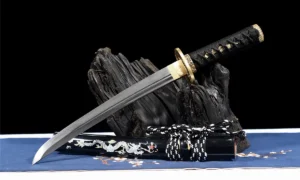
A mirror-polished 1045 steel blade with bo-hi
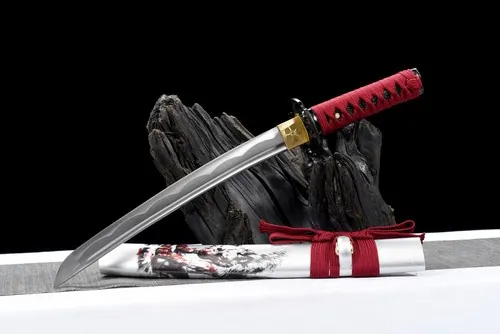
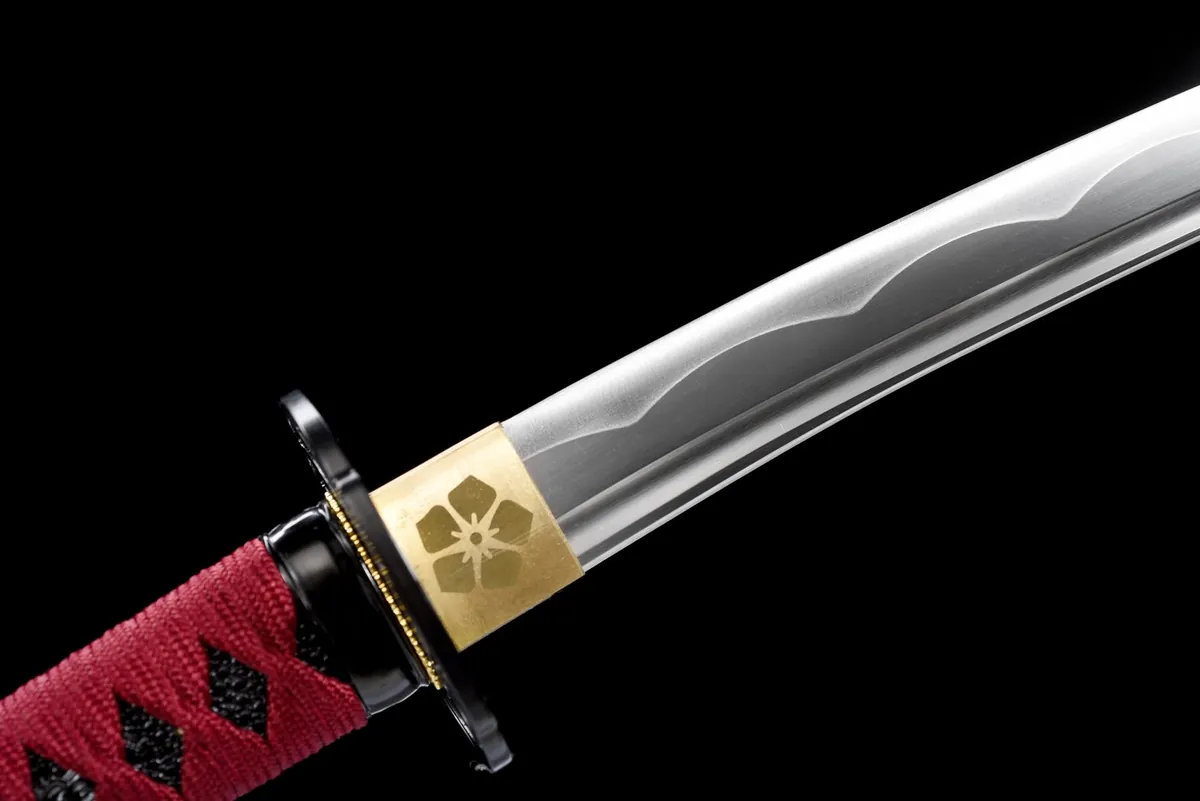
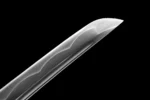
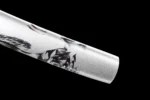
The blade is forged from 1045 steel, a dependable high-carbon steel that is robust and straightforward to maintain. It follows a shinogi-zukuri geometry with a chū-kissaki point. A broad bo-hi, finished with a rounded terminus (maru-dome), runs the length of the blade: this fuller reduces weight while catching the light along its polished groove.
The blade carries a mirror polish. Along the cutting edge runs a satin undulating line of gunome style: this is a decorative hamon.
A black and red buke-zukuri mounting
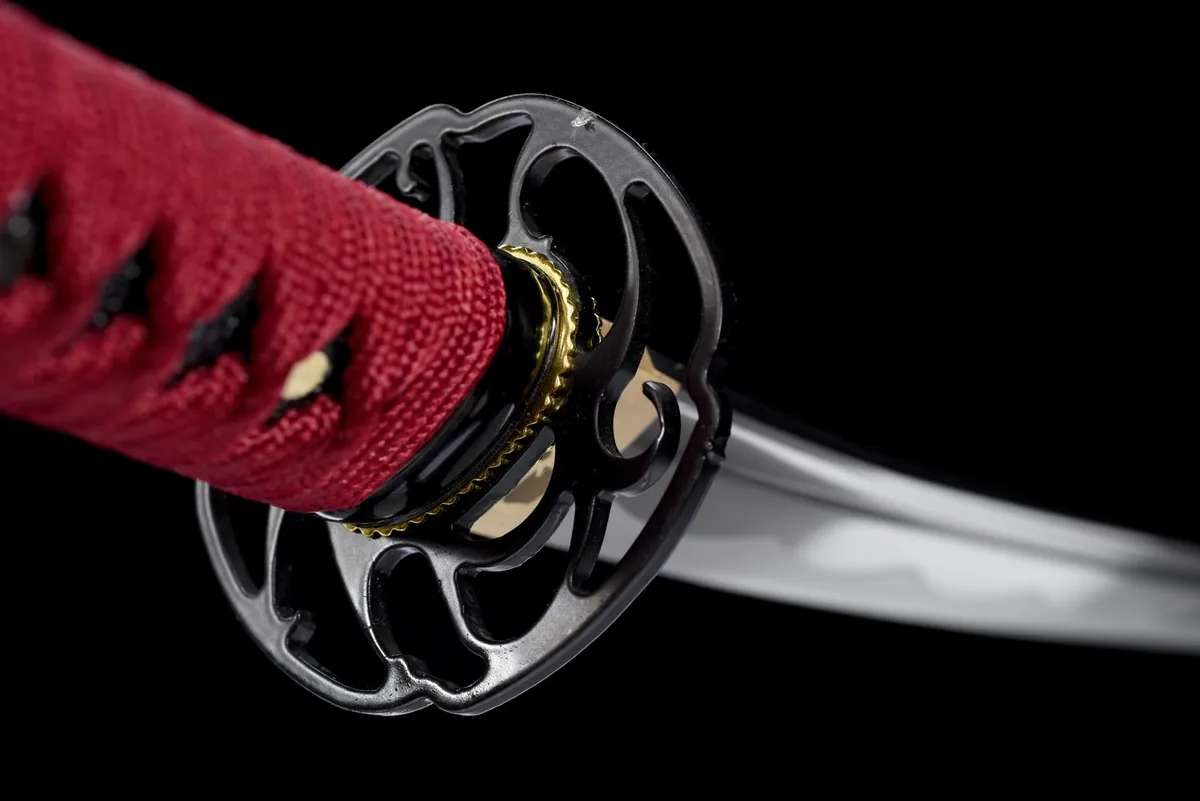
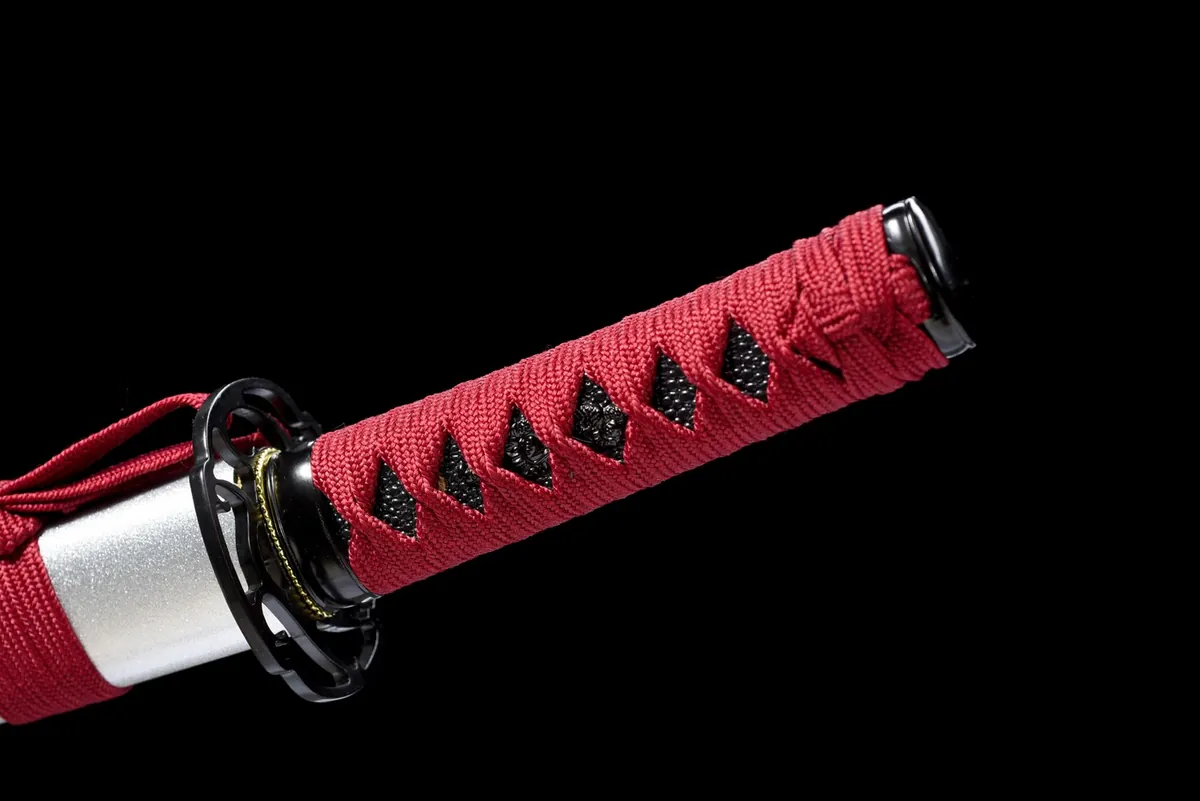
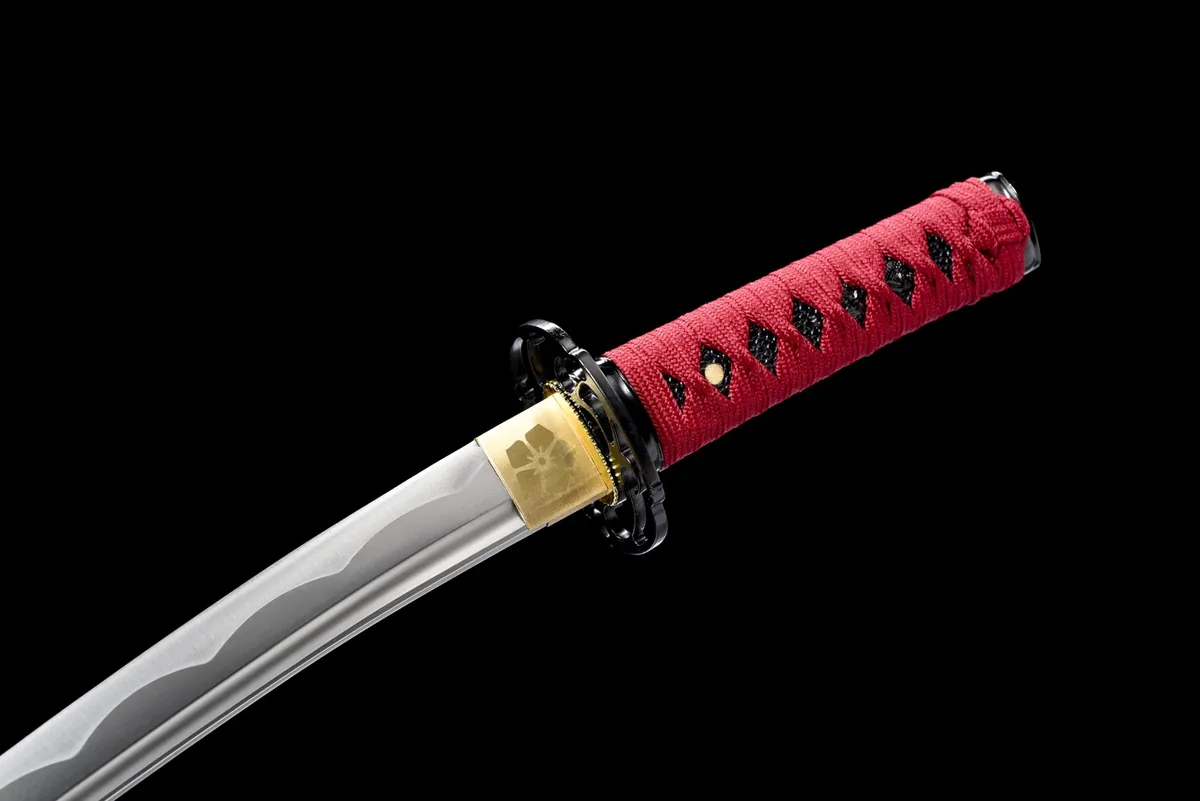
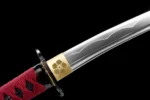
The tsuba, in four-lobed mokkō-gata form, is crafted from blackened bright ferroalloy. It is pierced with scrolling sukashi, with a smooth polished migaki surface and a rounded maru-mimi rim. Two gilt brass seppa with scalloped edges frame it on either side.
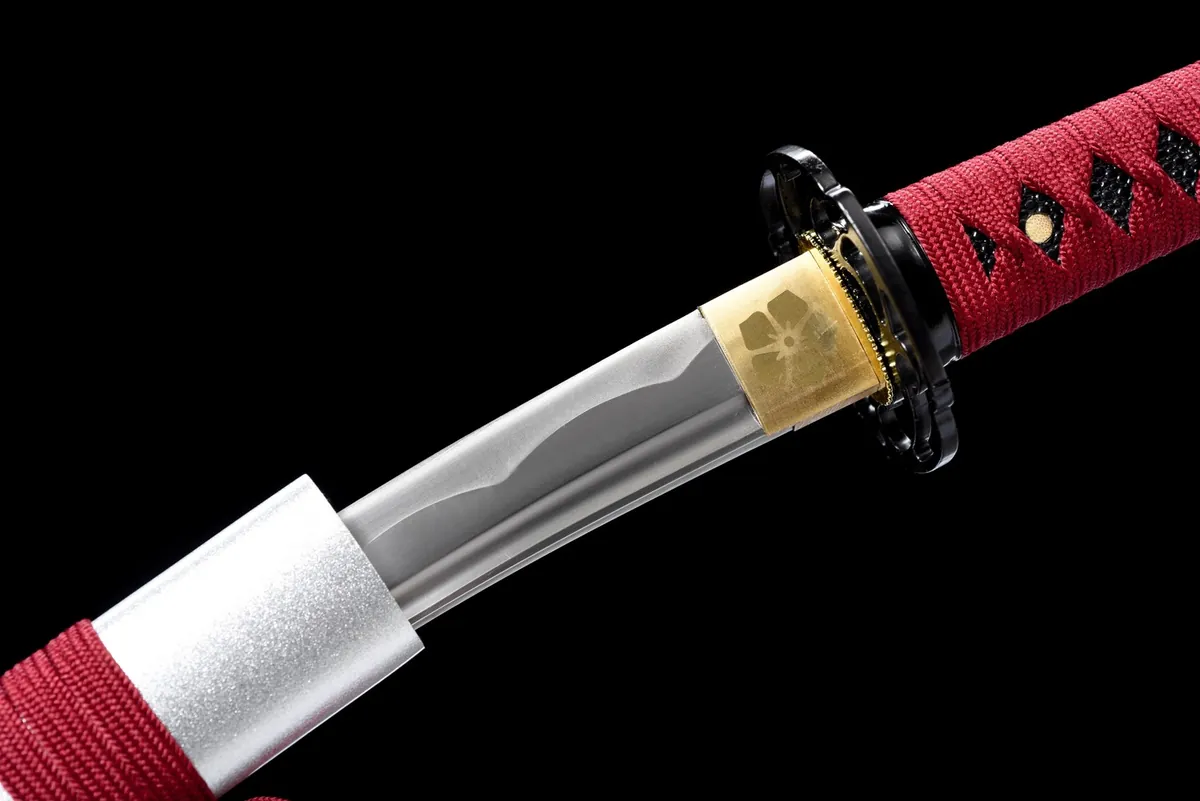
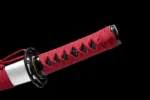
The fuchi and kashira, in smooth blackened alloy, are kept deliberately understated, allowing the saya to command attention. The tsuka, constructed on a wooden core wrapped in black faux ray skin, is bound with red tsuka-ito in hineri-maki, beneath which black menuki are visible. The single-piece ichimai habaki, in gilt brass, is engraved with a floral mon.
A silver lacquered saya with painted wolf
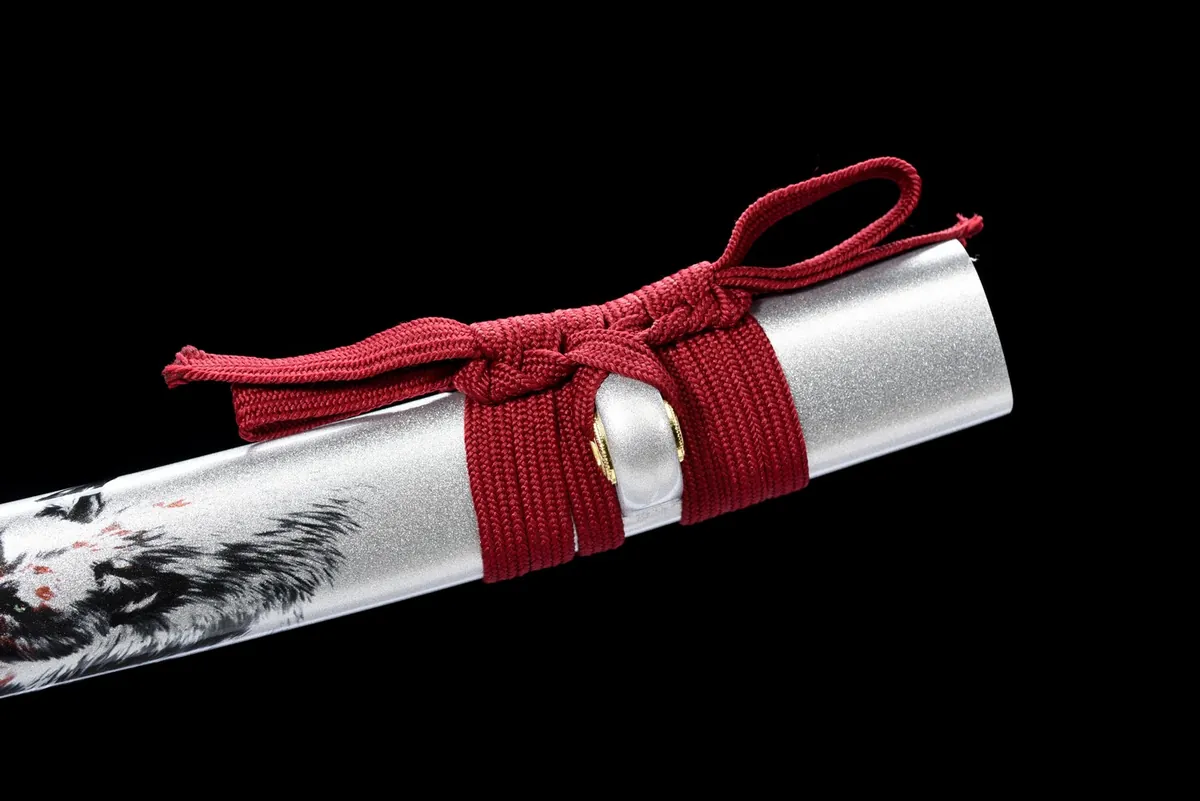
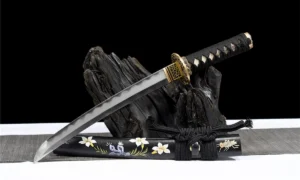
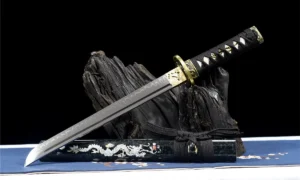
The saya is carved from solid wood and lacquered in silver-white with fine glittering flecks that catch the light. It bears the wolf’s head in black and red, rendered with a vivid and expressive brushstroke. The koiguchi is lacquered in the same silver-flecked finish with a plain collar, and the rounded maru kojiri echoes the same lacquer, unadorned.
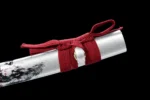
The kurikata, lacquered to match the saya and set with gilt shitodome, receives a sageo in red cotton hira-sageo style, in keeping with the wrapping of the handle.
Dimensions and handling of the tanto
With a blade of 33 cm and an overall length of 55 cm, Ōkami is a tanto of generous proportion. Its 17 cm handle provides a firm, precise single-handed grip. At 0.7 kg, it sits lightly in the hand. It measures 57 cm within its saya, making it easy to display on a stand or to present alongside a katana and wakizashi.

Reviews
There are no reviews yet