


Kirigirisu (螽斯): the katydid
In Japan, singing insects such as the kirigirisu (the katydid) have been cherished since the Heian period. Their song heralds the end of summer and the arrival of autumn; these creatures were once kept in small cages so their calls could be savoured indoors. They evoke the natural world, the turning of the seasons and a quiet, melancholic beauty.
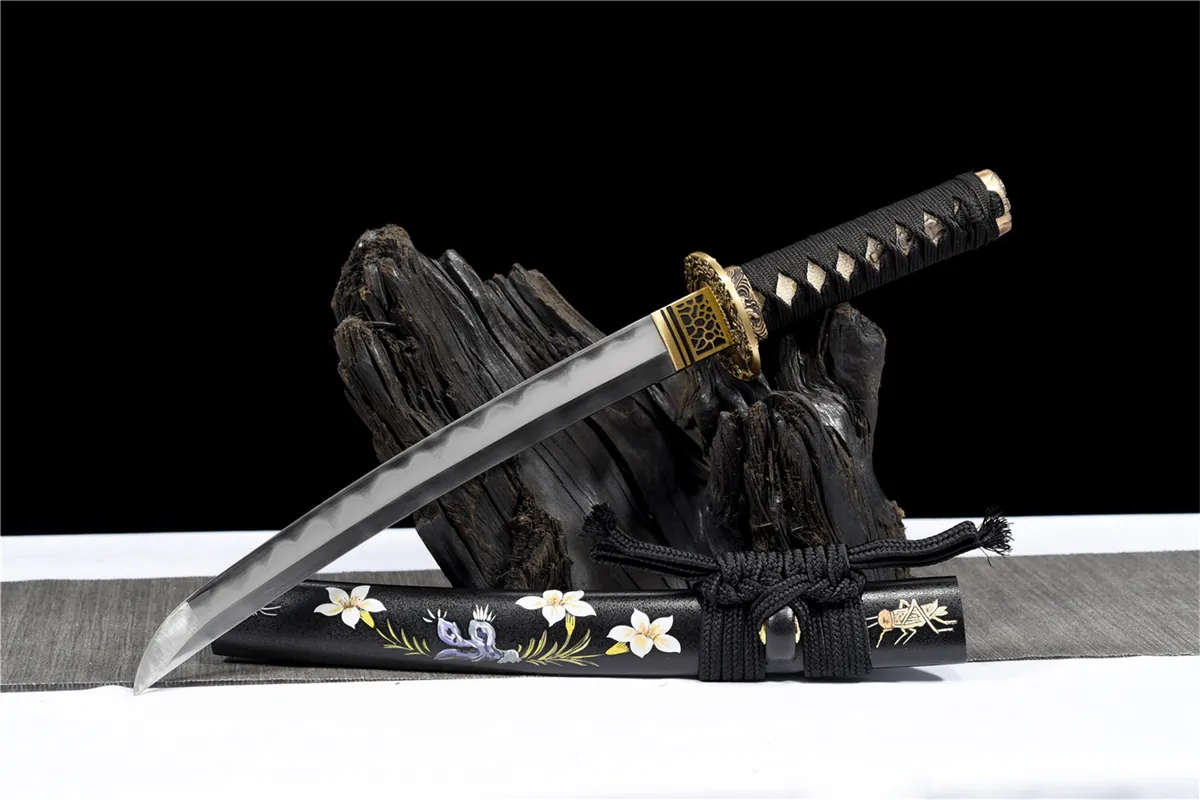
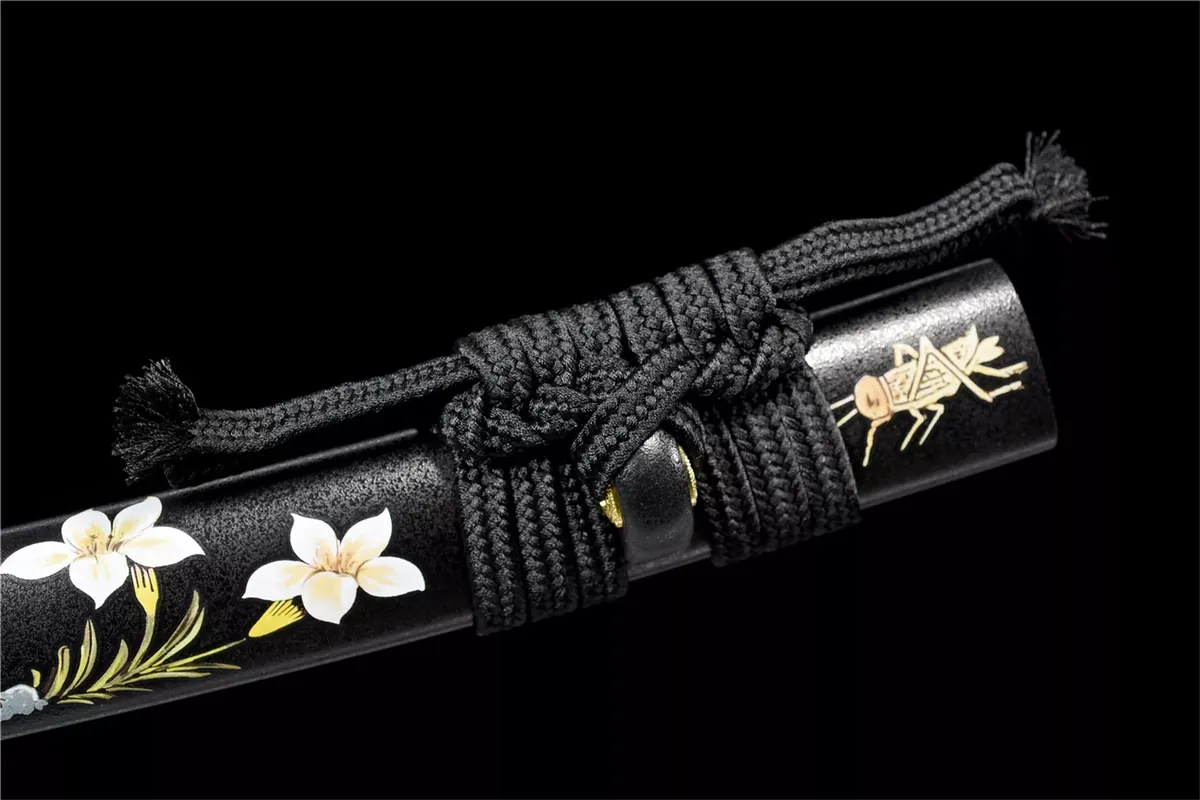
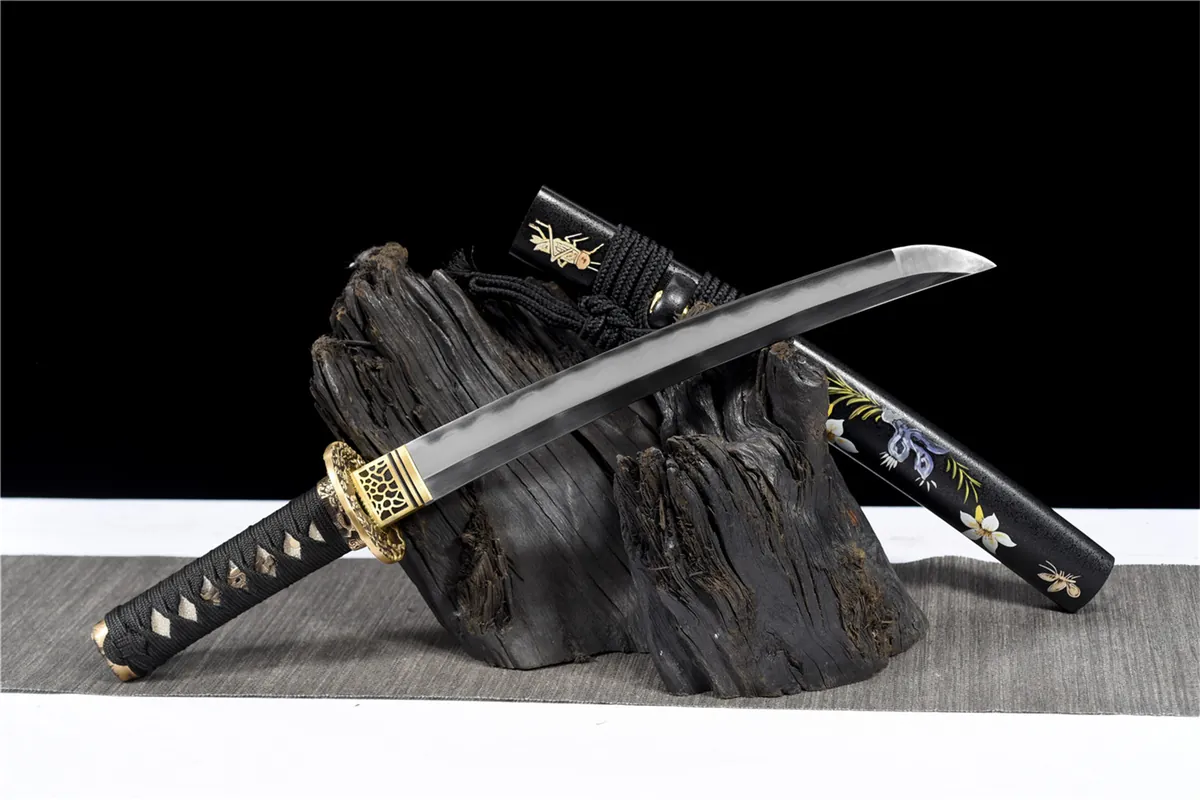
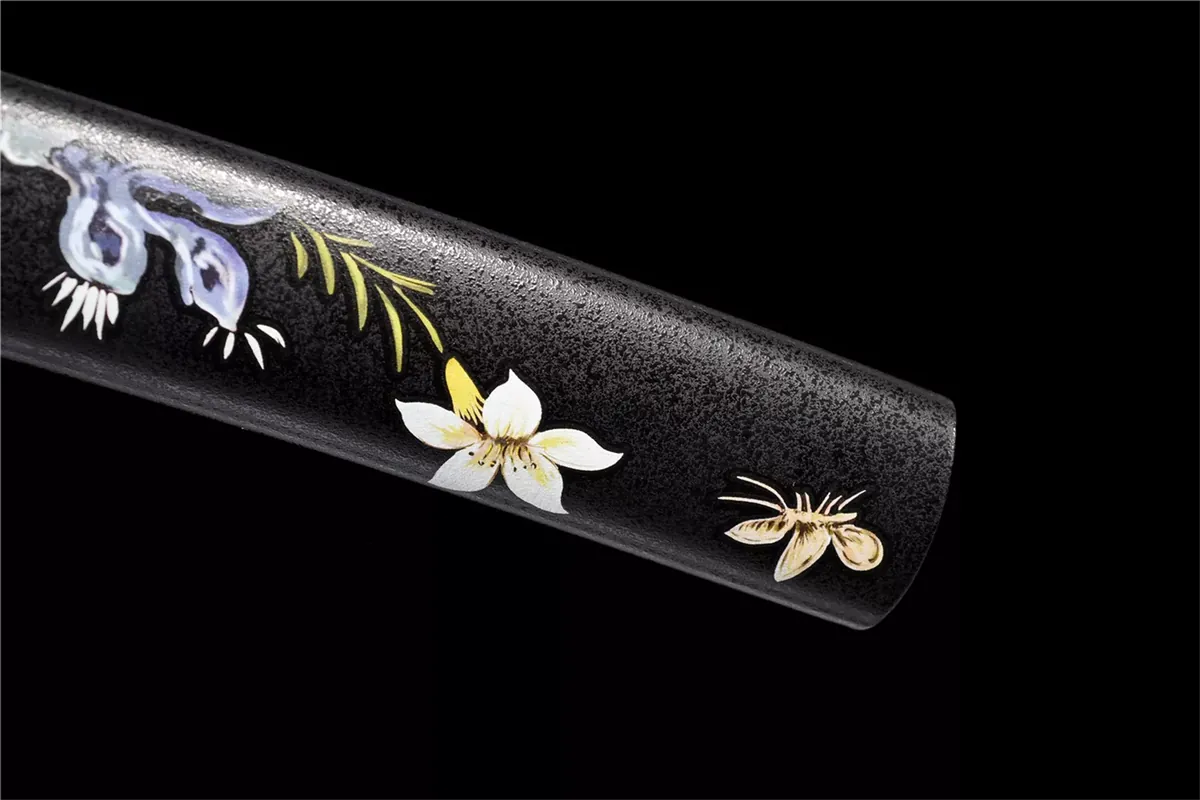
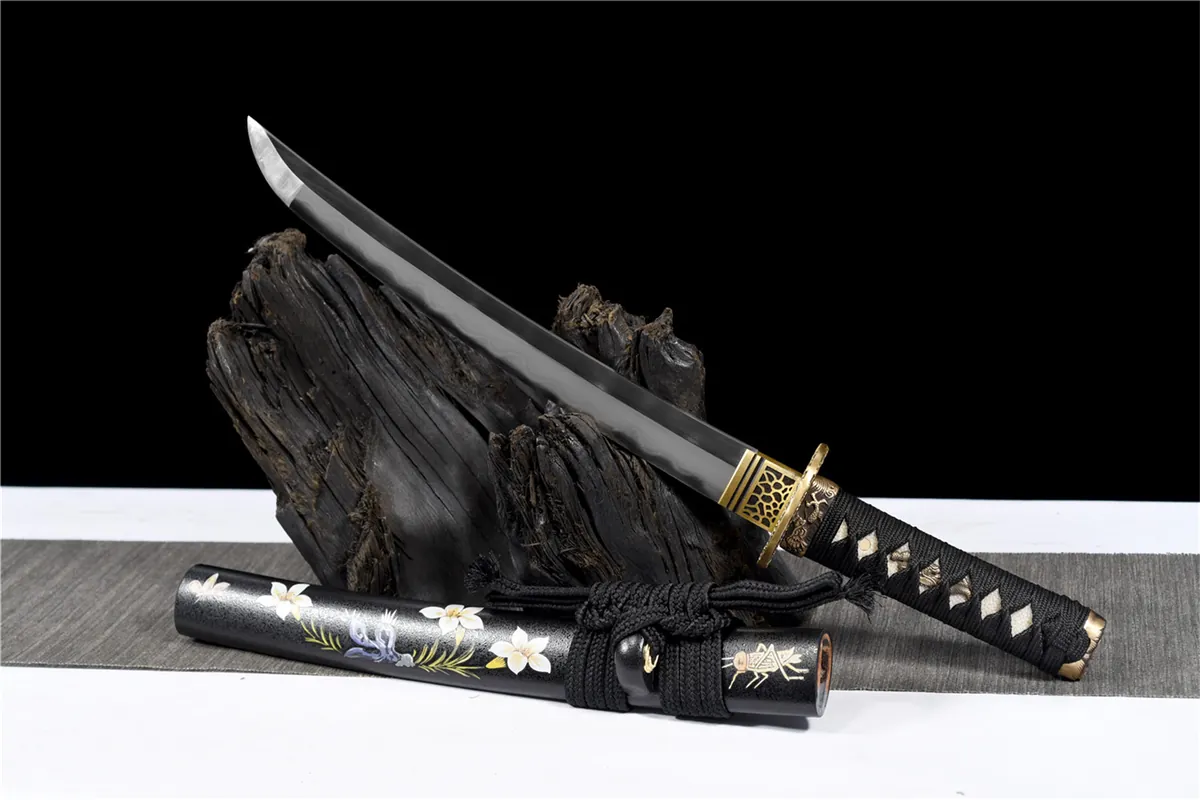
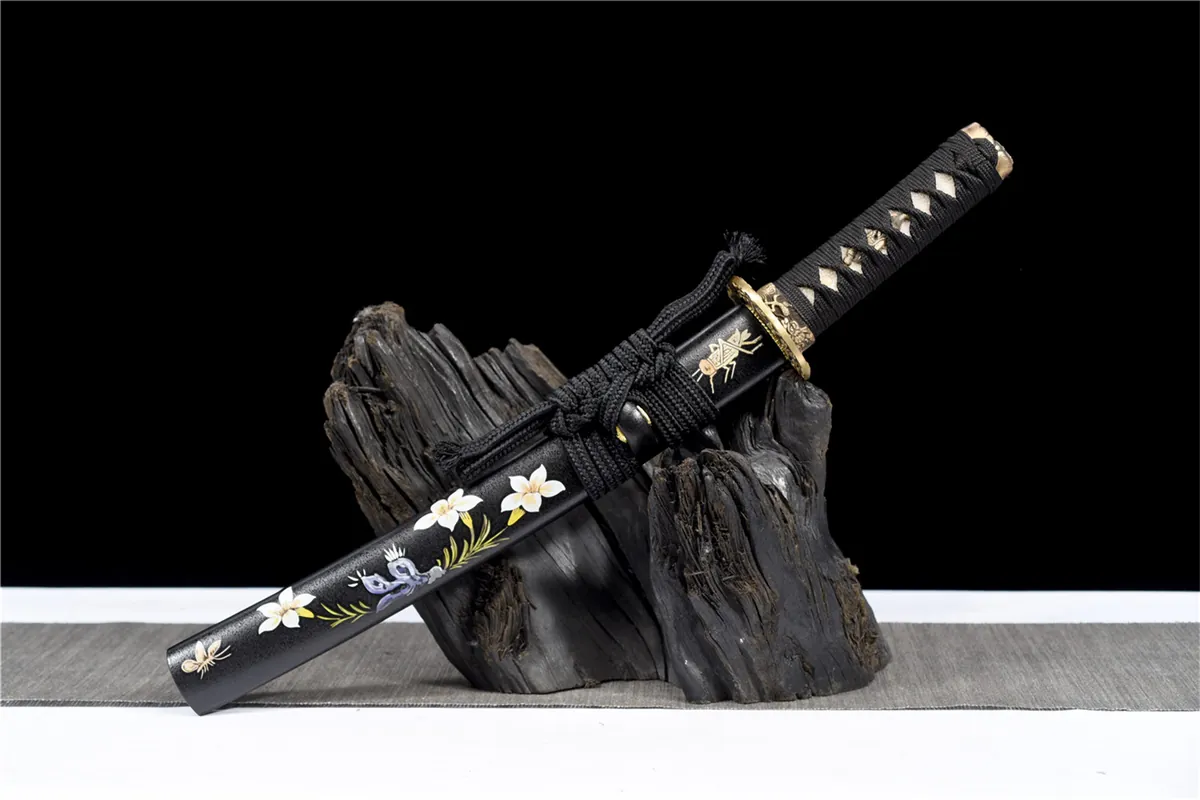
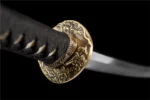
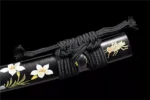
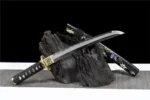
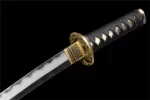
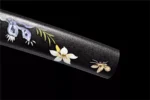
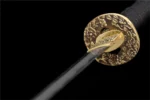
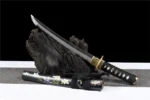
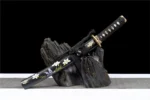
This tanto places the katydid at the heart of its saya: a golden insect painted among blossoms and foliage in the manner of maki-e. The flowering tsuba extends this garden scene, while the dragon on the fuchi and kashira speaks to the martial character of the blade.
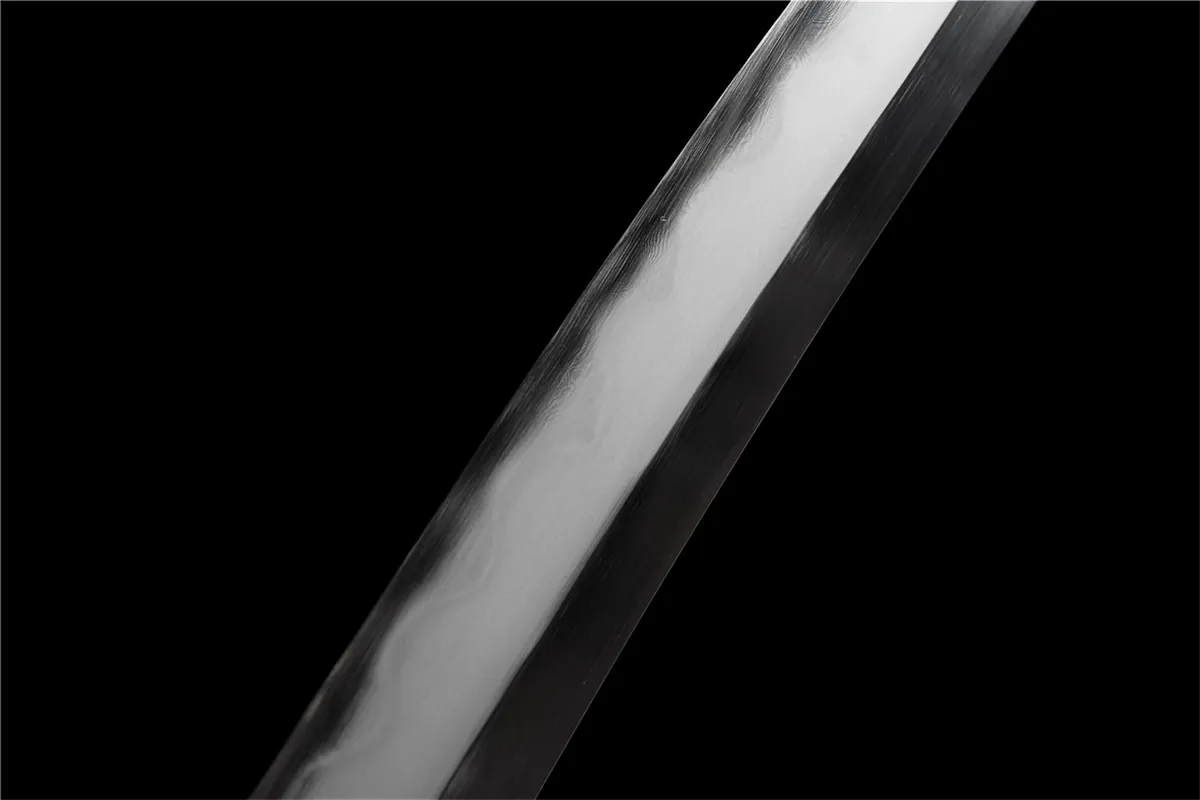
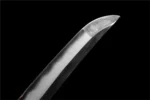
A damascus steel blade with a genuine gunome hamon
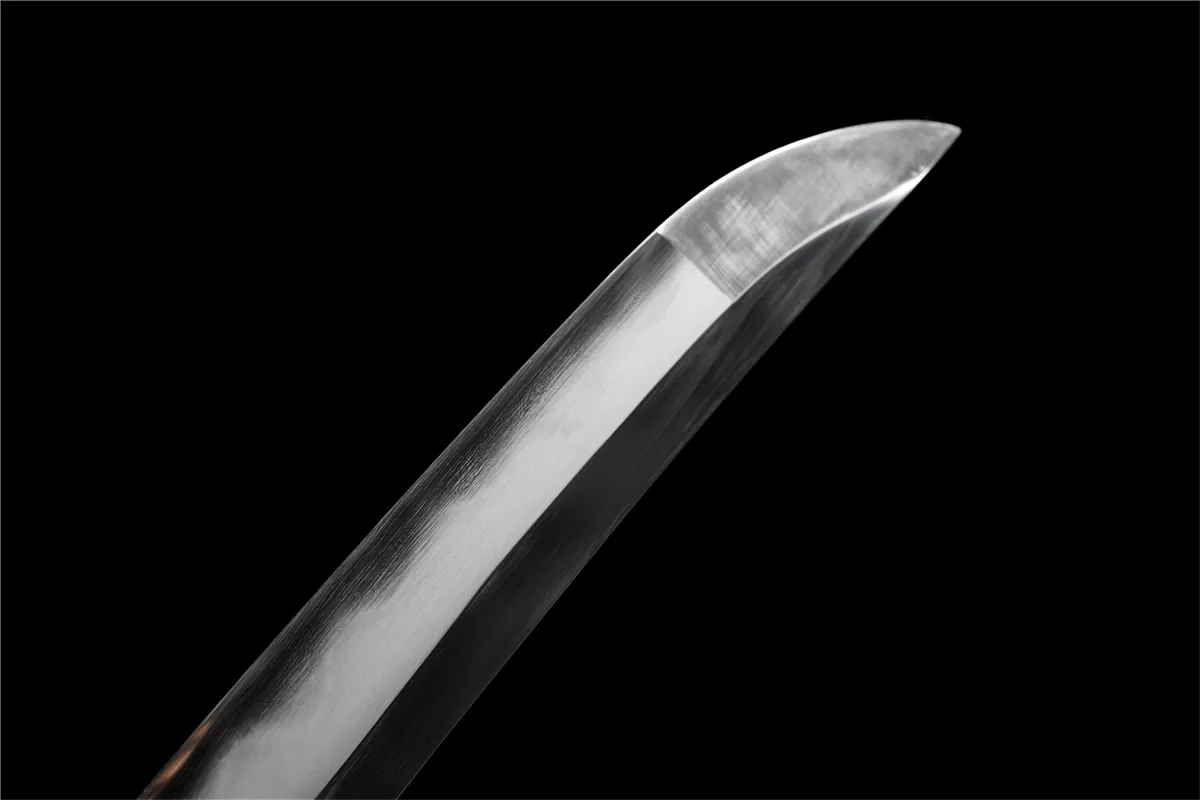
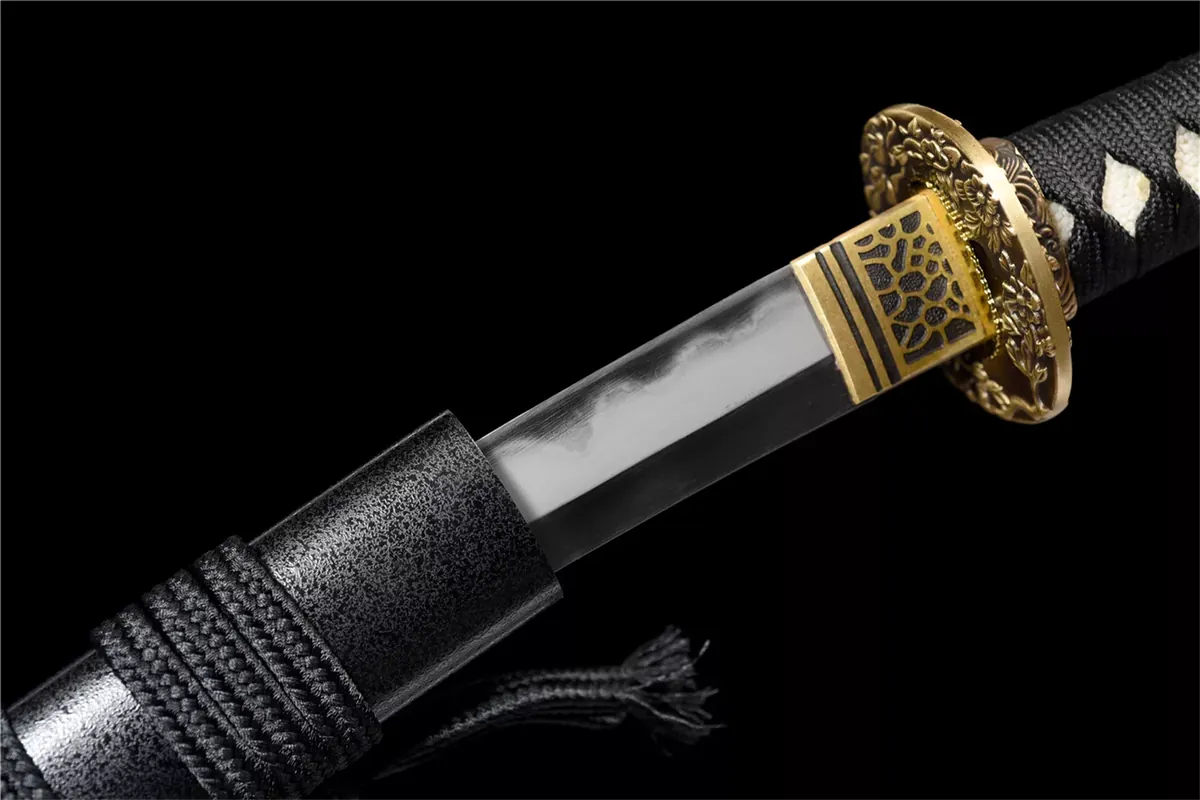
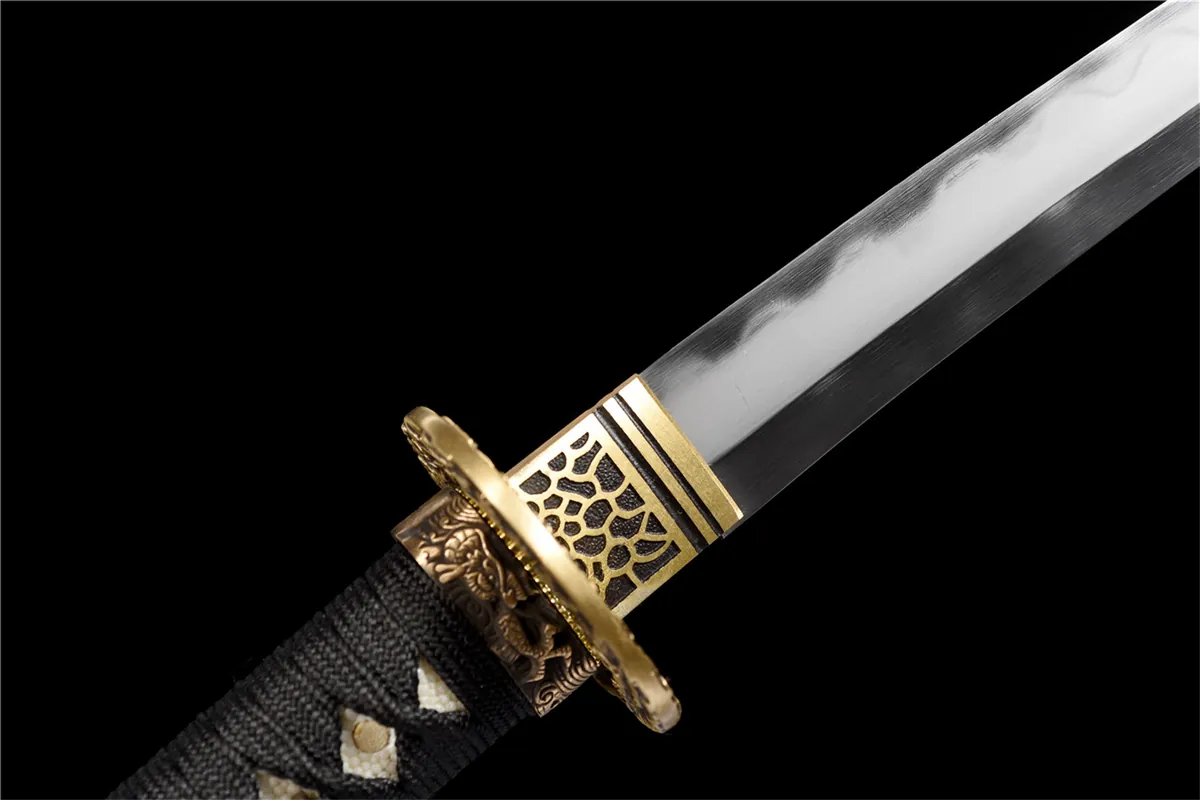
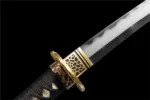
The blade is forged in damascus steel, built up through the layering and folding of multiple sheets of steel. The damascus pattern, shifting between pale and deep grey, is visible across the entire blade surface. The geometry follows the classical shinogi-zukuri form, terminating in a chū-kissaki point.
The blade has been clay-tempered, giving rise to a genuine gunome hamon of regular, rolling undulations. The milky-white hamon zone stands in sharp contrast to the darker body of the blade. There is no bo-hi. The hand-sharpened edge reflects a level of artisanal finishing that sets this piece apart.
A mounting of flowers and dragons
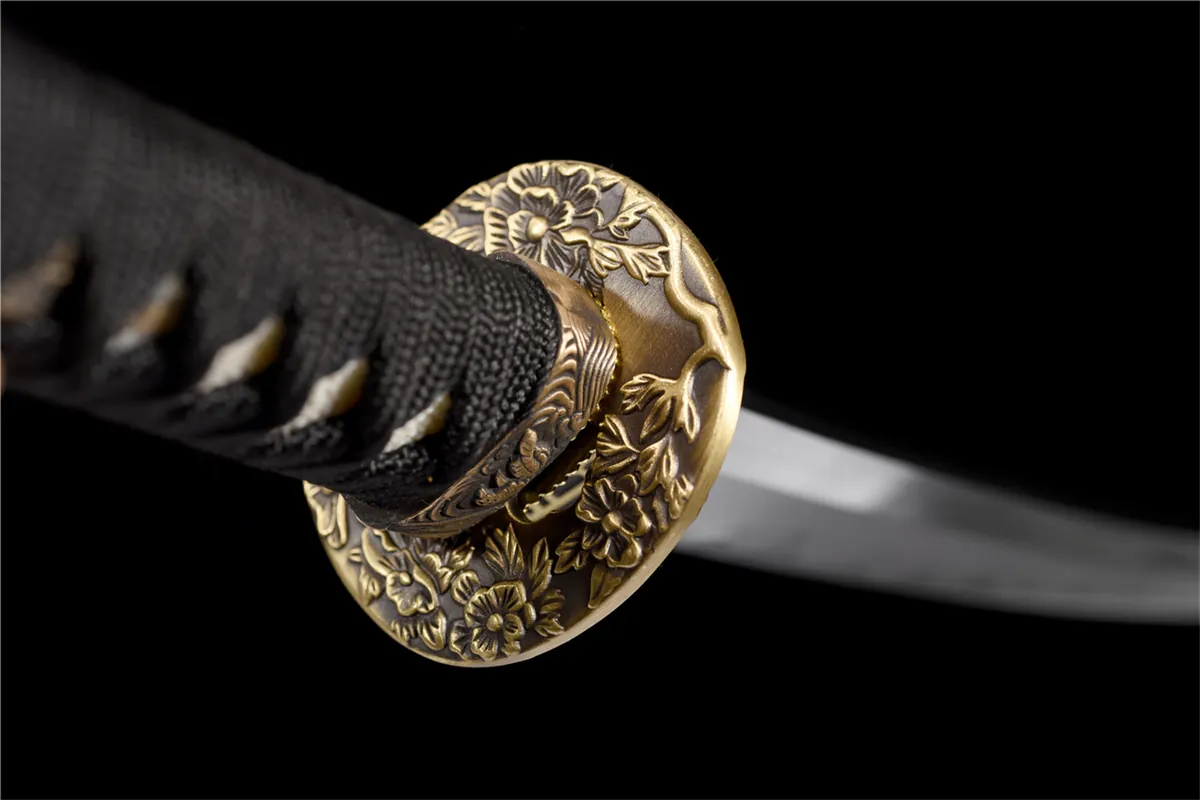
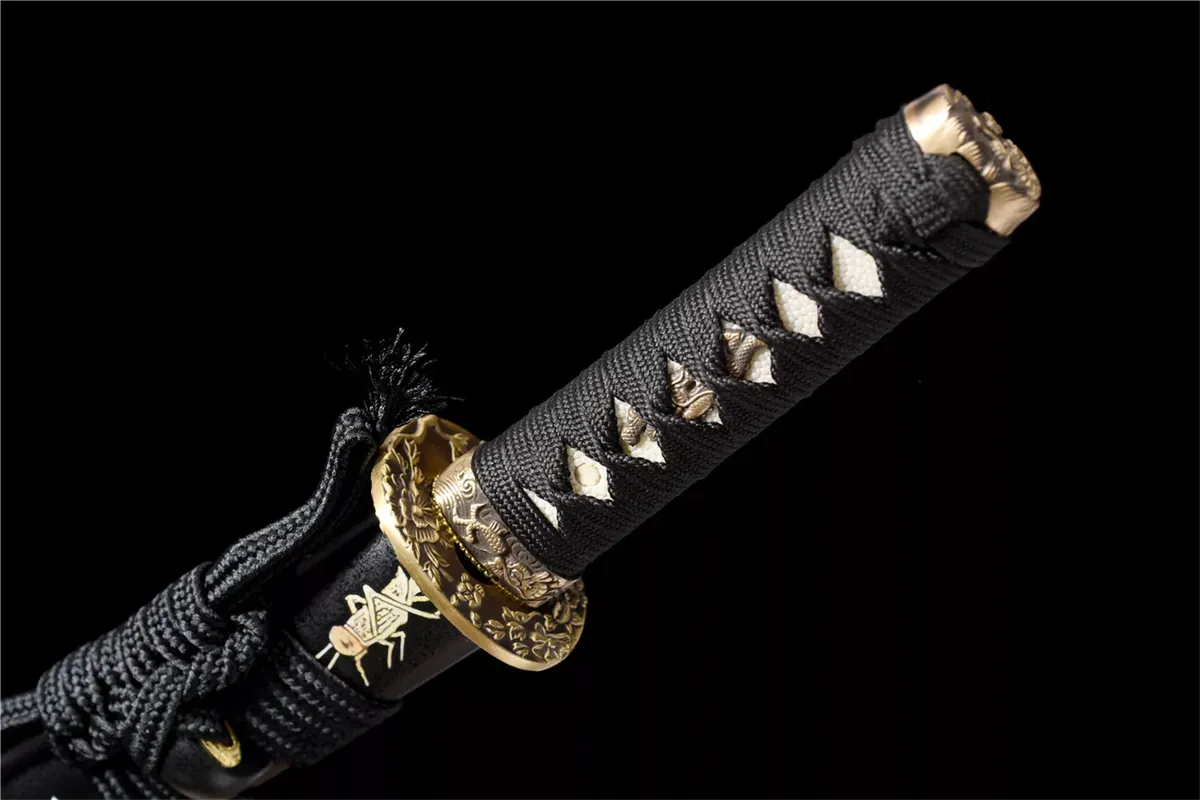
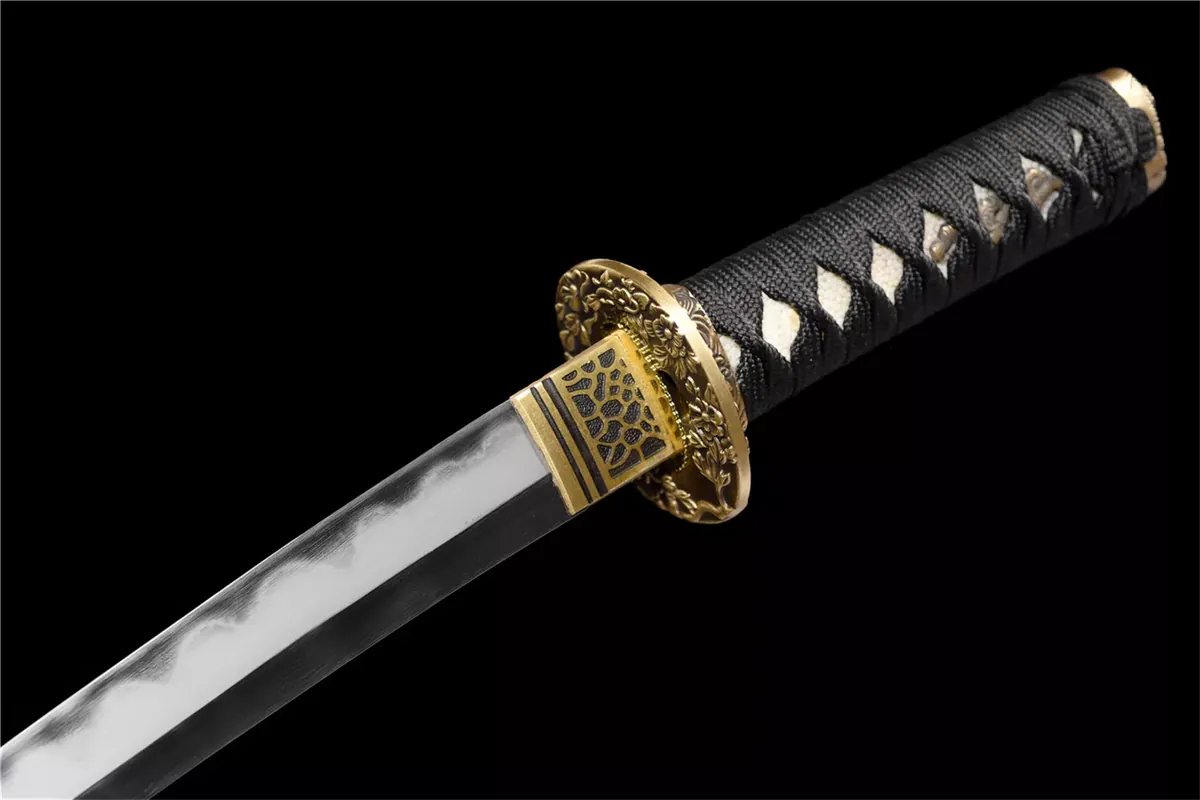
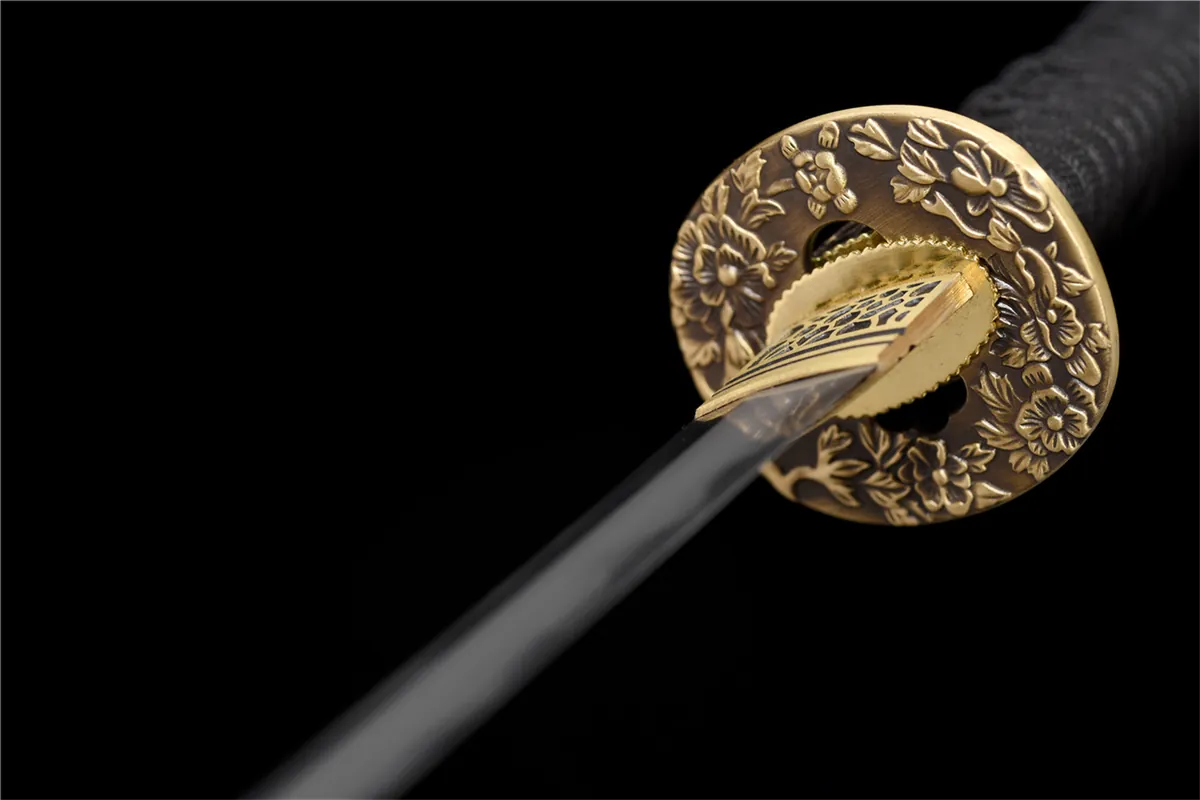
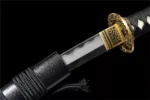
The round (maru-gata) tsuba in gilded patinated copper features flowers and branches sculpted in relief (takabori) against a polished ground (migaki), with a rounded rim (maru-mimi). Two brass seppa with a notched edge frame it on either side.
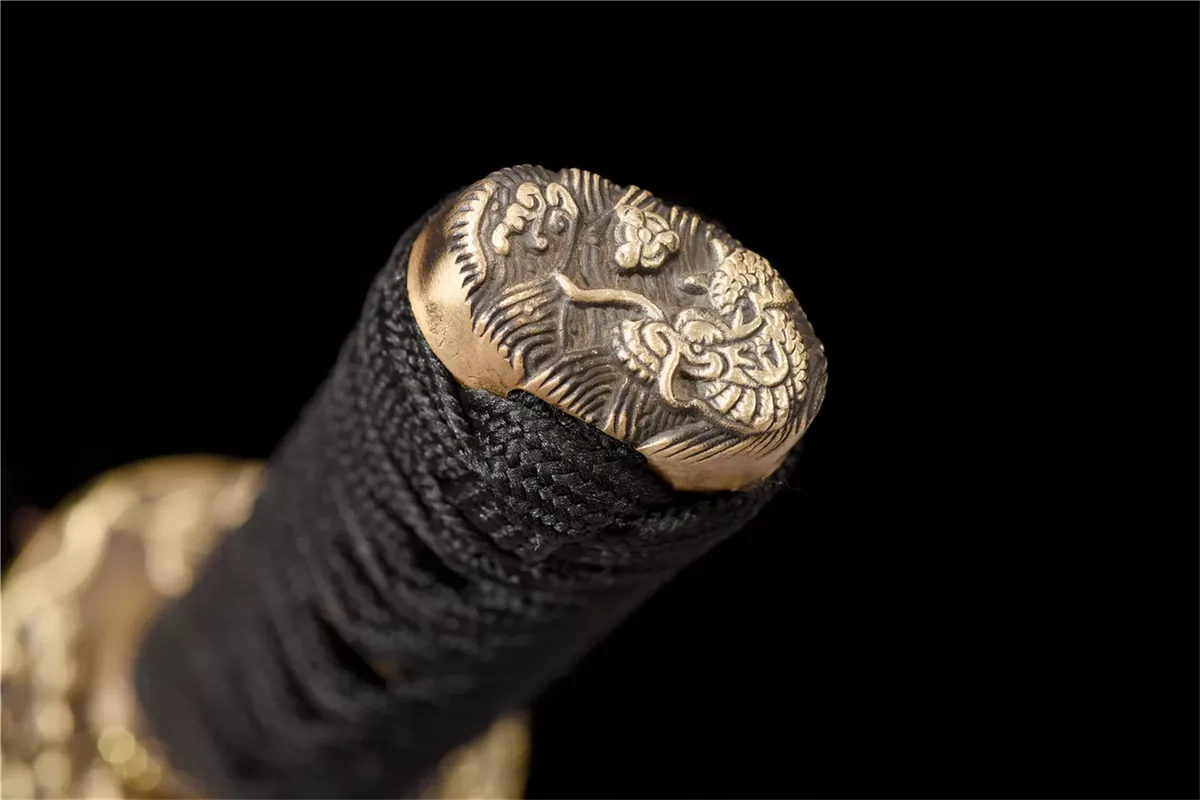
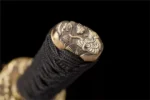
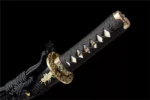
The fuchi in gilded patinated copper bears a dragon in relief, and the kashira a dragon’s head in takabori. The handle is wrapped in genuine white samegawa over a wooden core, bound with black tsuka-ito in hineri-maki, and fitted with gilded menuki. The ichimai habaki in gilded brass is engraved with a kikkō geometric motif and finished with black lacquer.
A saya painted with a golden katydid
The saya is crafted from hardwood and covered in a textured black lacquer in the manner of ishime-nuri, with the granular surface of stone. It carries a painted decoration in gold and colour in the spirit of maki-e: white blossoms, green leaves and a golden katydid. The koiguchi and kojiri, both with rounded edges, are lacquered in the same textured black as the body of the saya. The kurikata, fitted with a gilded shitodome, holds a black cotton sageo.
Dimensions and handling of the tanto
With a blade of 33 cm and an overall length of 55 cm, the Kirigirisu is a tanto of generous proportions. Its 17 cm handle sits firmly in a single hand. At 0.7 kg, it remains notably light. Measuring 57 cm within its saya, it presents its painted decoration to full advantage when displayed.


Reviews
There are no reviews yet